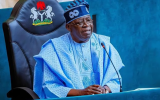



The Executive Chairman of the Nigeria Revenue Service (NRS), Dr Zacch Adedeji, has declared that Nigeria’s economy is emerging from a difficult period of adjustment and moving towards greater stability and resilience.
Adedeji said the far-reaching economic reforms introduced by President Bola Ahmed Tinubu since May 2023 were beginning to produce measurable improvements in key areas of the economy, including revenue generation, investment, production and corporate performance.
Speaking on Channels Television’s Sunday Politics, the NRS chairman identified the removal of petrol subsidy, unification of the foreign exchange market, implementation of the Petroleum Industry Act (PIA), tighter monetary management and the ongoing tax reforms as the major measures driving the change.
He said the economy was now showing “strong signs of full recovery and accelerated growth” after the difficult adjustments triggered by the reforms.
According to Adedeji, improved exchange-rate stability, moderating inflationary pressures and better liquidity conditions have strengthened business confidence and allowed companies and investors to make longer-term decisions with greater certainty.
“Nigeria’s economy is showing strong signs of full recovery and accelerated growth following a series of necessary reforms by the current administration,” he said.
“The economy has moved decisively from acute macroeconomic distress to a more stable and increasingly resilient footing.”
Adedeji attributed the development to what he described as President Tinubu’s determination to implement reforms under the administration’s Renewed Hope Agenda.
He said the recapitalisation of the banking sector had strengthened the financial system’s capacity to provide large-scale corporate financing, while the tax reforms had simplified administration and broadened the revenue base.
“These reforms have improved the overall business climate and reduced structural inefficiencies, as well as enhanced the operating environment for capital-intensive and export-oriented firms by improving market efficiency, strengthening macroeconomic stability and increasing investor confidence,” he said.
The NRS chairman also linked the reforms to improved corporate financial performance, saying stronger market fundamentals and a more predictable business environment had enabled companies to improve operational efficiency, financial transparency and investment planning.
He said these factors had contributed to substantial increases in revenue and profit before tax recorded by many major companies.
Four Major Distortions
In a separate report titled “National Economic Performance: Baseline (May 29, 2023) vs Current Outlook (Mid-June 2026): A Comparative Review of President Bola Ahmed Tinubu Administration’s Economic Reform Programme,” the NRS said the government inherited four major and interconnected economic distortions.
They included an unsustainable fuel subsidy regime, a fragmented and opaque foreign exchange market, an oil sector operating substantially below capacity and a tax base far below its potential.
The service said the removal of the fuel subsidy and the unification of the foreign exchange market, implemented shortly after Tinubu assumed office, represented the two foundational reforms from which many subsequent changes could be traced.
According to the NRS, subsidy removal freed federally collectible revenue previously consumed by fuel under-recovery, while FX unification eliminated round-tripping and arbitrage and restored price discovery in the currency market.
The service said the impact of the reforms was becoming increasingly visible in government revenue, investment, production and corporate earnings.
Tax Revenue Rises
NRS said tax collections increased from N12.3 trillion in 2023 to N21 trillion in 2024 and N28.3 trillion in 2025, while collections stood at N27.1 trillion in the first eight months of 2026.
The improvement, it said, pushed the tax-to-GDP ratio to 13 per cent, up from 10.3 per cent in 2023.
However, the service said there was still significant room for expansion towards the government’s 18 per cent target.
It attributed the increase in revenue to the digitalisation of tax administration, expansion of the tax base and implementation of the new tax framework.
The national e-invoicing system for large taxpayers was identified as one of the key initiatives supporting compliance.
The NRS also cited four new laws that took effect on January 1, 2026: the Nigeria Tax Act, Nigeria Tax Administration Act, Nigeria Revenue Service Establishment Act and Joint Tax Board Establishment Act.
The transformation of the former Federal Inland Revenue Service into the Nigeria Revenue Service, it added, had further strengthened revenue consolidation by bringing together non-tax revenue streams previously collected by other agencies.
According to the service, non-oil sources now account for 76 per cent of total collections, which it described as significant progress towards diversifying public revenue.
NRS projected that revenue mobilisation could increase further as e-invoicing coverage expands and the new tax laws become fully operational in 2026 and 2027.
Debt Position Improves
The revenue service also reported an improvement in Nigeria’s debt position, saying the debt-to-GDP ratio declined from 35.5 per cent in 2025 to 32.3 per cent in 2026.
It attributed the decline largely to nominal GDP growth outpacing debt accumulation and noted that the ratio remained below the International Monetary Fund’s 55 per cent risk threshold.
NRS explained that the rise in naira-denominated debt had been driven largely by the revaluation of dollar-denominated obligations following exchange-rate changes rather than fresh borrowing.
The agency also pointed to the oversubscription of Nigeria’s November 2025 Eurobond by 12 times, with a record order book, as evidence of improving investor confidence.
However, it cautioned that debt-service-to-revenue remained an important indicator requiring sustained attention.
The service said stronger domestic revenue mobilisation would provide a more durable means of reducing the debt burden and creating additional fiscal space for capital expenditure.
Oil Production, Refining Capacity Improve
The oil and gas sector, according to the NRS, has also recorded a significant turnaround.
Crude oil production recovered to about 1.73 million barrels per day by August 2026, equivalent to about 104 per cent of Nigeria’s OPEC quota, compared with production of between 1.2 million and 1.3 million barrels per day around the beginning of the reform period.
NRS attributed the recovery to intensified security operations against pipeline vandalism and crude theft, as well as continued implementation of the Petroleum Industry Act, which it said had improved fiscal and regulatory certainty for upstream operators.
Although monthly production has fluctuated, the agency said the overall trajectory remained positive after years of underinvestment and operational disruptions.
Domestic refining capacity has also expanded significantly.
According to the NRS, refining capacity increased from about 30,000 barrels per day in May 2023 to approximately 700,000 barrels per day by mid-2026.
It said about 90 per cent of domestic petrol supply was now being met through local refining, while diesel imports had fallen to zero by May 2026.
The agency identified the Dangote Refinery as a major driver of the shift and said the crude-for-naira arrangement between the Nigerian National Petroleum Company Limited and the refinery had helped reduce dollar demand associated with fuel imports.
NRS said the development demonstrated the potential of policy and regulatory certainty to attract large-scale private-sector investment.
It also cited major upstream transactions involving Seplat Energy and Aradel Holdings, saying the deals had strengthened the long-term prospects of the oil and gas sector by expanding reserves and production capacity while reducing uncertainty around major investments.
Banking Recapitalisation Supports Businesses
The recapitalisation of the banking sector was also identified as an important component of the emerging recovery.
According to NRS, stronger bank capital positions would increase the capacity of financial institutions to support large-scale corporate financing and provide businesses with greater access to capital for expansion.
The service said the combined effect of monetary, fiscal, tax and structural reforms had created a more predictable operating environment for capital-intensive and export-oriented businesses.
“Taken together, these reforms have enhanced the operating environment for capital-intensive and export-oriented firms by improving market efficiency, strengthening macroeconomic stability, increasing investor confidence, and facilitating more efficient allocation of capital,” the agency stated.
Economy Moving From Adjustment to Consolidation
The NRS acknowledged that the reforms had initially created significant pressure for businesses and households, but maintained that the economy was increasingly moving from adjustment to consolidation.
“Measured against its May 2023 starting point, the Nigerian economy has moved decisively from acute macroeconomic distress toward a more stable and increasingly resilient footing,” the agency said.
It stressed, however, that the next phase would require consolidating the gains, sustaining revenue growth, improving debt-service capacity and ensuring that macroeconomic stability translates into higher investment, increased production, job creation and improved living standards.
For the NRS, the ultimate test of the reforms will be whether the stronger economic fundamentals being reported by government and businesses eventually translate into tangible improvements in the welfare of Nigerians.
—————————————————————————————————————————————
Your help to our media platform will support the delivery of the independent journalism and broadcast the world needs. Support us by making any contribution. Your donation and support allows us to be completely focus, deeply investigative and independent. It also affords us the opportunity to produce more programmes online which is a platform universally utilised.
Thank you.
Please click link to make – DONATION