


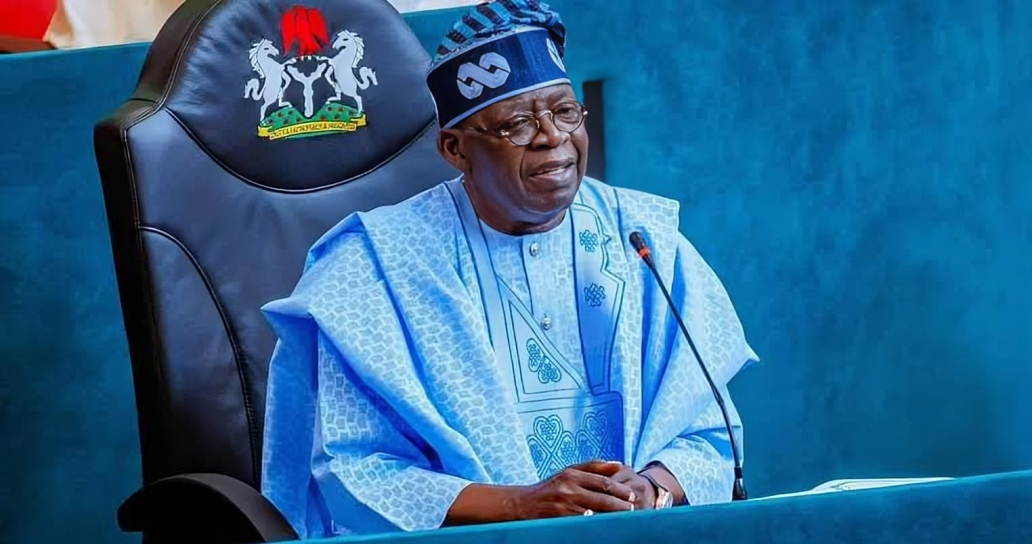
Ten major companies quoted on the Nigerian Exchange recorded a combined N14.4 trillion in revenue and N4.99 trillion in profit before tax in the first half of 2026, in what the Nigeria Revenue Service described as evidence that economic reforms under President Bola Ahmed Tinubu are beginning to translate into stronger corporate earnings.
The performance represents a significant improvement from the corresponding period of 2025, when the companies recorded about N10.59 trillion in combined revenue and N2.99 trillion in profit before tax.
The NRS, in its report titled “National Economic Performance: Baseline (May 29, 2023 vs Current Outlook [Mid-June 2026]): A Comparative Review of President Bola Ahmed Tinubu Administration’s Economic Reform Programme,” attributed the improvement to a combination of greater macroeconomic stability, improved market efficiency, stronger investor confidence and increased access to capital.
Among the companies driving the growth were MTN Nigeria Communications, Dangote Cement, Seplat Energy and Aradel Holdings.
MTN Nigeria led the revenue table with N2.99 trillion, up 25 per cent from N2.38 trillion recorded in the first half of 2025.
Its profit before tax also increased by 75.2 per cent to N1.09 trillion, compared with N622.26 billion in the corresponding period of last year.
Dangote Cement recorded revenue of N2.51 trillion, representing a 21.4 per cent increase from N2.07 trillion, while its profit before tax rose to N981 billion from N730 billion.
Seplat Energy reported N2.5 trillion in revenue, up 16.5 per cent from N2.17 trillion a year earlier. Its profit before tax rose by 54.2 per cent to N700 billion, compared with N454 billion in the first half of 2025.
Aradel Holdings recorded one of the strongest increases, with revenue jumping to N2.49 trillion from N368.08 billion, representing a 576.9 per cent increase.
The company’s profit before tax also rose to N752 billion from N191 billion, an increase of 293.7 per cent.
Other companies in the group also recorded varying levels of growth.
Nigerian Breweries increased revenue by 8.9 per cent to N803.68 billion, while BUA Foods grew by 16.2 per cent to N765.12 billion.
BUA Cement recorded a 25.6 per cent increase in revenue to N728.93 billion, while HBM Nigeria Conglomerate grew by 31.2 per cent to N678.41 billion.
Nestlé Nigeria posted a 12 per cent increase in revenue to N581.04 billion, while Transcorp was the only company among those listed to record a decline, with revenue falling by 13.4 per cent to N279.04 billion.
Overall, the companies’ combined profit before tax rose by 66.7 per cent, from N2.99 trillion in H1 2025 to N4.99 trillion in H1 2026.
The NRS said the improvement was coming after a difficult adjustment period triggered by some of the administration’s major economic reforms introduced from May 2023.
These include the removal of petrol subsidy, foreign exchange market reforms, tighter monetary management, tax reforms and measures aimed at improving fiscal sustainability and restoring investor confidence.
According to the revenue service, the reforms initially created significant pressure for businesses, particularly companies with foreign currency obligations, as the naira depreciation resulted in substantial exchange-rate losses.
However, it said the subsequent improvement in exchange-rate stability, liquidity conditions and investor confidence had helped businesses make longer-term investment decisions with greater certainty.
The NRS also identified the recapitalisation of the banking sector as another factor strengthening the economy, saying it had increased the capacity of financial institutions to provide large-scale financing to businesses.
The service said the benefits were particularly evident in capital-intensive and export-oriented sectors, including oil and gas.
It cited Seplat Energy and Aradel Holdings as examples of companies that had benefited from higher production, foreign-currency-linked revenues and increased investor confidence.
The approval of major upstream transactions involving the two companies was also said to have strengthened their long-term growth prospects.
Aradel is part of the consortium involved in the acquisition of Shell Petroleum Development Company assets, while Seplat completed the acquisition of Mobil Producing Nigeria Unlimited.
The NRS said the transactions were expected to expand the companies’ reserve bases and production capacity while reducing regulatory uncertainty surrounding major upstream investments.
Revenue Reforms
The NRS also attributed part of the improved economic performance to changes in tax administration.
It cited the rollout of the national e-invoicing system for large taxpayers and the implementation of four new tax laws from January 1, 2026.
The laws are the Nigeria Tax Act, Nigeria Tax Administration Act, Nigeria Revenue Service Establishment Act and Joint Tax Board Establishment Act.
The transformation of the former Federal Inland Revenue Service into the Nigeria Revenue Service has also expanded the government’s revenue framework by bringing together non-tax revenue streams previously collected by other agencies.
According to the NRS, non-oil sources now account for 76 per cent of total collections, although it acknowledged that oil revenues remain significant.
The agency said the tax-to-GDP ratio still had considerable room for improvement towards the government’s 18 per cent target.
It projected that wider adoption of e-invoicing and full implementation of the new tax laws would further strengthen revenue collection in 2026 and 2027.
Oil Production, Refining Capacity Rise
The NRS also highlighted developments in the petroleum sector, saying crude oil production had recovered to about 1.73 million barrels per day by August 2026, equivalent to about 104 per cent of Nigeria’s OPEC quota.
It attributed the recovery to intensified security operations against pipeline vandalism and crude theft, as well as continued implementation of the Petroleum Industry Act, which it said had improved fiscal and regulatory certainty for upstream operators.
Domestic refining capacity, according to the agency, has also risen from about 30,000 barrels per day in May 2023 to approximately 700,000 barrels per day by mid-2026.
The NRS said about 90 per cent of domestic petrol supply was now being met through local refining, while diesel imports had fallen to zero by May 2026.
It identified the Dangote Refinery as central to the development, alongside the crude-for-naira arrangement between the Nigerian National Petroleum Company Limited and the refinery.
The arrangement, it said, had helped reduce dollar demand associated with petroleum imports and eased pressure on the foreign exchange market.
Adedeji Defends Reforms
The Executive Chairman of the NRS, Dr Zacch Adedeji, strongly defended the Tinubu administration’s economic policies, arguing that the petrol subsidy would have cost the country as much as N53 trillion if it had remained in place.
Speaking on Channels Television, Adedeji described the former subsidy regime as an “under-recovery” system that had become financially unsustainable before the Tinubu administration took office.
He argued that retaining the arrangement, particularly amid rising international oil prices and global energy disruptions, would have placed further pressure on government finances and the naira.
“If Mr President has not removed it, given what is happening in Iran, given what is happening globally, the subsidy today will have been N53 trillion,” he said.
Adedeji further argued that the naira could have depreciated to about N3,500 to the dollar if the subsidy and other structural distortions had remained.
He said the administration inherited four major economic distortions: an unsustainable petrol subsidy, an opaque foreign exchange market, an underperforming oil sector and a narrow tax base.
He also cited a foreign exchange backlog of about $7 billion and Ways and Means obligations of roughly N23 trillion among the challenges inherited by the government.
According to him, the reforms were designed to address those structural weaknesses rather than provide short-term relief.
“I understand the pain, because it has to be painful,” Adedeji said, arguing that the administration had prioritised building a more sustainable economic foundation.
Growth Versus Cost of Living
Despite the improved corporate earnings and other indicators highlighted by the NRS, the reforms have continued to attract criticism because of their impact on households.
The removal of petrol subsidy, foreign exchange reforms and increases in energy and transportation costs contributed to sharp increases in the prices of fuel, food, transportation and other essential goods and services.
Although the government has maintained that the reforms were necessary to correct longstanding structural weaknesses, many Nigerians continue to face high living costs, elevated inflation and reduced purchasing power.
The debate has therefore increasingly shifted towards whether improving macroeconomic indicators are translating into better living conditions for ordinary citizens.
Adedeji acknowledged the economic pain but argued that the country had moved beyond what he described as the crisis-management stage.
“We have moved from crisis management in our economy to the consolidation stage,” he said.
He pointed to stronger corporate earnings, increased market capitalisation, bank recapitalisation, improved government revenue and increased investment as evidence of the changing economic landscape.
According to him, market capitalisation of the Nigerian Exchange has risen from about N30 trillion to N150 trillion, while bank recapitalisation has attracted N4.6 trillion, with about 75 per cent of the funds raised locally.
He also cited the increase in monthly Federation Account allocations, which he said rose from about N711 billion in May 2023 to N4.5 trillion in July 2026.
Adedeji said stronger revenue flows had improved the ability of state governments to pay salaries and execute development projects.
He also linked the increase in domestic refining capacity to the administration’s reforms, arguing that Nigeria was now better positioned to withstand disruptions in the global oil market.
On social interventions, the NRS chairman said more than one million students across about 300 higher institutions had benefited from more than N303 billion in student loans over the past three years.
He said programmes such as student loans and CreditCorp were intended to expand opportunities and support economic participation.
Debt and Outlook
The NRS said Nigeria’s debt-to-GDP ratio had declined from 35.5 per cent in 2025 to 32.3 per cent in 2026, largely because nominal GDP growth outpaced the growth in debt.
It also cited the oversubscription of Nigeria’s November 2025 Eurobond as evidence of improving investor confidence in the country’s fiscal outlook.
However, the agency cautioned that the debt-service-to-revenue ratio remained an important area requiring continued attention.
It said stronger domestic revenue mobilisation would provide government with greater fiscal space for capital expenditure without excessive reliance on new borrowing.
The NRS concluded that Nigeria had moved from what it described as “acute macroeconomic distress” in May 2023 towards a more stable and resilient economic position.
It identified petrol subsidy removal, foreign exchange unification, implementation of the Petroleum Industry Act, disciplined monetary policy and the tax law overhaul as key drivers of the transition.
The agency, however, acknowledged that the ultimate test of the reforms would be whether stronger corporate earnings and improved macroeconomic stability eventually translate into increased investment, job creation, higher incomes and improved living standards for Nigerians.
Adedeji urged the government to consolidate the reforms rather than reverse them, warning that returning to the previous economic model could recreate the distortions that prompted the reforms in the first place.
“We just need to consolidate on what we have,” he said.
—————————————————————————————————————————————
Your help to our media platform will support the delivery of the independent journalism and broadcast the world needs. Support us by making any contribution. Your donation and support allows us to be completely focus, deeply investigative and independent. It also affords us the opportunity to produce more programmes online which is a platform universally utilised.
Thank you.
Please click link to make – DONATION