

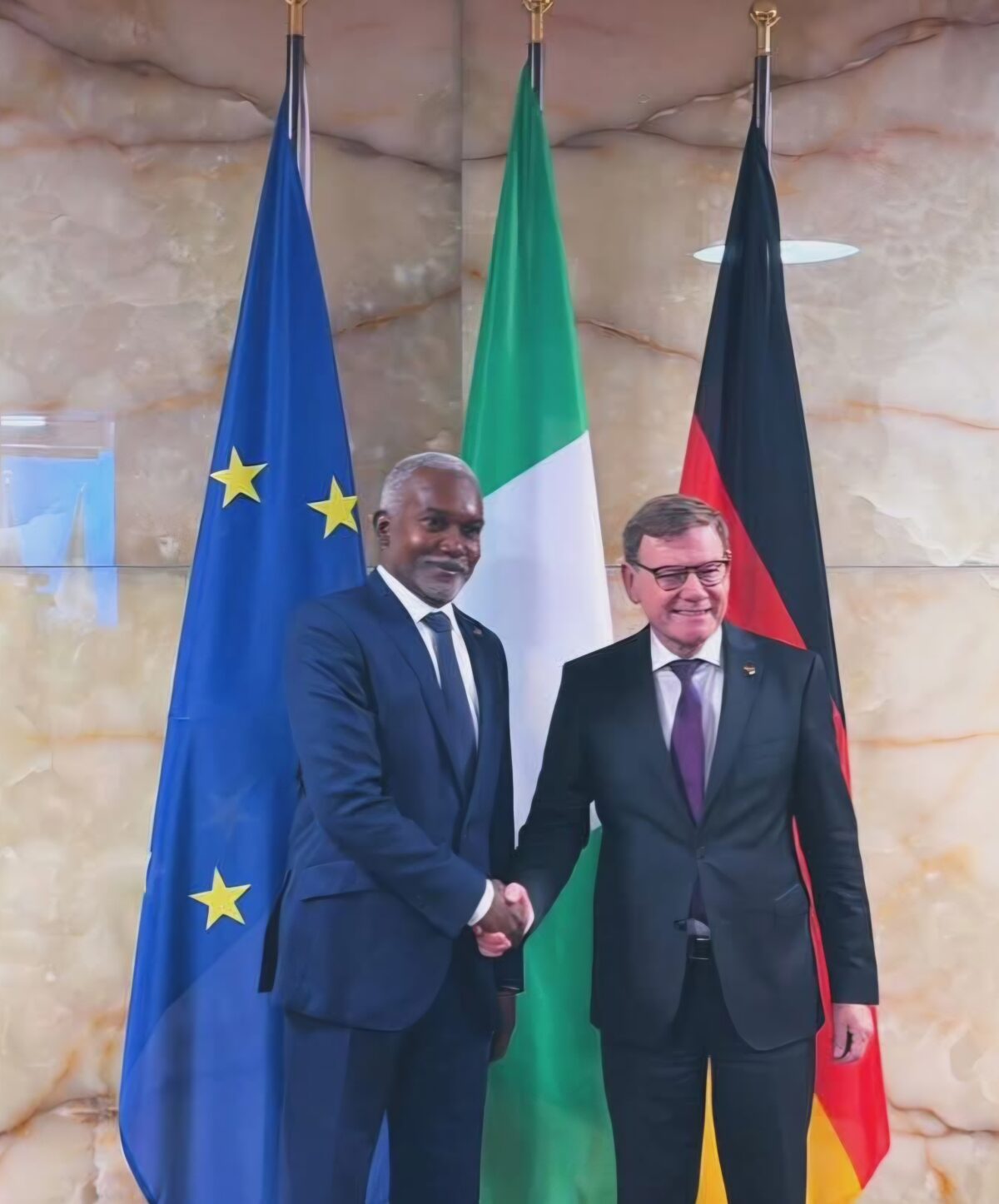
Nigeria’s Foreign Affairs Minister, Yusuf Tuggar, has firmly dismissed allegations of state-backed religious persecution in the country, insisting that the narrative being circulated internationally is misleading, inaccurate and potentially dangerous. Speaking in Berlin alongside his German counterpart, Tuggar said the Government of Nigeria “cannot, and does not, support religious persecution in any way, shape or form,” describing such allegations as incompatible with both the Constitution and Nigeria’s long-standing culture of religious coexistence.
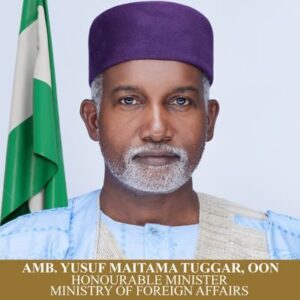 Tuggar held up a document titled “Nigeria’s Constitutional Commitment to Religious Freedom and Rule of Law,” underscoring that the nation’s legal foundation explicitly protects freedom of worship and prohibits the adoption of any religion as state policy. According to him, external claims suggesting otherwise are not only unfounded but risk amplifying tensions in a country where people of different faiths have lived and worked side by side for decades.
His remarks follow recent statements by former U.S. President Donald Trump, in which Nigeria was labelled a “Country of Particular Concern,” and the suggestion was made that America may consider military action in response to alleged persecution of Christians. The Nigerian Government has rejected the claims as “misinformed,” pointing out that insecurity in Nigeria affects citizens of multiple religions and ethnic backgrounds and cannot be framed as a targeted campaign supported by the state.
Tuggar cautioned against the global trend of reducing complex internal security challenges to simplistic religious storylines, saying such narratives can distort the reality on the ground and embolden groups seeking to divide the country. “What we are trying to make the world understand is that we should not create another Sudan,” he said, referring to the devastating consequences of externally reinforced religious and ethnic fragmentation in that region.
Diplomatic officials familiar with the matter say the Government is increasingly concerned that mischaracterisation of Nigeria’s security crisis by foreign political actors, advocacy organisations, and online commentators could influence international policy decisions without a proper understanding of local dynamics. Some government sources argue privately that external groups have built entire campaigns around portraying Nigeria as a hotspot of religiously motivated genocide, despite what they describe as “no credible evidence” of state involvement in such acts.
For Nigeria’s large diaspora community, analysts say the dispute highlights the importance of accurate context when international narratives emerge around sensitive issues. Nigeria remains a secular state under the 1999 Constitution, and its security agencies, though heavily criticised for other shortcomings, operate under laws that do not permit religious targeting. Abuja’s position, reiterated once again in Berlin, is that the violence witnessed in parts of the country stems from criminality, terrorism, land tensions and socio-economic pressures — not government-directed persecution.
As the diplomatic conversation evolves, Nigeria is expected to intensify engagement with partners in Europe and North America to correct what it sees as a potentially destabilising misinterpretation of its internal security situation. Officials close to the matter say the country will “continue to address its security challenges, but will not accept narratives that undermine national unity or misrepresent the motives of the Nigerian state.”
—————————————————————————————————————————————
Your help to our media platform will support the delivery of the independent journalism and broadcast the world needs. Support us by making any contribution. Your donation and support allows us to be completely focus, deeply investigative and independent. It also affords us the opportunity to produce more programmes online which is a platform universally utilised.
Thank you.
Please click link to make – DONATION