

The Executive Secretary of the National Commission for Colleges of Education (NCCE), Dr. Angela Ajala, has warned that Nigeria’s future could be jeopardized if urgent steps are not taken to strengthen teacher education, describing teachers as the foundation of national development.
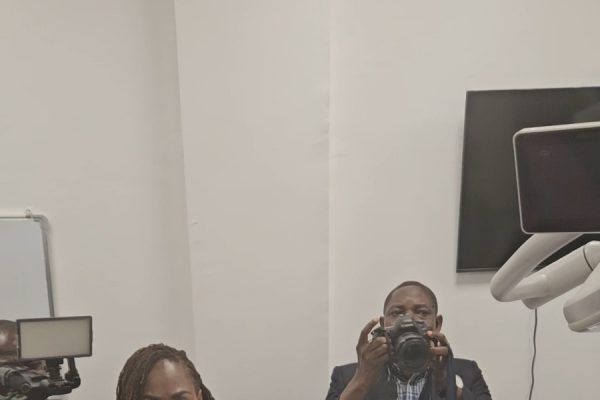
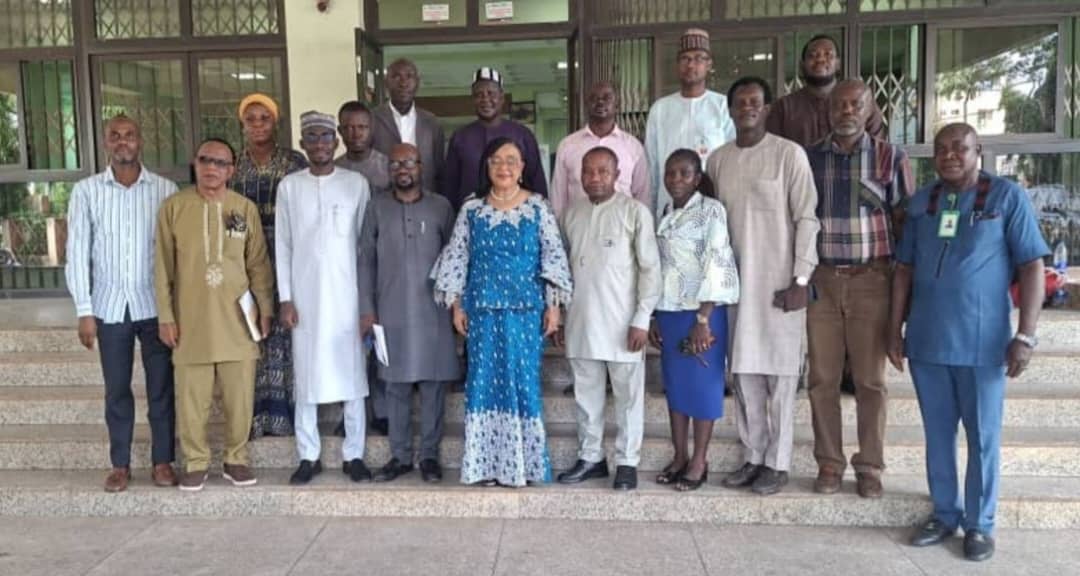
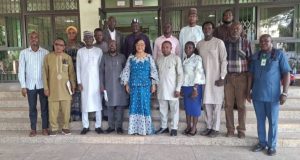
Ajala spoke on Tuesday in Abuja while receiving members of the Education Correspondents Association of Nigeria (ECAN), stressing that decades of neglect and declining respect for the teaching profession have weakened the country’s education system.
According to her, no nation can rise above the quality of its teachers, noting that every professional and leader is shaped by educators.
“If you get it wrong with a teacher, just know that Nigeria is finished. Every engineer, doctor, scientist, entrepreneur, politician and leader passes through the hands of a teacher. Teacher education lies at the heart of national development,” she said.
The NCCE chief decried the perception of teaching as a profession of last resort, describing it as a dangerous narrative that has discouraged talented young people from pursuing careers in education.
She emphasized the far-reaching impact of teachers on society, arguing that while mechanical faults can be repaired, the consequences of poor teaching can affect learners for life.
“You can fix a faulty car. But when a teacher damages a child in the classroom, that damage can last a lifetime. Those children become the future professionals and leaders of society,” Ajala stated.
Calling for greater collaboration with the media, she urged education journalists to support ongoing reforms by promoting positive and accurate narratives about teacher education.
“You are not just reporters; you are reformers. What you report shapes public opinion, influences policy conversations and changes mindsets. We need responsible reporting that reflects the true importance of teacher education,” she told the ECAN delegation led by its Chairman, Mr. Chuks Ukwuatu.
Ajala recalled a period when teachers enjoyed high esteem and influence in communities, lamenting that the profession has since lost much of its prestige.
“Something went wrong along the way. We moved from a society where teachers were highly respected to one where people say, ‘If you have nothing else to do, go and become a teacher.’ That narrative must change,” she said.
The NCCE Executive Secretary also defended the Federal Government’s decision to remove the Unified Tertiary Matriculation Examination (UTME) requirement for admission into Colleges of Education, dismissing concerns that the policy would lower academic standards.
She argued that UTME is primarily a placement examination and not a comprehensive assessment of academic potential.
“What is UTME? It is a two-hour examination. It is not an achievement test. Decisions like these were not taken arbitrarily; they were based on evidence, data and projections about the future of teacher education in Nigeria,” she explained.
Ajala warned that Nigeria could face a critical shortage of teachers within the next six years if enrolment in teacher-training institutions is not significantly increased.
“In some colleges, you find only about 30 students spread across 10 programmes. The attrition rate is alarming. If we do not act now, Nigeria may not have enough teachers in the near future,” she cautioned.
She highlighted ongoing reforms in the sector, including the implementation of the dual mandate for Colleges of Education, which allows institutions to award both the Nigeria Certificate in Education (NCE) and degree qualifications.
According to her, graduates will also have opportunities to acquire globally recognized skills certifications, improving their competitiveness in the international labour market.
“Colleges of Education are becoming institutions where students can earn multiple qualifications and acquire international skills that make them globally competitive,” she said.
Ajala further disclosed that the Commission is reviewing curricula across Colleges of Education to align teacher training with global best practices and emerging realities.
“People often cite Finland, Singapore and other countries as models. When you compare their curricula with ours, you will find that Nigeria is not far behind. What we need is proper implementation and a change in perception,” she added.
Earlier, ECAN Chairman, Mr. Chuks Ukwuatu, congratulated Ajala on her appointment as the first female Executive Secretary of the NCCE, describing her emergence as a significant milestone for the Commission.
He assured the Commission of ECAN’s commitment to objective and constructive reporting of education policies and programmes, while also informing the NCCE leadership about the association’s forthcoming Education Conference and Awards aimed at assessing reforms under President Bola Tinubu’s Renewed Hope Agenda.
Both parties pledged to strengthen collaboration in promoting teacher education reforms and enhancing public understanding of the critical role teachers play in national development.
—————————————————————————————————————————————
Your help to our media platform will support the delivery of the independent journalism and broadcast the world needs. Support us by making any contribution. Your donation and support allows us to be completely focus, deeply investigative and independent. It also affords us the opportunity to produce more programmes online which is a platform universally utilised.
Thank you.
Please click link to make – DONATION