


Nigeria is presently at a critical governance juncture where continuity in leadership must be carefully balanced with evolving political realities. As members of the Federal Executive Council step aside to pursue political engagements ahead of the 2027 electoral cycle, it becomes imperative that the administration of Bola Ahmed Tinubu responds with urgency, precision, and strategic foresight in filling resulting vacancies – particularly within ministries that directly shape national stability and international engagement.
In every effective governance system, ministerial leadership gaps, however brief, can disrupt policy execution, delay critical decisions, and weaken institutional momentum. While the convention of maintaining state or regional balance in appointments remains politically relevant, present circumstances demand that competence, institutional memory, and national interest take clear precedence.
This consideration becomes even more urgent within the Ministry of Foreign Affairs.
Nigeria’s external engagement environment has become increasingly complex, influenced by global economic volatility, shifting geopolitical alliances, multilateral negotiations, and emerging international security concerns. In such an environment, diplomatic leadership cannot be left uncertain even momentarily.
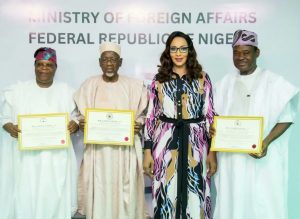 The importance of this ministry was further reinforced this week when Minister of State for Foreign Affairs, Bianca Odumegwu-Ojukwu, formally presented Letters of Credence to Ambassador Aminu Dalhatu for the United Kingdom, Ambassador Ayodele Oke for France, and Senator Jimoh Ibrahim as Permanent Representative-designate to the United Nations in New York. In her remarks, she emphasised that Letters of Credence are not mere formalities but constitutional instruments through which a Head of State officially authorises envoys to speak and act on behalf of the nation abroad.
That statement underlines a larger reality: diplomacy is continuous, sensitive, and cannot function effectively in a vacuum.
At present, the delayed full deployment of ambassadors and high commissioners has already placed exceptional operational responsibility on the leadership of the ministry.
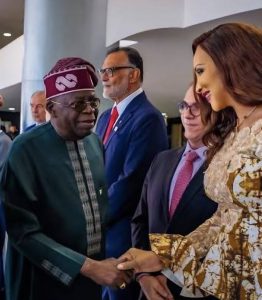 Consequently, both the Minister of Foreign Affairs and the Minister of State now carry responsibilities extending beyond administration into strategic representation of Nigeria’s interests globally.
A delay or weak replacement at this level could undermine Nigeria’s diplomatic effectiveness, slow bilateral and multilateral negotiations, and weaken international influence at a time when strategic engagement is most needed.
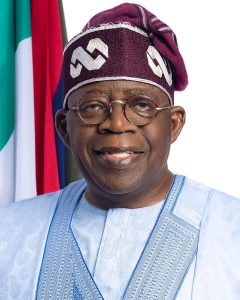 This moment therefore offers President Tinubu a practical opportunity to strengthen Nigeria’s global standing through merit-driven appointments. Priority should be given to seasoned career diplomats, respected former ambassadors, and experienced envoys with immediate operational readiness—including capable hands among recently recalled diplomatic personnel.
Given that such appointments are essentially to complete the current presidential term, immediate competence matters more than political experimentation.
In this final phase of the administration’s first term, uninterrupted and highly competent leadership in Foreign Affairs is not merely administrative necessity; it is a strategic national imperative requiring urgent presidential attention.
—————————————————————————————————————————————
Your help to our media platform will support the delivery of the independent journalism and broadcast the world needs. Support us by making any contribution. Your donation and support allows us to be completely focus, deeply investigative and independent. It also affords us the opportunity to produce more programmes online which is a platform universally utilised.
Thank you.
Please click link to make – DONATION