

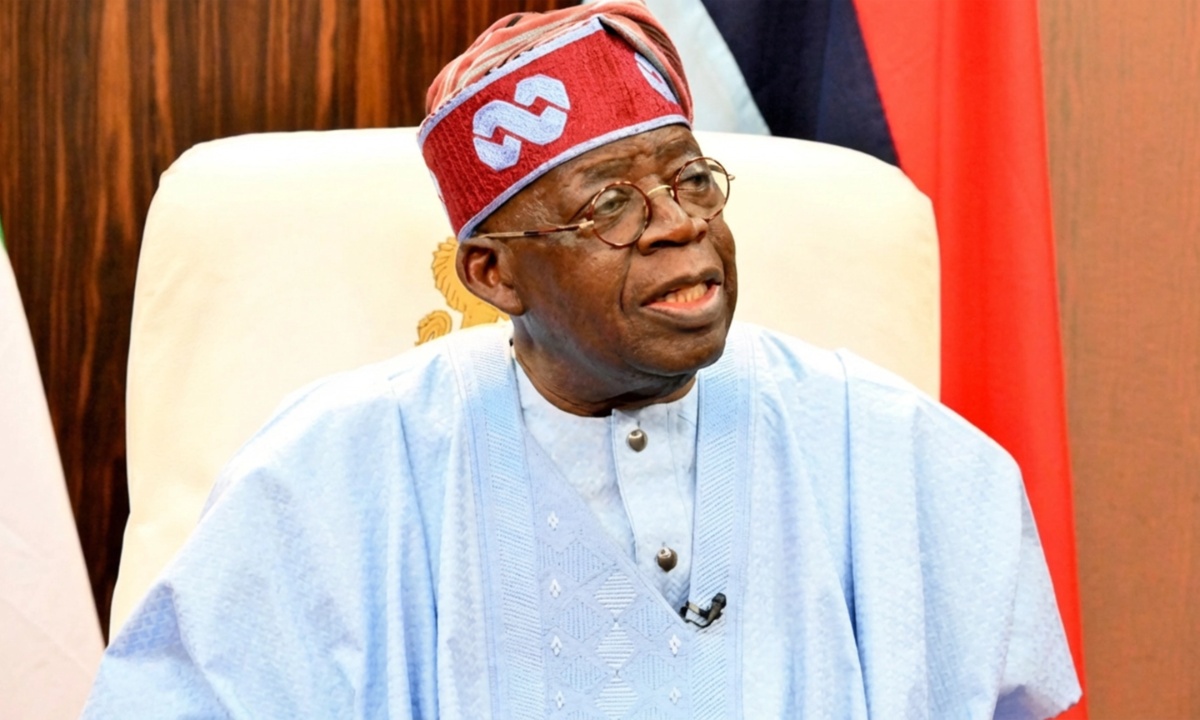
President Bola Tinubu on Friday defended the economic reforms introduced by his administration, insisting that the removal of fuel subsidy and foreign exchange reforms were necessary to prevent Nigeria from sliding into deeper economic crisis.
Speaking in a nationwide address to mark the third anniversary of his administration, Tinubu acknowledged the hardship caused by the policies but said early signs of economic recovery were emerging.
The president said Nigeria had faced severe fiscal and structural pressures when he assumed office in 2023, including rising debt-servicing costs, exchange-rate distortions, insecurity, declining revenues, and mounting subsidy obligations.
“At the height of the subsidy regime, Nigeria was spending as much as ₦18.4 billion daily to sustain petrol subsidies,” Tinubu said, adding that multiple exchange-rate windows and forex arbitrage had also created major economic distortions.
He argued that his administration chose “reform over ruin” by scrapping fuel subsidy payments and liberalising the foreign exchange market despite the immediate economic pain triggered by the decisions.
The reforms, introduced shortly after Tinubu took office in May 2023, contributed to a sharp rise in fuel prices, transportation costs, inflation, and the cost of living, sparking criticism from labour unions, opposition parties, and civil society groups.
While acknowledging the sacrifices made by Nigerians, Tinubu insisted the measures had stabilised the economy and improved investor confidence.
“Our economy is now more competitive and better positioned for sustainable growth than it was in 2023,” he said.
The president pointed to gains in the stock market, infrastructure projects, oil and gas investment, domestic refining capacity, and digital economy expansion as evidence of recovery.
He said over 2,700 kilometres of highways and major roads were under construction or rehabilitation across the country, including the Lagos-Calabar Coastal Highway, the Sokoto-Badagry Super Highway, and the Abuja-Kaduna-Zaria-Kano Road.
Tinubu also highlighted progress in the power sector, rail modernisation, agriculture, healthcare, housing, and telecommunications.
According to him, the Nigerian Education Loan Fund has provided over 1.5 million students access to higher education financing, while the Renewed Hope Housing Programme is delivering more than 10,000 housing units nationwide.
On security, the president said military and security agencies had intensified operations against terrorists, kidnappers, oil thieves, and bandits.
“Many communities and highways are becoming safer and more economically active,” he said, while acknowledging that insecurity remained a major challenge.
Tinubu urged Nigerians to remain patient and united, saying national recovery would require continued sacrifice and collective effort.
“We have not solved every problem, and we are not yet where we want to be. But the foundation for recovery has been laid,” he said.
The president also appealed for national unity, warning against division along ethnic, religious, or regional lines.
“Nigeria belongs to all of us—no region, faith, or group should feel marginalised or forgotten,” he added.
The address comes amid continued public concern over inflation, food prices, unemployment, insecurity, and the declining purchasing power of households despite government assurances of economic improvement.
—————————————————————————————————————————————
Your help to our media platform will support the delivery of the independent journalism and broadcast the world needs. Support us by making any contribution. Your donation and support allows us to be completely focus, deeply investigative and independent. It also affords us the opportunity to produce more programmes online which is a platform universally utilised.
Thank you.
Please click link to make – DONATION