

Abuja, Nigeria — Nigeria is making a powerful push to redefine its economy, focusing on homegrown manufacturing, legislative reform, and private sector innovation, government leaders said in a series of speeches this week.
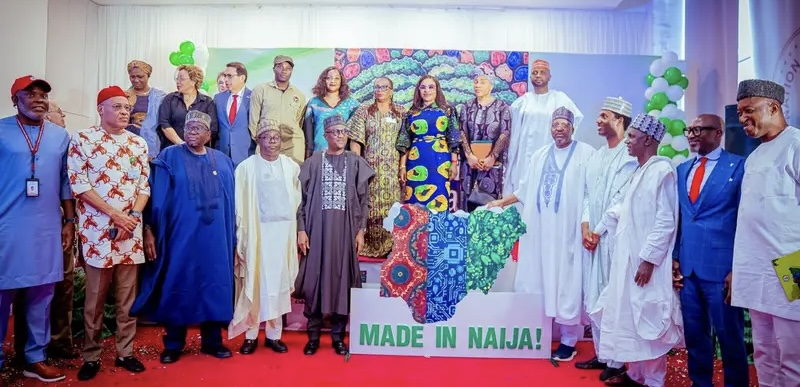
At the Made in Naija trade exhibition organised by the House of Representatives Committee on Commerce, Vice-President Kashim Shettima, speaking through his adviser Dr. Aliyu Modibbo Umar, declared that the country’s future depends on its own creativity and ingenuity. “There is nothing that advertises the pride of a nation as much as the craft, creativity and conceptions of its people,” he said, reinforcing the government’s commitment to supporting local production.
Shettima warned that producing locally is not enough on its own — Nigerians must also consume what they make. “Every time we choose a product manufactured here, we are making an investment in a Nigerian entrepreneur, an artisan, a factory worker, a young graduate building a future,” he said.
To back this ambition, the government plans to bolster infrastructure and regulatory systems, including establishing special economic zones, improving finance access, reforming ports, and aligning certification standards with global benchmarks.
Speaker of the House, Tajudeen Abbas, also struck a nationalist tone. He praised the exhibition as a practical step toward Nigeria’s industrial rejuvenation, saying the nation must move from being import-dependent to becoming a hub of value creation. He pointed to the Nigeria First Policy — legislation now pushing government agencies to give preference to locally manufactured goods — as a critical tool to drive sustainable employment and import substitution.
Abbas went further, citing the National Assembly’s push for structural economic reforms: “We must position Nigerian goods as competitive, dependable and reasonably visible,” he said. According to the NALTF, he affirmed that lawmakers are “wholeheartedly” committed to transforming Nigeria’s economy through reforms. Among the legislative priorities he highlighted are laws requiring at least 30 percent local content before export and reforms to improve the Nigeria Export–Import Bank’s responsiveness to exporters.
Abbas also defended the proposed 2025 budget as a collective national effort, telling a joint sitting that “this is not merely your budget; it is a national project … we will work to ensure its timely passage … and conduct robust oversight.” He described the 10th National Assembly as “pro-business” and pledged to support President Tinubu’s tax reforms that aim to make Nigeria more investor-friendly.
Private Sector Response and Innovation
Local companies, long calling for more policy support, are already seizing the opportunity. Innoson Cars, Nigeria’s first indigenous automaker, stands out as a flagship of the “Made in Nigeria” vision — producing vehicles that reduce reliance on imports.
In agriculture and tourism, Green House Farms & Resort is also becoming a symbol of domestic value creation, offering both agro-processed products and hospitality services rooted in local quality.
Meanwhile, a few other such as a fast-growing manufacturing outfit, is expanding its production capacity in response to the reform drive, aligning its business model with national priorities.
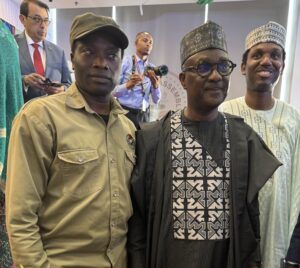
Ambassador Alistair, Rt Hon. Speaker Abbas and Honourable Munir
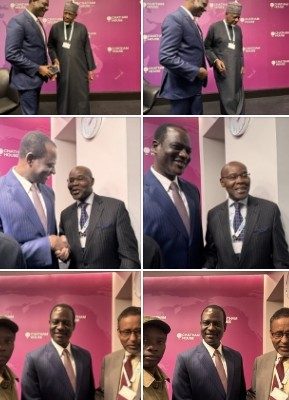
Behind the scenes, a UK-based mentor, Commandant Alistair, is helping these companies scale. By providing global expertise and networking support, Alistair is accelerating their growth and integration into international markets — demonstrating the power of transnational diaspora mentorship.
The synergy between government policy and private enterprise represents a turning point for Nigeria. With the National Assembly lending its weight to industrial reform, and local innovators stepping up, the country could begin to transform its economic base.
If successful, Nigeria’s renewed push for local production could help reduce foreign dependency, retain value, and generate millions of jobs — all while building a globally competitive “Made in Nigeria” brand.
—————————————————————————————————————————————
Your help to our media platform will support the delivery of the independent journalism and broadcast the world needs. Support us by making any contribution. Your donation and support allows us to be completely focus, deeply investigative and independent. It also affords us the opportunity to produce more programmes online which is a platform universally utilised.
Thank you.
Please click link to make – DONATION