

As political conversations gradually shift toward Nigeria’s 2027 general election, early alignments, quiet negotiations and strategic calculations are already shaping what could become another highly competitive national contest. While public debate often focuses on economic hardship and government performance, political observers note that elections in Nigeria are usually decided as much by structure and alliances as by public sentiment.
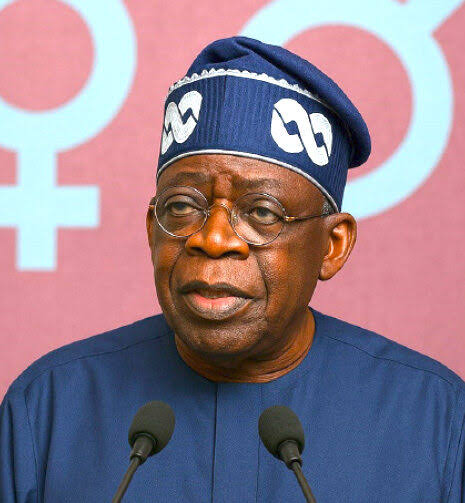
At this early stage, President Bola Ahmed Tinubu appears to remain one of the most structurally prepared political actors heading toward the next election cycle. This observation does not automatically translate into electoral victory, nor does it serve as an endorsement of government policies, but it reflects a long-standing pattern in Nigeria’s political history where organisation, networks and political endurance often determine outcomes.
Tinubu’s political strength did not begin with his presidency. For more than two decades, he has remained deeply involved in political coalition building, beginning from the post-June 12 democratic era through the alliances that contributed to the 2015 electoral victory that brought Muhammadu Buhari to power. Over the years, he built alliances across regions, supported candidates, survived political setbacks and maintained a wide political network that still shapes national politics today.
His political relationships over time with figures such as Atiku Abubakar and Nuhu Ribadu also mean he entered office already familiar with many personalities now considered potential challengers in 2027.
One major demonstration of his political resilience came during the 2022 APC presidential primary, where he secured the ruling party’s ticket despite strong opposition from powerful political interests, and before he became president or controlled federal institutions. Many analysts still view that primary victory as one of the strongest indicators of his long-term political organisation and negotiation strength.
Now as president, Tinubu combines the advantages of incumbency with an already established political structure. Like former presidents Olusegun Obasanjo, Umaru Musa Yar’Adua, Goodluck Jonathan and Muhammadu Buhari, the constitutional powers of presidential appointments naturally expand political influence across ministries, agencies and institutions. In Tinubu’s case, this institutional influence sits on top of an already mature political network.
The electoral calendar may also favour early organisation. With party primaries expected well ahead of the 2027 elections, parties that are already united around a central candidate may have an advantage. At present, the ruling All Progressives Congress appears more coordinated around one likely candidate than major opposition parties, many of which are still dealing with internal leadership issues and coalition discussions.
The Peoples Democratic Party continues to face internal divisions, while the Labour Party still struggles with leadership uncertainty. Smaller parties such as the African Democratic Congress are involved in coalition conversations but have yet to present a clear national structure capable of matching the ruling party’s machinery.
Several prominent political figures are already being mentioned as possible contenders, including Peter Obi, Atiku Abubakar, Rotimi Amaechi, Seyi Makinde, Rabiu Kwankwaso and Adebayo Adewole. However, Nigerian elections are rarely won by popular names alone. Success often depends on polling-unit agents, ward coordination, vote collation systems, legal teams and nationwide party structures.
Another factor currently strengthening the ruling party is the steady defection of governors, lawmakers and influential political actors into the APC. In Nigerian politics, defections often reflect where politicians see long-term political stability, negotiation power and future opportunities.
However, frequent defections also expose a weakness in Nigeria’s democratic system. In many established democracies, elected officials who switch parties are often required to seek a fresh mandate through by-elections. In Nigeria, politicians frequently change parties while retaining seats won under different party platforms, a practice some analysts argue weakens ideological accountability and party discipline.
Despite the ruling party’s structural advantages, economic hardship remains a major political risk heading toward 2027. Inflation, cost of living pressures, exchange-rate instability, subsidy removal effects and security challenges continue to shape public opinion. However, history suggests that economic dissatisfaction alone does not remove incumbents unless opposition parties successfully convert public frustration into organised electoral strength.
Political communication may also become a factor. Some of the most vocal defenders of the government today were once among its strongest critics, and sudden political reversals sometimes create public scepticism rather than new support. In politics, credibility often influences voters more than the loudness of political messaging.
One of the most important political variables remains former President Goodluck Jonathan, who still retains considerable acceptance in parts of northern Nigeria. Some political actors may view him as a possible consensus southern candidate capable of serving as a transitional one-term president if he returns to active politics. His potential role continues to feature quietly in long-term political calculations, alongside Atiku Abubakar, who remains a consistent figure in Nigeria’s presidential politics.
However, many political observers believe the most significant potential challenge to Tinubu could emerge if Peter Obi and Rabiu Kwankwaso eventually form a political alliance. Such a partnership could combine Obi’s strong support base among youths and urban voters in the South with Kwankwaso’s grassroots political structure, particularly in Kano and parts of the North-West.
This kind of alliance would also reflect Nigeria’s long-standing political balancing tradition involving regional and religious considerations in presidential tickets, which often influence national electoral acceptability.
Still, coalition discussions alone do not win elections. Any serious opposition alliance would require strong party structures, funding, legal teams, nationwide coordination and clear power-sharing agreements to become a viable electoral force.
Ultimately, the 2027 election may not simply become a contest between the APC and individual opposition parties. It could evolve into a contest between the ruling party and a broader national coalition, depending on how opposition forces organise over the next two years.
For now, the political landscape suggests that the biggest challenge to the ruling party will not come from public anger alone, social media campaigns or elite criticism, but from a single, well-organised opposition candidate backed by a united structure, strong funding, legal preparation and disciplined nationwide field operations.
Until such a structure emerges, Tinubu enters the road to 2027 not only as the incumbent president but also as one of the most politically organised figures on Nigeria’s national stage and in Nigerian politics, organisation has often proven more decisive than sentiment.
—————————————————————————————————————————————
Your help to our media platform will support the delivery of the independent journalism and broadcast the world needs. Support us by making any contribution. Your donation and support allows us to be completely focus, deeply investigative and independent. It also affords us the opportunity to produce more programmes online which is a platform universally utilised.
Thank you.
Please click link to make – DONATION