


As political activities gradually gather momentum ahead of Nigeria’s 2027 general election, the emergence of Oyo State Governor, Seyi Makinde, as the reported presidential candidate of the Allied Peoples Movement (APM) has added a new dimension to the evolving national political landscape.
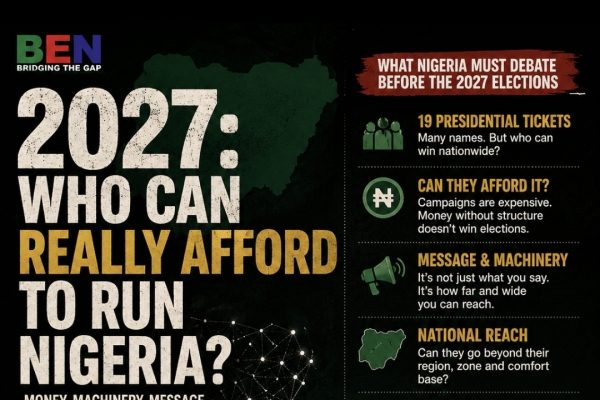
While the major parties are still managing internal consultations, alliances and strategic calculations, political observers note that the 2027 race is beginning to reveal some of the personalities likely to dominate public debate in the coming months.
Among those already associated with presidential conversations are incumbent President Bola Ahmed Tinubu, former Vice President Atiku Abubakar, Labour Party figure Peter Obi and now Governor Makinde, whose profile continues to grow beyond the South-West political space.
 Reacting to Makinde’s emergence, former House of Representatives member, Rita Orji, described the development as a significant moment for Nigerians seeking alternative leadership options and renewed national direction. According to reports, she praised Makinde’s record in governance, infrastructure, education, agriculture and economic development, arguing that his experience in Oyo State has strengthened his national credentials.
Rita Orji is widely known in political and business circles as a former federal lawmaker who represented Ajeromi-Ifelodun Federal Constituency in Lagos State. Beyond politics, she has also been associated with legal practice and business interests, making her one of the more visible voices within emerging political realignments.
Whether one agrees with her assessment or not, Makinde’s growing national relevance is increasingly difficult to ignore.
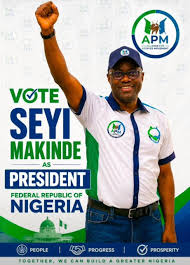 Since assuming office in Oyo State in 2019, the governor has built a reputation around infrastructure renewal, fiscal reforms, agribusiness investment, education interventions and efforts to attract private-sector participation into state development. Supporters point to these achievements as evidence of administrative capacity, while critics argue that national leadership presents a far more complex challenge than state governance.
Nonetheless, one factor working in Makinde’s favour is perception. In a political environment where many Nigerians continue to express frustration over economic hardship, insecurity and declining trust in institutions, candidates viewed as relatively pragmatic, accessible and reform-oriented may find increasing public attention.
His reported “Reset Nigeria” message also appears designed to position him as a bridge between established political structures and voters seeking a fresh governance approach.
The road to 2027 remains long and highly unpredictable. Alliances will shift, political calculations will evolve and new contenders may yet emerge. However, the inclusion of Governor Makinde in the early presidential conversation reflects a broader reality: Nigerians are actively searching for leadership alternatives capable of addressing economic challenges, strengthening national unity and restoring confidence in governance.
For now, Makinde has secured what every aspiring national leader seeks at the beginning of a presidential journey — relevance in the national conversation.
Whether that relevance eventually translates into widespread electoral support remains one of the political questions Nigeria will answer between now and 2027.
—————————————————————————————————————————————
Your help to our media platform will support the delivery of the independent journalism and broadcast the world needs. Support us by making any contribution. Your donation and support allows us to be completely focus, deeply investigative and independent. It also affords us the opportunity to produce more programmes online which is a platform universally utilised.
Thank you.
Please click link to make – DONATION