

As campaigning begins, Nigeria’s crowded opposition field raises a bigger question: can fragmented challengers overcome an APC that appears increasingly organised – or will another split opposition vote hand the advantage to the incumbent?
 Nigeria’s 2027 presidential race is moving from political positioning to open campaigning, with the campaign period approaching and INEC’s timetable placing the presidential and National Assembly election on 20 February 2027.
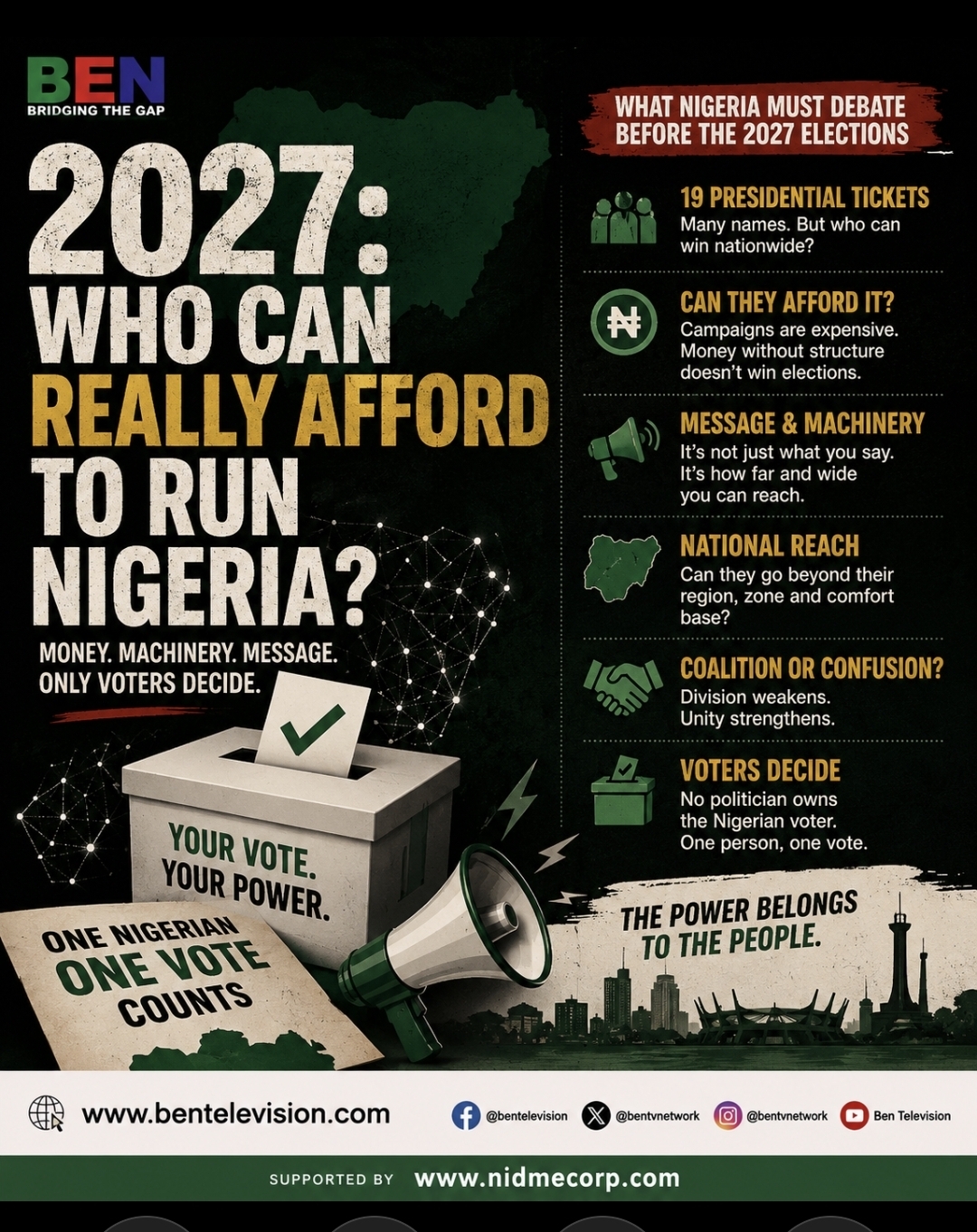
On paper, the country is heading towards another crowded presidential contest. In reality, however, the number of candidates capable of mounting a truly nationwide campaign is considerably smaller.
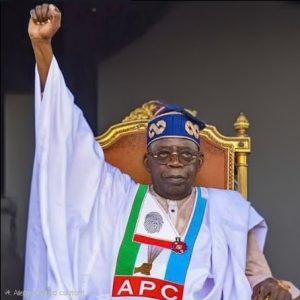
At the centre is President Bola Ahmed Tinubu, seeking another term for the APC alongside Vice-President Kashim Shettima. The APC has retained the same presidential ticket that won in 2023.
The 2023 numbers explain why fragmentation matters.
 Tinubu received 8.79 million votes, Atiku Abubakar 6.98 million, Peter Obi 6.10 million and Rabiu Kwankwaso 1.50 million. INEC’s official election-results portal records the 2023 presidential election, while the final result established the four leading political forces of that election.
The extraordinary feature of 2027 is that several of those familiar personalities are returning – but with potentially different alliances and, in some cases, stronger political structures around them.
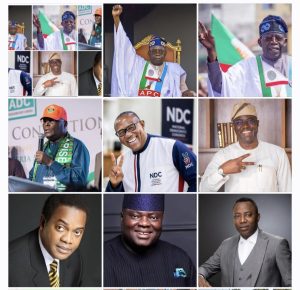
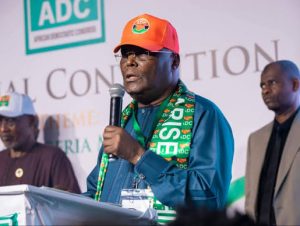
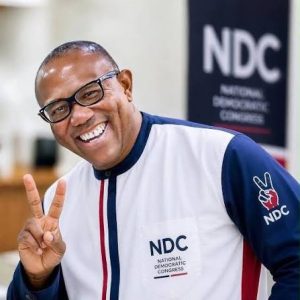
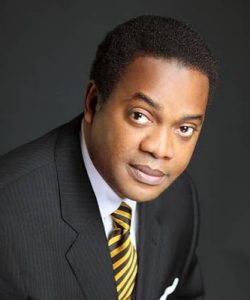
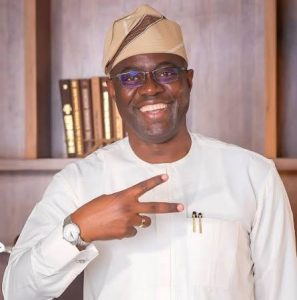
Atiku Abubakar, now associated with the ADC, is making another presidential attempt. Peter Obi is seeking the presidency again under the NDC, while Rabiu Kwankwaso remains a major northern political figure. Seyi Makinde, associated with the APM ticket, brings the weight and visibility of a sitting governor. Donald Duke, contesting under the PRP, brings previous presidential experience and a well-known political and business profile. Prince Adewole Adebayo is also back as the SDP presidential candidate after contesting the 2023 election under the same party.
Then there is Sandy Onor, the PDP candidate submitted by the Wike-backed faction of the party, while Omoyele Sowore returns under the AAC. Other parties, including LP, YPP, ZLP, NRM, ADP, AA, Boot Party and others, add further candidates to an already crowded field.
This produces a fascinating paradox.
The opposition may arguably have more recognisable political personalities than it had in 2023, yet that could make the mathematics worse rather than better.
If Atiku, Obi, Kwankwaso, Makinde, Duke, Adebayo, Onor, Sowore and other candidates continue independently, each must persuade Nigerians that his or her party can build a national coalition large enough to overcome the APC.
That means they must do more than produce manifestos. They must take their messages into all six geopolitical zones, establish structures across states and local governments, recruit and finance polling-unit agents, sustain media campaigns, mobilise supporters and protect their votes.
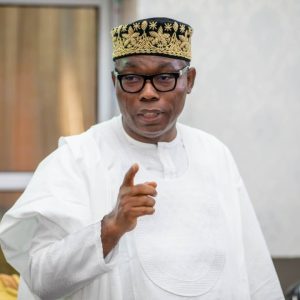
Prince Adewole
And this is where money and political machinery become unavoidable parts of the conversation.
A presidential election in Nigeria is enormously expensive. The serious question is therefore not simply who is wealthy? but who has the resources and organisational network to sustain a national campaign from the opening rally to the final declaration?
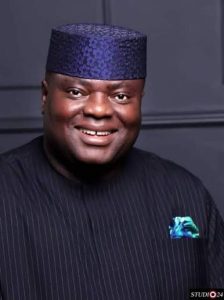
Senator Sandy Onoh PDP
The APC appears to have strengthened its political footprint substantially since 2023, including through the movement of governors and political heavyweights into its orbit. Reports of the party controlling more than 30 states’ political structures are now part of the broader 2027 political conversation, although the exact strength of any party should ultimately be measured by votes rather than the number of governors formally associated with it.
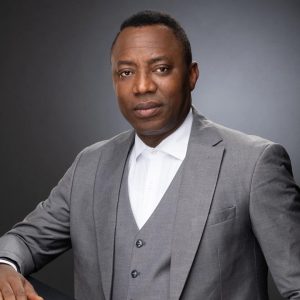
Sowore Omoyele
The opposition faces a different problem.
There have also been reports and allegations of political pressure around venues and access to campaign facilities in high profiled places. Such claims require careful verification, but if opposition parties believe that access to public or privately controlled spaces is being restricted, that becomes another test of whether they can compete with an incumbent-backed political machine. Osun state election gives a template.
And this is where Britain offers an interesting – though not identical lesson.
In the UK’s 2024 general election, Nigel Farage won Clacton for Reform UK with 21,225 votes, or 46.2%, defeating the Conservative candidate’s 27.9%. Farage had attempted parliamentary politics repeatedly before finally winning the seat in 2024.
The lesson is not that Nigeria operates like Britain; it does not. Britain’s first-past-the-post system is fundamentally different from Nigeria’s presidential system.
The lesson is political: a fragmented field can produce an unexpected winner when one candidate successfully consolidates a sufficiently large bloc while others divide the remainder.
Farage’s subsequent 2026 Clacton by-election victory with 63% in a contest boycotted by the major parties and reinforces another point: political identity, organisation and a recognisable message can matter enormously when voters know exactly what a candidate represents.
For Nigeria, the question is whether opposition politicians have learnt the opposite lesson from 2023.
Tinubu did not need to defeat a single opposition candidate in 2023. He defeated a divided field.
In 2027, if anything, the opposition field could be more divided by recognisable personalities.
That raises a provocative question: when politicians announce that they will not support one candidate, change parties at the last minute, reject another candidate’s endorsement or demand that everyone rallies behind them, do they really believe their personal political following will automatically move with them?
A voter has one presidential vote.
An endorsement does not come with a guaranteed ballot box.
A governor does not own his state’s voters.
A party leader does not own the electorate.
And political wealth does not automatically become electoral support.
This may ultimately be the most important debate of the 2027 election.
The APC must still persuade Nigerians that its record deserves another mandate. The opposition must convince Nigerians not only that it can defeat Tinubu, but that it can govern differently.
But if the opposition remains divided among Atiku, Obi, Kwankwaso, Makinde, Duke, Adebayo, Onor, Sowore and others, while the APC consolidates its structures, the central question may become less about who has the best candidate and more about who has successfully consolidated the largest coalition.
Nigeria’s voters will decide.
Each Nigerian voter has one vote.
And ultimately, no politician – however wealthy, powerful, popular or well connected owns it.
“No politician owns the Nigerian voter.”
—————————————————————————————————————————————
Your help to our media platform will support the delivery of the independent journalism and broadcast the world needs. Support us by making any contribution. Your donation and support allows us to be completely focus, deeply investigative and independent. It also affords us the opportunity to produce more programmes online which is a platform universally utilised.
Thank you.
Please click link to make – DONATION