

Moments of national debate do more than expose political differences; they reveal the values a nation is prepared to defend or quietly abandon. Nigeria now finds itself at such a moment again.
 Recent public remarks by the Honourable Minister of Arts, Culture and Creative Economy, Hannatu Musa Musawa, have ignited intense reactions across political and religious lines. Some applaud her courage; others attempt to weaponise her intervention for sectional advantage. But stripped of emotion, political branding, and opportunism, the issue before Nigeria is neither about personalities nor entitlement. It is about balance, inclusion, and the long-term stability of a fragile federation.
Nigeria’s Unwritten Stabilising Principle
For decades, Nigeria has operated, by necessity rather than law – an informal but widely respected balancing framework:
- North and South
- Christian and Muslim
This arrangement was not sentimental. It was pragmatic. It emerged from experience and helped manage diversity, reduce tension, and sustain a sense of belonging in a country shaped by deep historical, ethnic, and religious fault lines.
2023 Was an Exception, Not a New Standard
 The Muslim–Muslim presidential ticket of 2023 was widely perceived, both locally and internationally, as a departure from this stabilising convention. Many Nigerians – particularly Northern Christians and Christians across the South; felt excluded. International observers read it through the broader global narrative of religious tension and inclusion in Nigeria.
 That decision may have succeeded electorally, but political success does not automatically confer moral or national legitimacy. Exceptions do not become norms simply because they win elections.
This Is Not a North vs South Debate
Framing the current discussion as a Northern demand for dominance is misleading and intellectually dishonest. The North is not a religious monolith. It is home to Christians and Muslims, and to a rich diversity of ethnic nationalities.
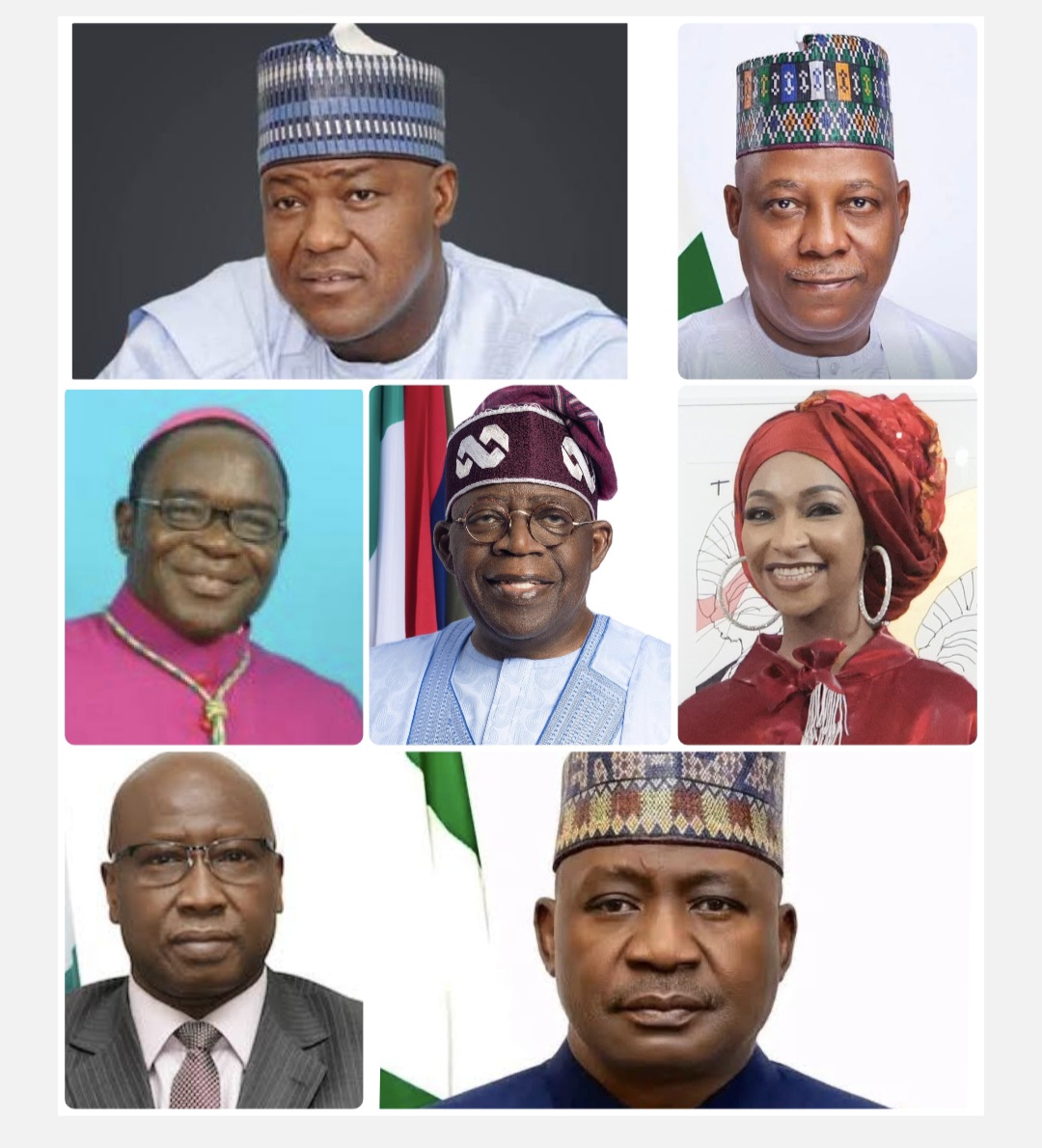
 Northern Christian leaders such as Rt. Hon. Yakubu Dogara, Boss Mustapha, Bishop Matthew Kukah, and even Nigeria’s current Chief of Defence Staff, General Christopher Musa, clearly demonstrate that competence, loyalty, and leadership in the North are not defined by religion.
 The real national question is therefore simple and unavoidable:
Can Nigeria afford another same-faith presidential ticket in 2027?
If unity truly matters, the honest answer is no.
Equity Is Not Exclusion
 Calling for religious balance is not an attack on Muslims, nor is it a rejection of Northern political relevance. The vice-presidential slot, by rotation, belongs to the North – but nothing in equity demands that it must always belong to one faith.
Since the era of Shehu Shagari to date, Nigeria has never produced a Northern Christian President or Vice President. That historical imbalance exists despite the abundance of qualified Northern Christian leaders in public service, security, governance, and diplomacy.
Is this the picture of unity we wish to defend?
Former President Muhammadu Buhari, a Northern Muslim, recognised this reality when he selected a Southern Christian as Vice President. So did:
- Umaru Musa Yar’Adua (Northern Muslim) with Goodluck Jonathan (Southern Christian)
- Goodluck Jonathan (Southern Christian) with Namadi Sambo (Northern Muslim)
Balance, historically, has strengthened Nigeria—not weakened it.
Global Lessons: Where Balance Is Non-Negotiable
Nigeria is not alone in this reality.
Lebanon, despite its imperfections, constitutionally balances its leadership:
- President (Christian)
- Prime Minister (Muslim)
- Speaker (Muslim)
Merit alone does not override balance, because history has taught them the cost of exclusion.
Similarly, in Switzerland, power is deliberately shared across linguistic, religious, and regional lines within its Federal Council. Stability is preserved not by dominance, but by inclusion.
These nations understand a simple truth: diverse societies survive through structured fairness, not raw political strength.
Leadership Demands Sacrifice
True statesmanship is not measured by how much power is accumulated, but by how wisely it is distributed. If Nigeria is serious about healing divisions and correcting global perceptions around exclusion, then patriotic restraint – not political bravado; must guide decisions ahead of 2027.
Allowing space for a Northern Christian Vice President does not diminish the North. It strengthens Nigeria. It does not erase future opportunities for Muslims or any region; it simply restores equilibrium.
A Call for Mature National Conversation
Hannatu Musa Musawa deserves recognition for opening a conversation many prefer to avoid. But courage must be matched with clarity. The objective is not religious triumphalism or ethnic consolidation; it is national balance. It will be wrong for a Christian to picked a Christian running mate in the context of national offices etc.
Nigeria does not need louder slogans.
It needs wiser compromises.
It needs leaders who understand that unity is not automatic – it is deliberately maintained.
History will remember not who shouted the loudest, but who chose fairness over faction, balance over bravado, and nation over self. This is where the leaders should be counted, and have a say in who becomes the next Vice President with credits to them and a strong position for the future elections and offices. Part of negotiations and balancing the system.
As 2027 approaches, Nigeria must rise above sentiment and return to the principles that have kept it standing:
equity, inclusion, and balance.
Profiles: Key Northern Christian Figures Being Mentioned
Bishop Matthew Hassan Kukah
 Bishop Kukah is a respected cleric, intellectual, and public moral voice. Known for bridge-building across faiths and regions, he combines deep Northern roots with international credibility. His influence lies less in partisan politics and more in conscience, dialogue, and national cohesion.
Boss Mustapha
 Boss Mustapha is a seasoned administrator and former Secretary to the Government of the Federation. Quiet, methodical, and widely regarded as loyal to institutions rather than factions, he represents continuity, competence, and Northern political depth without religious or ethnic extremism.
Rt. Hon. Yakubu Dogara
 A former Speaker of the House of Representatives, Dogara is one of the most prominent Northern Christian politicians of his generation. He is known for legislative strength, political courage, and cross-regional appeal, with a track record of defending constitutional balance and national inclusion.
General Christopher Musa
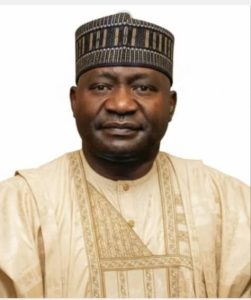 Nigeria’s current Minister of Defence, a former Chief of Defence Staff, General Musa represents professionalism, discipline, and national service above politics. Now firmly rooted and changing the nation’s successes. A Northern Christian with deep security experience, he symbolises unity through duty. His profile reflects stability, patriotism, and credibility at home and with international partners.

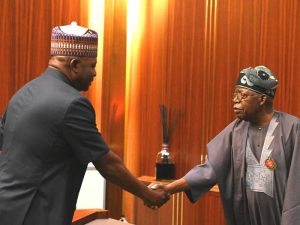
- Tinubu 2023 campaign poster

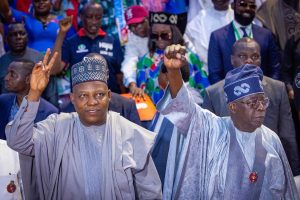
- Tinubu & Kashim Shettima (Northern Muslim leadership option for 2023)
- Tinubu & Boss Mustapha (competence beyond religion in for 2023)
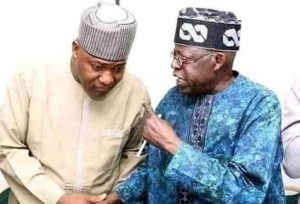
- Tinubu & Yakubu Dogara (2023 option)
These images visually reinforce the argument without been emotionally Charged. They were all presented in 2022 for the 2023 elections by various groups.
—————————————————————————————————————————————
Your help to our media platform will support the delivery of the independent journalism and broadcast the world needs. Support us by making any contribution. Your donation and support allows us to be completely focus, deeply investigative and independent. It also affords us the opportunity to produce more programmes online which is a platform universally utilised.
Thank you.
Please click link to make – DONATION