

By ifeoma Onyekachi
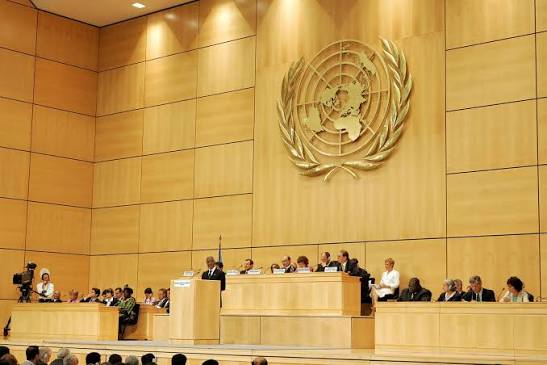
Nigeria, alongside Ghana and 121 other United Nations member states, has adopted a landmark resolution declaring the transatlantic slave trade as the gravest crime against humanity.
The resolution, spearheaded by Ghana, received 123 votes in favour at the UN General Assembly, while Argentina, Israel and the United States voted against it. Fifty-two countries abstained from the vote.
The resolution was adopted as part of activities marking the Second International Decade for People of African Descent and the African Union’s Decade of Reparations.
Speaking ahead of the vote on behalf of the 54-member African Group, Ghana’s President, John Mahama, said the resolution was a step toward truth, healing and justice.
He noted that for more than 400 years, millions of Africans were forcibly taken from the continent, transported across the Atlantic and subjected to slavery in the Americas, where they worked on plantations under harsh and inhumane conditions.
According to the resolution, the trafficking of enslaved Africans and racialised chattel slavery represents the gravest crime against humanity because of its scale, brutality, systemic nature and lasting global consequences.
The document also stressed that the impact of slavery continues to shape modern economic and social systems, including racial discrimination and inequality affecting people of African descent worldwide.
The resolution further affirmed that addressing historical injustices affecting Africa and the African diaspora is essential for promoting justice, human rights, dignity and healing, adding that reparations are a concrete step toward remedying the legacy of slavery.
President of the UN General Assembly, Annalena Baerbock, described slavery and the slave trade as among the gravest human rights violations in history, noting that the practice violated the principles of the United Nations Charter and the Universal Declaration of Human Rights.
She added that African countries also suffered long-term economic and social losses due to the removal of millions of their people, describing the slave trade as a form of “mass resource extraction.”
UN Secretary-General António Guterres called on the international community to confront the lasting legacies of slavery, including inequality and systemic racism, and to promote inclusive development and equal opportunities for people of African descent.
He urged countries to support reparatory justice, ensure equal access to education, healthcare, employment and housing, and promote Africa’s participation in global financial institutions and international decision-making bodies.
However, the United States opposed the resolution, with its representative to the UN Economic and Social Council, Dan Negrea, stating that the U.S. does not recognise a legal right to reparations for historical wrongs that were not illegal under international law at the time they occurred.
—————————————————————————————————————————————
Your help to our media platform will support the delivery of the independent journalism and broadcast the world needs. Support us by making any contribution. Your donation and support allows us to be completely focus, deeply investigative and independent. It also affords us the opportunity to produce more programmes online which is a platform universally utilised.
Thank you.
Please click link to make – DONATION