

The race to succeed António Guterres as Secretary-General of the United Nations is entering an important stage, with Member States putting forward candidates for one of the most influential international positions in the world.
 The Secretary-General serves as the chief administrative officer of the United Nations and plays a central diplomatic role in bringing international attention to global peace, security, development, human rights and humanitarian challenges.
The UN’s formal process requires candidates to be submitted by Member States. The General Assembly ultimately appoints the Secretary-General following a recommendation from the Security Council.
The United Nations has established clear expectations for candidates: the highest standards of efficiency, competence and integrity; proven leadership and managerial ability; extensive international-relations experience; and strong diplomatic, communication and multilingual capabilities.
Against that background, a number of candidates have already been formally presented by Member States.
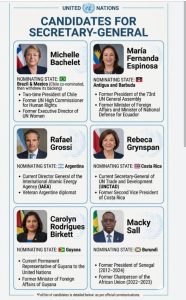
UN
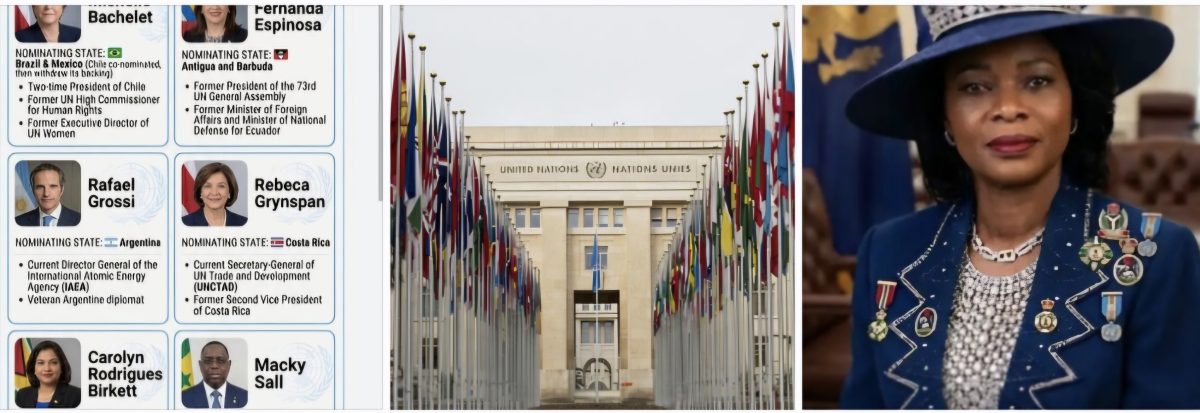
Rafael Mariano Grossi — Argentina
Director General of the International Atomic Energy Agency and a senior diplomat with extensive experience in nuclear diplomacy and multilateral international relations.
Rebeca Grynspan — Costa Rica
Former Vice-President of Costa Rica and former Secretary-General of UNCTAD, with extensive experience in economics, development and international multilateral institutions.
Macky Sall — Burundi
Former President of Senegal, bringing extensive experience in national leadership, African regional affairs, international diplomacy and global political engagement.
María Fernanda Espinosa Garcés — Antigua and Barbuda
Former Ecuadorian Foreign Minister and former President of the UN General Assembly, with a long record of international diplomacy and multilateral leadership.
Carolyn Rodrigues Birkett — Guyana
Former Foreign Minister of Guyana and experienced diplomat with a substantial background in international affairs, development and multilateral cooperation.
Olara Otunnu — Uganda
Former Ugandan Foreign Minister and former UN Under-Secretary-General and Special Representative for Children and Armed Conflict.
These profiles demonstrate the range of governmental, diplomatic and international institutional experience already represented in the succession process.
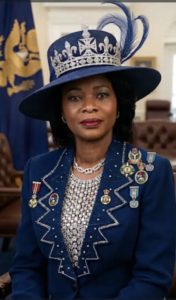 It is against this international background that the name of Queen Akasoba Zainab Duke-Abiola has now entered the wider African conversation.
Her proposed candidature has been endorsed by the African Policy and Research Consortium (APRC), through a Nigerian national think-tank initiative, with the objective of encouraging Nigeria to consider and potentially adopt her candidature for the UN Secretary-Generalship.
The significance of the endorsement is that an African policy organisation has publicly placed her name before the Nigerian government and the wider public and is advocating that Nigeria consider putting her forward through the official UN process.
So, who is Queen Akasoba Duke-Abiola?
Information obtained by BEN TV presents a career spanning law, government, diplomacy, academia, governance, security, international affairs, sustainable development, energy, arbitration, peacebuilding and public policy.
A comprehensive curriculum vitae with various academic certificates and official letters and documents from universities and government institutions supporting aspects of the professional and academic record expected for major international levels and offices.
Queen Duke-Abiola is a British-trained Barrister-at-Law, called to legal practice in both the United Kingdom and Nigeria. Her stated areas of expertise include constitutional law, public international law, human rights, international arbitration, negotiation and governance.
She served as a Director in the Presidency and later as an Adviser on international strategic engagement, with responsibilities relating to United Nations initiatives, G8 initiatives, NATO-related strategic programmes, African Union affairs, ECOWAS governance, international diplomacy and multilateral cooperation. She is a SEC 20 Member of NIPSS.
It also states that she became the first Chief Legal Consultant of the Nigeria Police Force, with responsibilities spanning constitutional and statutory legal advice, security-sector legal policy, institutional governance, legal drafting and rule-of-law matters.
Her academic and professional background, according to the material documents, includes political science, professional legal education, governance and public policy, security and strategic studies, peace and conflict studies, sustainable development, petroleum and renewable energy, gender studies, entrepreneurship and innovation, and migration, border and demography studies.
She has also worked as a university lecturer, researcher, international arbitrator, negotiator, human-rights advocate and public-policy strategist, with academic engagement involving universities including the University of Abuja, Imo State University among others.
Her profile further records her as a Distinguished Member of the National Institute (mni) and identifies a long-standing interest in international diplomacy, governance, peace and security, sustainable development, gender inclusion, entrepreneurship and innovation.
The next major question is therefore not whether an African organisation can support or endorse her. It clearly can.
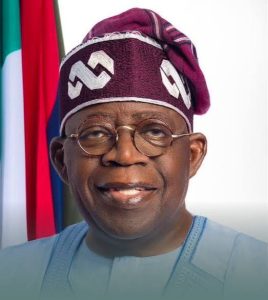 The question is whether Nigeria will decide to adopt the candidature and formally present Duke-Abiola as Nigeria’s candidate to the United Nations.
That decision belongs to the Nigerian government within the established intergovernmental process. A formal UN candidature is fundamentally different from an endorsement by a think tank, civil-society organisation or advocacy group.
If Nigeria chooses to proceed, the candidature would enter the formal international arena where the United Nations’ established procedures, Member States and ultimately the Security Council and General Assembly determine the outcome.
For Queen Duke-Abiola, this creates an opportunity to place her experience, qualifications and vision before the Nigerian government and, if formally submitted, before the international community.
For Nigeria, it presents another opportunity to consider how the country seeks representation at the highest levels of global governance.
And for Africa, the wider question remains important: whether the continent can increasingly place credible African voices at the centre of institutions responsible for shaping international peace, security, development and global cooperation.
At this stage, therefore, the Duke-Abiola proposal should be understood for exactly what it is: an African-backed candidature seeking consideration and possible adoption by Nigeria.
The final decision and process remain in the hands of the appropriate institutions.
—————————————————————————————————————————————
Your help to our media platform will support the delivery of the independent journalism and broadcast the world needs. Support us by making any contribution. Your donation and support allows us to be completely focus, deeply investigative and independent. It also affords us the opportunity to produce more programmes online which is a platform universally utilised.
Thank you.
Please click link to make – DONATION