


In every democracy, the power to forgive stands as one of the most profound symbols of justice tempered with compassion. Section 175 of the 1999 Constitution (as amended) grants the President of the Federal Republic of Nigeria the prerogative of mercy — a constitutional authority to pardon, commute, remit, or substitute punishment for persons convicted under federal laws.
 It provides that the President may:
(a) grant any person concerned with or convicted of any offence created by an Act of the National Assembly a pardon, either free or subject to lawful conditions;
(b) grant to any person a respite, either for an indefinite or for a specified period, of the execution of any punishment imposed on that person;
(c) substitute a less severe form of punishment for any punishment imposed; or
(d) remit the whole or any part of any punishment imposed or any penalty due to the State.
The Constitution further stipulates that such powers shall be exercised after consultation with the Council of State and may extend to persons convicted under military law.
This constitutional provision, often referred to as the prerogative of mercy, embodies both clemency and pardon. Clemency represents an act of leniency or compassion from the consequences of conviction, while pardon is an official forgiveness for a crime — restoring certain rights and offering moral rehabilitation.
Yet, this power is not without boundaries. It must be guided by conscience, reason, and responsibility. The President, though vested with discretion, holds that discretion in trust for the people. To pardon, therefore, is not merely an act of executive grace but a moral statement of national forgiveness — one that should reflect the collective will of Nigerians rather than the sentiments of a few.
While the Constitution does not restrict the types of offences eligible for pardon, wisdom demands that such discretion be exercised judiciously and in the public interest. A visit to Nigeria’s correctional centres reveals thousands of citizens awaiting trial or serving time for minor offences, often born of poverty or circumstance. These individuals — the petty offenders, the economically displaced, and those wronged by systemic inefficiency — are the ones most deserving of mercy.

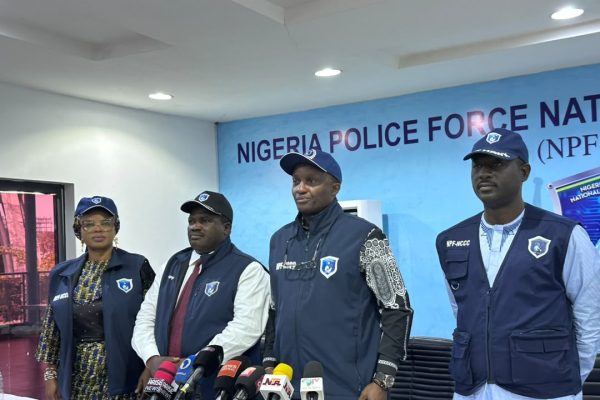
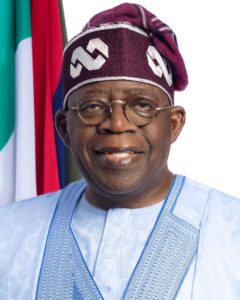
NDLEA Chairman and President Bola
However, the recent presidential pardon granted to seventy convicted drug lords has raised deep concerns across moral, legal, and security circles. It represents a departure from global standards and threatens to undermine the dedicated efforts of the National Drug Law Enforcement Agency (NDLEA) and its officers, who risk their lives daily in the war against narcotics. Years of intelligence gathering, investigation, and prosecution have been nullified in one sweep of executive discretion.
This decision, unprecedented both in Nigeria’s history and internationally, poses grave risks. It endangers the safety of NDLEA operatives, prosecutors, and judges who were instrumental in securing convictions against these traffickers. Drug syndicates are rarely forgiving; vengeance and intimidation are part of their code. Releasing convicted traffickers without comprehensive rehabilitation, supervision, or psychological evaluation reintroduces danger into society and undermines confidence in the rule of law.
Globally, large-scale pardons of this nature are rare. In the United States, clemency for drug offences typically targets non-violent offenders or those sentenced under outdated laws. In Morocco, recent royal pardons covered low-level cannabis farmers following a shift in cultivation policy — not drug cartels. Even in Peru, where several hundred drug traffickers were pardoned in 2011, the action sparked a national scandal and was later investigated for abuse of discretion.
By contrast, Nigeria’s decision appears to extend mercy without a corresponding framework of accountability or rehabilitation. The justification that some offenders were pardoned due to age, vocational training, or good conduct does not sufficiently address the moral and social implications. Skills acquisition, while commendable, does not erase criminal intent nor guarantee behavioural reform.
The broader implication of such pardons is reputational. It sends a confusing message to international partners that Nigeria may be softening its stance in the global fight against narcotics, a perception that could weaken cooperation, intelligence sharing, and credibility within anti-drug networks such as the United Nations Office on Drugs and Crime (UNODC). Nations thrive not only on policy but on perception; our international image as a serious, law-abiding state must never be compromised.
Mercy, though noble, loses its virtue when misapplied. A government’s power to forgive must never become a tool for recycling privilege or shielding the powerful. To release those convicted of drug trafficking, illegal mining, human trafficking, and financial crimes without a transparent, rehabilitative process is to erode public trust and diminish justice itself.
If mercy must be shown, let it begin with the forgotten; the poor, the voiceless, and those unjustly detained for petty or non-violent offences. Only then can the prerogative of mercy truly serve its constitutional and moral purpose: to heal rather than to harm, to restore rather than to reward impunity. Dino Melaye
About Senator Dino Melaye
 Senator Dino Melaye is a lawyer, human rights advocate, and former member of the Nigerian Senate who represented Kogi West Senatorial District. A passionate voice for justice, transparency, and democratic accountability, he is widely known for his advocacy on governance reform, rule of law, and citizen empowerment. Beyond politics, he is a respected public analyst and “Democratic Evangelist,” committed to promoting responsible leadership and the protection of Nigeria’s democratic institutions.
—————————————————————————————————————————————
Your help to our media platform will support the delivery of the independent journalism and broadcast the world needs. Support us by making any contribution. Your donation and support allows us to be completely focus, deeply investigative and independent. It also affords us the opportunity to produce more programmes online which is a platform universally utilised.
Thank you.
Please click link to make – DONATION