

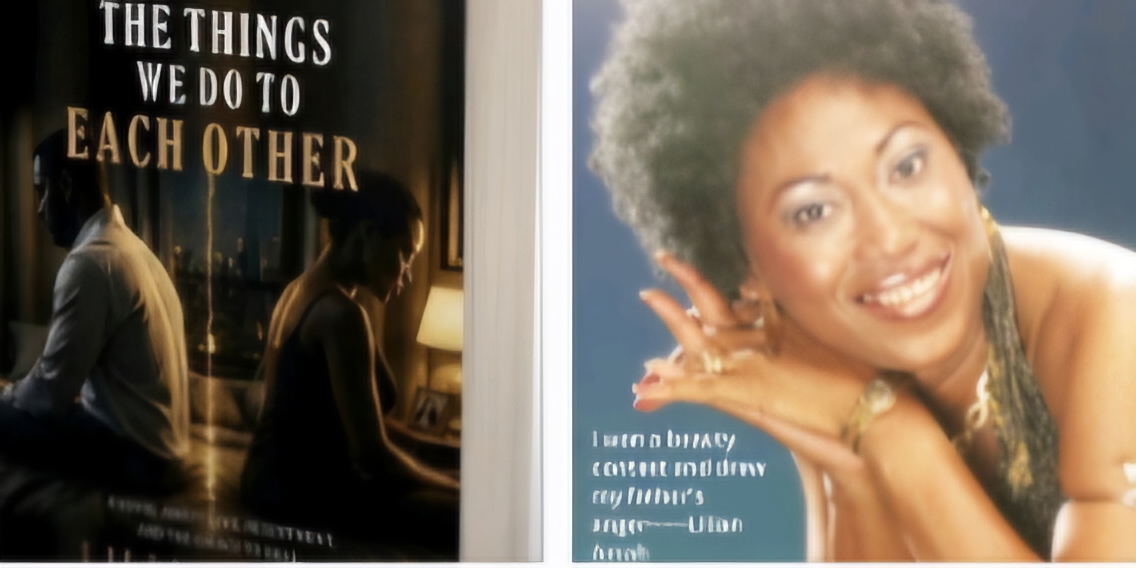
LAGOS, NIGERIA — She smiles. Then she writes. Somewhere between those two silent acts, author Lilian Amah manages to dismantle our deepest certainties, expose our cultural contradictions, and drag the ghosts of our private realities into the light.
The most dangerous storytellers, after all, are rarely the ones shouting from the rooftops. They are the quiet investigators who force us to recognise ourselves in the mirror of their narratives—even when the reflection makes us flinch.

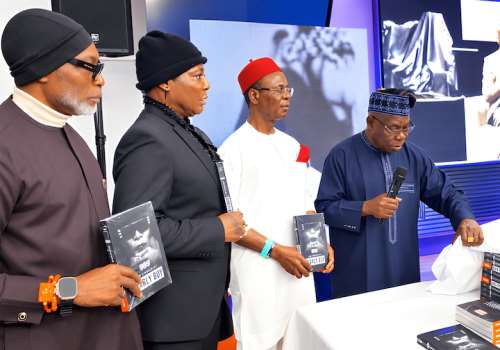
Days after the high-profile launch of Amah’s latest book, The Things We Do to Each Other, the haunting gravity of its title refuses to fade from the cultural conversation. Renowned art patriarch and commentator Teju Kareem recently reflected on the text, noting that the title itself acts as a lingering psychological weight. It is an open invitation for humanity to sit before a mirror it routinely avoids.

Teju kareem , Niyi Coker and The President of Shining Tonight Studio
Borrowing an apt descriptor from filmmaker Zik Zulu Okafor, Kareem points to Amah as “The Wicked Storyteller.”
It is a title earned not from malice, but from a terrifying precision of perception. Amah possesses a rare ability to map out the emotional crimes we commit against one another while maintaining our masks of public innocence. Her stories slice through the sophisticated veneer of modern civilization to expose an uncomfortable, timeless truth: we are rarely broken by complete strangers. Most human scars arrive carrying familiar names. Most betrayals know our birthdays.
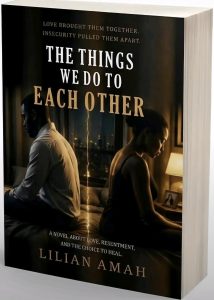 In The Things We Do to Each Other, fiction reads less like a collection of imagined tales and more like a stack of forensic evidence.
But Amah’s chillingly precise prose doesn’t stand alone in the contemporary Nigerian creative landscape. It finds an intellectual twin in the theatrical world with Esther’s Revenge, a gripping historical narrative currently captivating the cultural imagination.
Where Amah’s book asks, “What do we do to those we claim to love?”, Esther’s Revenge counters with a more volatile question: “What happens when the wounded finally answer history back?”
Both works are born from the raw material of human injury, yet they travel toward entirely different destinations. They prove that passion is a volatile alchemy—one capable of producing vengeance, forgiveness, or healing. In its most elevated state, that same passion produces enduring art.
This intersection of text and stage serves as a prologue to a much larger global dialogue. As the 17th Wole Soyinka International Cultural Exchange (WSICE) gathers momentum under the urgent theme of “Culture Beyond Borders,” a global audience is waiting. They are coming not merely to be entertained, but to deliberate.
The immediate question on the cultural docket is heavy: Should Esther’s Revenge live? Or die?
Ultimately, literature has spoken, and theatre is actively preparing its defense. As memory assembles its witnesses on the grand stage, civilization continues its longest, most grueling conversation somewhere in the gray space between revenge and reconciliation.
The final verdict, as it always does, belongs to history. But as the curtain rises, we are left to ponder the ultimate dilemma of the creative arts: Should writers comfort society, or are they born to disturb it?
—————————————————————————————————————————————
Your help to our media platform will support the delivery of the independent journalism and broadcast the world needs. Support us by making any contribution. Your donation and support allows us to be completely focus, deeply investigative and independent. It also affords us the opportunity to produce more programmes online which is a platform universally utilised.
Thank you.
Please click link to make – DONATION