

A Classic Civic Report on Proof, Silence, and the Weight of Truth in Nigeria
I. When a Country Reads Its Fears in the Daily News
 There are times in the life of a nation when headlines hold more power than facts and the suggestion of danger is enough to quiet public debate, times when we are called not to know but to believe. Nigeria is one such country apparently going through such a moment.
Since October 2025, Nigerians have been continually shocked by headlines, analyses, and official statements that purport to signal a suspected coup. The language has been stark, the stakes high, and the mood anxious. But for all its gravity, this alleged putsch is strangely inscrutable — known more by what’s been said about it than proven.
This disjuncture begs a troubling question: are we dealing with an actual and proven conspiracy against the Nigerian state, or are we grappling more with a script designed mainly in the echo chamber of office and media amplification? Is this the coup planned in smoke-filled rooms and thwarted at the last moment, or is it a “coup” that lives mainly in newspaper columns and press briefings?
The distinction matters. You don’t hydrogen-bomb a constitutional system on mere atmosphere. They need to be grounded in evidence, tested in public fora, and subject to scrutiny by law and reason. Anything less risks turning journalism into theater and justice into ritual.
II. The Newspaper Coup: When Accusation Exceeds Proof
The first discordant note struck by the putative coup narrative is that it is so dependent on reportage rather than revelation. Nigerians have been reading about arrests, detentions, investigations, and trials. They were informed of conspiracies, motives, and objectives. But so far, they have seen little hard-and-fast, verifiable evidence.
A coup, by definition, is an act of coordination. It needs some planning, coordination, resource allocation, and a common purpose from those behind it. When such a conspiracy takes place, it does so in the open: papers, tapes, money trails, chains of command, and time lines. But in the current case, the public record is thin.
Instead, what is known has come filtered through unnamed sources, indirect briefings, and second-hand summaries. The upshot is that we face a paradox: The charge is enormous, but the publicly available evidence at present is remarkably weak.
This isn’t only a journalistic failure; it’s a civic peril. Unproven claims of treason grow powerful not because they have evidence behind them but, quite to the contrary, because neither you nor I can keep up with our repetitions. Eventually, repetition sounds like the truth, and questioning seems disloyal.
III. Journalism and the Threshold for Proof
Journalism, as with law and science, is built on a basic but unsentimental premise: assertions must be reasonably proved. The more that’s at stake, the heavier the weight. Accusing someone of attempting a coup — an act that has one of the heaviest penalties under Nigerian law — requires a very high standard of proof.
But a great deal of the reporting on this supposed plot seems to hang on:
• As usual with anonymous sources whose veracity can’t be verified
• Claims of intelligence whose veracity cannot be confirmed
• Assertions presented without supporting documentation
There was scarcely a public demonstration of:
• Official documents outlining the purported conspiracy
• Verbatim transcripts of incriminating communications
• Voice or video recordings that directly tie suspects to a coup plan
• Forensics or logistics proving that they had acted in unison
But without such materials, reportage — even narrative investigation like that found in The New Yorker itself — is liable to move smoothly from uncovering to suggestion. This doesn’t mean reporters should be disclosing sensitive intelligence information everywhere. It doesn’t mean that the public should settle for vague assurances that “evidence does exist somewhere, unseen.”
Trust is not enough for a democracy; it requires evidence.
IV. Official Narratives in Stepping Sands
But more disturbing than the absence of proof is the fragility of the story told in every version. Public explanations of the arrests have shifted from the start, occasionally subtly and sometimes dramatically.
Earlier reports indicated that some officers arrested were held for disciplinary cases—indiscipline, insubordination, or discontent at the home front. Only after did the story congeal into one of a supposed coup plot to help remove the government.
Timelines, too, have proven fluid. At various times, the supposed plot was connected to:
• Preparations for action on or around Nigeria’s Independence Day
• Planning is said to have started months earlier
Links: Targets for which the political stances did not exist when the plot was supposed to be conceived
Inconsistent as they are, they not only confound the public but also subvert faith in the institutions that supposedly defend the state. A real coup plot would produce a rational narrative grounded in fact, not a moving target that shifts with every subsequent briefing.
In national security, clarity is not a nice-to-have. It is a necessity.
V. The Anonymous Chorus and the Issue of Media Praxis
In contemporary journalism, which heavily depends on confidential sources of all types, especially when national security is involved. Anonymity, used moderately and responsibly, protects whistleblowers and exposes wrongdoing. Inordinate consumption becomes a shield for speculation.
In much of this reporting on the alleged coup, anonymity rattles as its own unalloyed norm. Many of the stories quote “the source close to the investigation,” “senior security officials,” or sources familiar with the matter, but give readers no way to assess reliability.
Exacerbating this is that many outlets have run almost identical stories, all playing catch-up and claiming exclusives while adding little fresh information. The result is a chorus, not a conversation — many voices singing the same tune, none pausing to inquire about whether the very music is on key.
Just as troubling is the all-too-common inability to differentiate accurately between accusation and conviction. In a nation ruled by law, those accused are innocent until proven guilty. When reporting loses sight of that boundary, it does more than harm individuals; it chips away at the media’s moral authority.
VI. Treason Is Not Metaphor: The Legal Overreach of the Whiskey Rebellion
A coup attempt is not a figure of speech. It’s one of the most serious offences in Nigeria’s statute book. Conviction may lead to a life sentence or the death penalty. Such consequences demand extraordinary care.
To accuse anyone of conspiring to subvert a constitutional government is to put their liberty — and conceivably, their life — in jeopardy. So it is the responsibility of the state and the media to ensure that, during accusations, they are not only based on truth but are transparent.
There are times when an investigation should be conducted in secret. It can’t be the lasting state of justice. A process that never sees the light of day will beget suspicion, whatever its ostensible courtesies.
VII. The Case for Open Justice
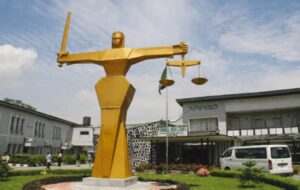 If the charges are as serious as they appear to be — if murderers and plotters were really in their midst, or mutineers planned to kill leaders and subvert constitutional order — then the Nigerian public has a right to have a clear case made against them before an open court.
Open trials fulfil several invaluable roles, permitting evidence to be challenged through the process of cross-examination
• They defend the rights of the accused
• They give the public a sense that justice is working, not just talking
The demand for transparency has been made, among others, by reputable lawyers such as Femi Falana, who insist that these are not issues to be covered up in underground courts where the doctrine of infallibility supplants facts.
A justice that is served entirely behind closed doors might be convenient, but it’s never convincing.
VIII. Institutions, Confidence and the Costs of Ambiguity
Faith in institutions is more than a nice abstraction — it’s a real-world requirement. People follow the law, play by the rules, and accept regulations, sacrifice, and hardship because they believe that institutions are basically fair and decent.
When the official narrative changes without explanation, when evidence is promised but not produced, and when questioning voices are dismissed as disloyal, that trust begins to break down.
It’s susceptible because of Nigeria’s history. The country has experienced coups, counter-coups, and long stretches of military rule. Those eras have not been forgotten; their memories shape how citizens understand events in the present.
In this context, accusations of another coup — real or not — resonate on an emotional and historical level. They want no concealment, but transparent truth.
IX. The Military, the State, and Public Performative Acts in France
 The position of establishments such as the Defence Headquarters is crucial in this discourse. Their job is to defend national security; their challenge is to strike a balance between secrecy and accountability.
Reassurances that “due process will be observed” are necessary, but far from sufficient. Due process is not just a process, but also an observance of fairness, evidence, and the law.
Once investigations have concluded and trials are in the offing, the public needs more than outcomes. It deserves understanding.
X. Between Silence and Stability
Others will say that too much openness will destabilize the state, and that secrecy is the price of security. This is a plausible argument, but it ultimately falls apart.
Security based on silence is tenuous. It depends on obedience, not consent; fear, not trust. In the end, this equilibrium crumbles under the unresolved questions.
A proud state is not afraid of openness. It embraces it as proof of legitimacy.
XI. A Nation’s Right to Know
The Nigerian public is not seeking the blueprints to classified information or the secrets of operations. It’s demanding coherence, consistency, and credibility.
If there was a coup plot, then let the evidence be presented and tested. And if there wasn’t, then let speculation yield to transparency. What we cannot continue is a limbo in which accusation takes the place of proof and silence serves as evidence.
XII. Conclusion: The Truest Guardian
Ultimately, the greatest threat Nigeria faces is not a potential coup; rather, it is the dismantling of the standards by which truth is judged and justice is ensured.
The “phantom coup” is dangerous not because it brings down governments, but because it weakens the norms that prop up democracy: evidence, transparency, and accountability.
Nigeria deserves better than speculations clothed as revelations. It deserves a public life driven not only by the truth but also by law and illuminated by honest, open discourse.
And only then will the country be safe — not just from coups, but from the quiet rot of its democratic spirit.
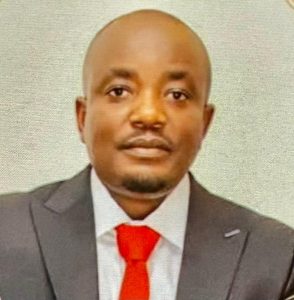 BY IBRAHIM BUNU (MINDER)
—————————————————————————————————————————————
Your help to our media platform will support the delivery of the independent journalism and broadcast the world needs. Support us by making any contribution. Your donation and support allows us to be completely focus, deeply investigative and independent. It also affords us the opportunity to produce more programmes online which is a platform universally utilised.
Thank you.
Please click link to make – DONATION