

For decades, discussions about Nigeria’s future have centred on oil, gas, minerals and other natural resources. Yet an emerging consensus among security experts, policymakers and development practitioners suggests that the country’s greatest wealth lies elsewhere — in its people, particularly its young population.
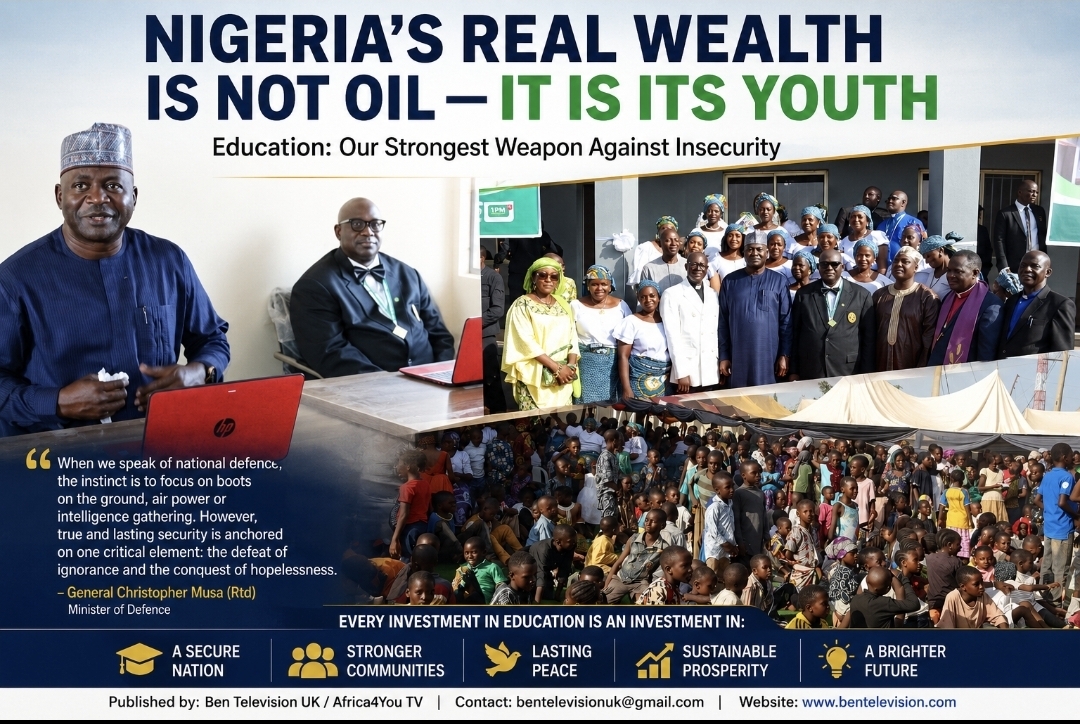
That message was reinforced recently by Nigeria’s Minister of Defence, General Christopher Musa (Rtd), and Kaduna State Governor, Senator Uba Sani, who described education as one of the most powerful tools available to defeat banditry, terrorism, violent extremism and social instability.
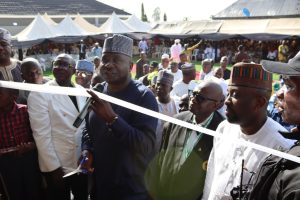
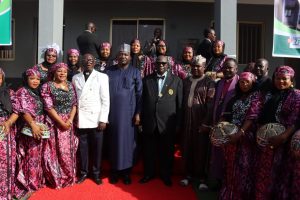
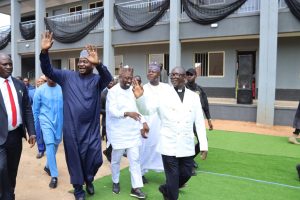 Speaking at the commissioning of the Kaduna Christian Academy in Kaduna State, General Musa delivered a message that reaches far beyond the classroom and speaks directly to the future of Nigeria.
“When we speak of national defence, the instinct is to focus on boots on the ground, air power or intelligence gathering. However, true and lasting security is anchored on one critical element: the defeat of ignorance and the conquest of hopelessness,” the Defence Minister said.
He further described the new school as “a weapon of mass instruction in the right hands,” arguing that education remains one of the most effective non-military responses to insecurity.
 These remarks come at a time when many nations are rethinking the relationship between education, economic opportunity and national security. Across the world, the evidence is increasingly clear that countries which invest in their people are often the ones that achieve the greatest long-term success.
The United Kingdom, following the Second World War, expanded access to education and vocational training to rebuild its economy and create opportunities for millions of young people. The result was not only economic growth but also stronger social cohesion and national stability.
Similarly, Saudi Arabia has invested heavily in education, skills development, research institutions and universities as part of its long-term national development strategy. Through its Vision 2030 programme, the Kingdom continues to place human capital at the centre of economic transformation, recognising that future prosperity depends not only on natural resources but on the knowledge, skills and productivity of its people.
These examples underline an important lesson: nations that invest in education and human capital often achieve more sustainable prosperity than those that rely solely on natural resources.
Nigeria’s demographic profile presents both a challenge and an opportunity. With one of the world’s youngest populations, the nation possesses an enormous reservoir of energy, innovation, creativity and entrepreneurial potential. If properly educated and empowered, this generation could become the driving force behind Africa’s largest economy and one of its most influential societies.
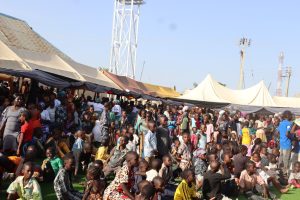 Governor Uba Sani echoed this vision, describing education as a foundation for human capital development and community progress.
“Education remains one of the most powerful tools for personal, human capital and social development. Every classroom built creates opportunity for learning. Every child educated strengthens our communities,” he said.
The significance of the Kaduna Christian Academy extends beyond education alone. The project follows the earlier establishment of another faith-based educational institution in Kaduna State. Together, these initiatives demonstrate how education can serve not only as a tool for development but also as a bridge for understanding, mutual respect and national unity among diverse communities.
In a world increasingly shaped by knowledge economies, nations are no longer competing primarily through natural resources. They compete through ideas, innovation, technology and skilled citizens. The countries making the greatest progress are those preparing their young people for the opportunities and challenges of the future.
Oil wells eventually dry up. Mineral deposits become exhausted. Human potential, however, grows when it is nurtured, developed and given the opportunity to flourish.
Nigeria’s future may therefore depend less on what lies beneath its soil and more on what is cultivated within its classrooms, training centres, laboratories and innovation hubs.
If insecurity is partly born from hopelessness, exclusion and lack of opportunity, then education is not merely a social service. It is a national security investment. It is an economic investment. It is a nation-building investment.
The lesson from Kaduna is clear: every school built today may prevent a crisis tomorrow. Every child educated strengthens the foundations of peace. Every young person empowered becomes a stakeholder in national progress.
 By investing in its youth, Nigeria is not simply preparing tomorrow’s workforce; it is building tomorrow’s nation. Oil may enrich a country for a season, but education enriches a nation for generations.
Contact: bentelevisionuk@gmail.com
Website: https://www.bentelevision.com
—————————————————————————————————————————————
Your help to our media platform will support the delivery of the independent journalism and broadcast the world needs. Support us by making any contribution. Your donation and support allows us to be completely focus, deeply investigative and independent. It also affords us the opportunity to produce more programmes online which is a platform universally utilised.
Thank you.
Please click link to make – DONATION