

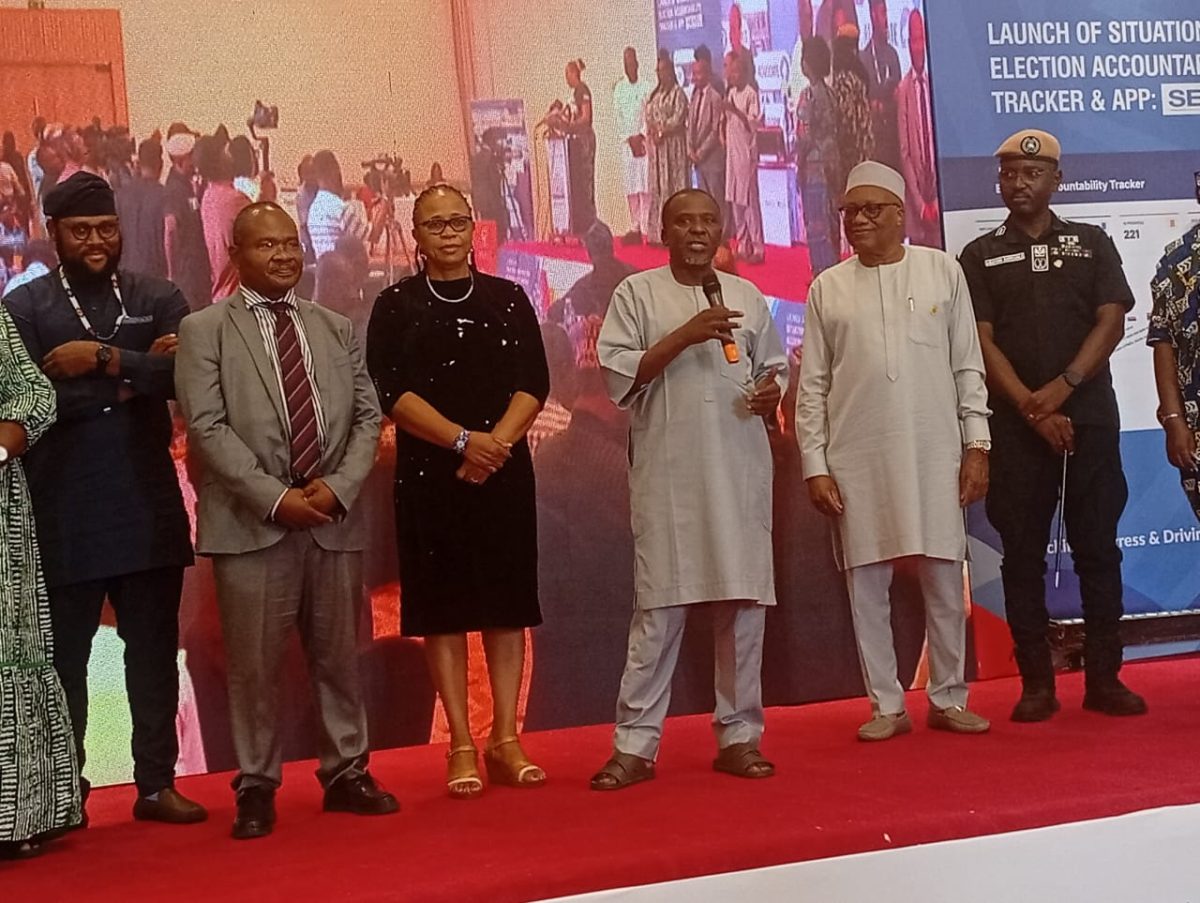
At the unveiling of the Situation Room Electoral Accountability Tracker in Abuja, civil society, Independent National Electoral Commission officials and policy advocates call for sustained transparency, warning that weak follow-through and compressed timelines could undermine credible elections.
By ifeoma Onyekachi
Efforts to deepen electoral transparency in Nigeria received a boost on Thursday with the launch of a new digital accountability platform in Abuja, as stakeholders called for stronger follow-through on electoral reforms ahead of the 2027 general elections.
The Convener of the Nigeria Civil Society Situation Room, Yunusa Ya’u, said the country must move beyond post-election assessments to sustained accountability throughout the entire electoral cycle.
Speaking at the unveiling of the Situation Room Electoral Accountability Tracker (SEAT), Ya’u stressed that weak implementation of recommendations from past elections had continued to widen accountability gaps and undermine public trust.
“Election credibility does not begin and end on election day. The integrity of our democracy is built long before ballots are cast and long after results are declared,” he said.
According to him, the SEAT platform introduces a structured, continuous monitoring framework designed to track electoral reforms and assess stakeholder performance over time. The system features a public web-based tracker for long-term oversight, alongside a citizen reporting application that allows voters to submit real-time feedback.
Ya’u explained that the platform would harmonise recommendations from accredited election observers into a central repository, making it easier to identify recurring challenges, measure reform progress and highlight areas requiring urgent attention.
He noted that citizen participation remains critical to democratic accountability, describing voters as central actors in sustaining transparency beyond the polls.
“As we look forward to the 2027 general elections, the question is no longer whether elections will be conducted, but whether lessons from previous elections will lead to meaningful reforms,” he added.
He further disclosed that the Situation Room would generate periodic reports using the platform, while engaging key stakeholders and drawing attention to critical gaps in the system.
Ya’u called on government institutions, the Independent National Electoral Commission (INEC), political parties, the media, development partners and citizens to actively utilise the platform.
“Accountability works when it is collective, transparent and sustained. This is not a project of the Situation Room alone; it is a platform for collaboration,” he said, while commending support from the UK Foreign, Commonwealth and Development Office.
However, INEC cautioned against potential misuse of emerging digital tools. National Commissioner and Chairman of its Information and Voter Education Committee, Sam Olumekun, warned that such platforms must complement, rather than undermine, the commission’s constitutional mandate.
“While technology has opened new frontiers for citizen engagement, it also presents risks that must be carefully managed,” he said, highlighting concerns around misinformation.
Also speaking, Executive Director of the Policy and Legal Advocacy Centre (PLAC), Clement Nwankwo, expressed reservations about INEC’s proposed timetable for the 2027 elections.
He warned that the compressed schedule for party primaries could weaken internal party democracy and limit credible political competition.
Nwankwo also criticised the growing trend of candidate imposition within political parties, describing it as a threat to democratic choice.
Meanwhile, Commissioner of Police in charge of Election Planning, Monitoring and Evaluation, Abayomi Shogunle, said the Nigeria Police Force would leverage the platform to improve election monitoring and response.
He emphasised the need for built-in verification mechanisms, including location tracking, to ensure the authenticity of reports and curb false claims.
In his remarks, Governance Adviser at the UK Foreign, Commonwealth and Development Office, Ayibakuro Matthew, described the initiative as a reflection of increasing recognition that democratic accountability must extend beyond election day.
He noted that the platform’s effectiveness would depend largely on transparency, trust and the responsible use of information by all stakeholders.
—————————————————————————————————————————————
Your help to our media platform will support the delivery of the independent journalism and broadcast the world needs. Support us by making any contribution. Your donation and support allows us to be completely focus, deeply investigative and independent. It also affords us the opportunity to produce more programmes online which is a platform universally utilised.
Thank you.
Please click link to make – DONATION