


Nigeria’s Minister of Education, Maruf Tunji Alausa, has reaffirmed the commitment of President Bola Tinubu’s administration to expanding non-formal education as a strategy for job creation, youth empowerment, and skills development across the country.
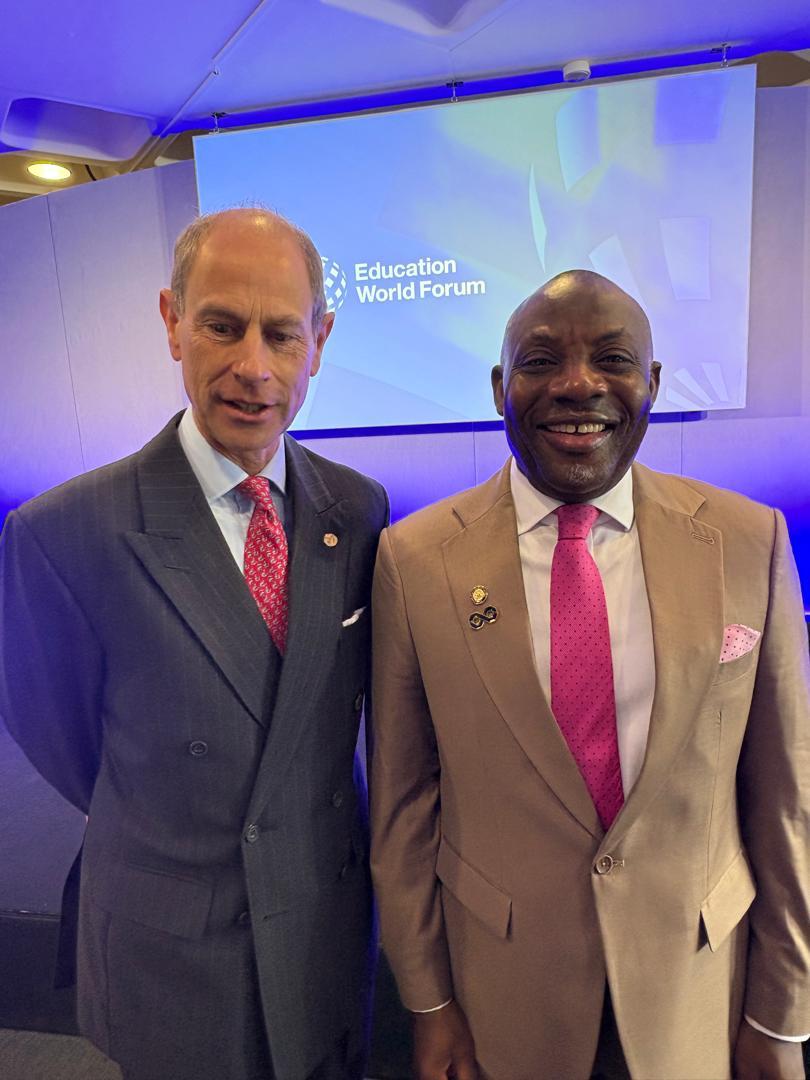
The minister made this known during a special plenary session moderated by Prince Edward at the ongoing Education World Forum in London.
The session focused on the importance of non-formal education, soft skills development, and industry participation in improving employability and the wellbeing of young people.
Other panelists at the session included Paul Calandra, Secretary of State for Education in Rio Grande do Sul, Brazil, Raquel Teixeira, and International Youth Representative of the Duke of Edinburgh International Award Foundation, Andrea Chakma.
Speaking during the discussion, Alausa said the Federal Government was intensifying efforts to provide educational opportunities for out-of-school children and vulnerable populations through flexible and accelerated learning programmes.
According to him, the government has developed an Accelerated Basic Education Programme tailored for children outside the formal school system in order to bridge literacy gaps and reintegrate them into mainstream education and economic activities.
“What we are doing in Nigeria is because we have a lot of out-of-school children. We have to find a way that we can quickly get them a kind of non-formal education,” the minister said.
He explained that the administration is also prioritising Technical and Vocational Education and Training (TVET) to equip young Nigerians with practical and entrepreneurial skills that can improve livelihoods and strengthen local economies.
Alausa noted that the Federal Ministry of Education’s flagship TVET initiative provides tuition-free vocational training, stipends, and start-up support aimed at closing skills gaps and boosting entrepreneurship nationwide.
The minister further highlighted the National Policy on Skills Development, which promotes flexible learning pathways through hands-on training, digital literacy, and vocational education for youths and adults outside the conventional school system.
He also referenced ongoing programmes on mass literacy, adult and non-formal education, as well as initiatives targeting Almajiri and out-of-school children through the integration of Qur’anic education with vocational and basic learning.
According to him, entrepreneurial and innovation training has now been embedded across different educational levels to prepare young Nigerians for the future economy.
“We have also now infused what we call entrepreneurial training in these kids. Whatever level of courses they are studying, they go through our entrepreneurship, innovation business certification to equip them with the skills they need to function and do things differently,” he stated.
The minister added that the government was also expanding digital technology training to provide young people with relevant digital skills for the modern workforce.
He said the overall objective of the administration’s education reforms was to equip Nigerian youths with practical skills for both present and future opportunities.
Alausa also commended the Duke of Edinburgh for his visit to Nigeria in November 2025 and acknowledged Nigeria’s participation in the Duke of Edinburgh International Award Foundation programme.
—————————————————————————————————————————————
Your help to our media platform will support the delivery of the independent journalism and broadcast the world needs. Support us by making any contribution. Your donation and support allows us to be completely focus, deeply investigative and independent. It also affords us the opportunity to produce more programmes online which is a platform universally utilised.
Thank you.
Please click link to make – DONATION