

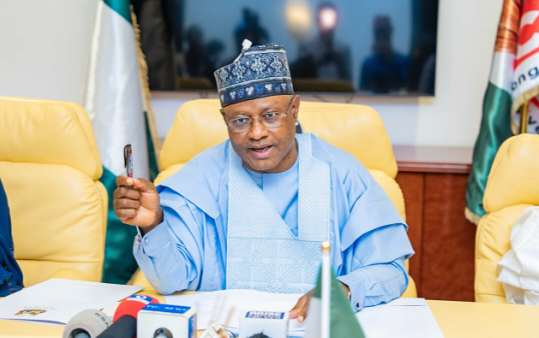
As political alignments ahead of Nigeria’s 2027 elections continue to unfold, reports that Kaduna State Governor, Senator Uba Sani, is set to choose a Christian running mate have generated significant national interest. While the decision is yet to be formally confirmed, it has already reignited discussions about inclusion, representation and the enduring importance of national unity in one of Nigeria’s most diverse states.
Among the names being quietly mentioned are Commissioner for Justice James Kanyip – known for judicial reforms and strengthening access to legal aid; Jerry Adams, the Executive Chairman and Chief Executive Officer of the Kaduna State Internal Revenue Service (KADIRS), credited with improving internally generated revenue and digitising tax collection; and the Head of Service in the state, Mrs Jummai Bako – a senior administrator recognised for her impactful work in the state’s programmes and empowerment initiatives. Also mentioned in hushed tones is a surprise “horse” still under consideration whose identity cannot yet be disclosed.
Kaduna occupies a unique place in Nigeria’s history. Home to large Muslim and Christian populations, the state has often reflected both the country’s diversity and its challenges. Political decisions in Kaduna therefore carry symbolism beyond its borders, particularly on issues of faith and social cohesion. The debate over Muslim-Muslim and mixed-faith tickets has remained part of Nigeria’s democratic evolution for decades.
Governor Uba Sani has built a reputation as a bridge-builder. A former senator representing Kaduna Central before becoming governor in 2023, he has consistently advocated peaceful coexistence, dialogue and inclusive governance. His administration has prioritised restoring security, expanding infrastructure, improving rural development and rebuilding confidence among communities previously divided by conflict.
Should the governor ultimately nominate a Christian deputy, many observers would view it as more than a political calculation. It would represent a deliberate affirmation that competence and inclusion can coexist, while recognising Kaduna’s delicate religious balance. Such a gesture could further strengthen trust between communities and reinforce the state’s image as a model of reconciliation.
Leadership is often judged not only by policies delivered but by the signals leaders send. In a period when political narratives are frequently framed through religious and ethnic lenses, Kaduna has an opportunity to demonstrate that unity remains a practical foundation for governance rather than merely an electoral slogan.
If confirmed, Governor Uba Sani’s decision may well become one of the defining political moments ahead of the 2027 elections—a reminder that the strength of Nigeria lies not in uniformity, but in its diversity. It is a leadership approach that many believe deserves recognition for placing national cohesion above division.
—————————————————————————————————————————————
Your help to our media platform will support the delivery of the independent journalism and broadcast the world needs. Support us by making any contribution. Your donation and support allows us to be completely focus, deeply investigative and independent. It also affords us the opportunity to produce more programmes online which is a platform universally utilised.
Thank you.
Please click link to make – DONATION