


Leaders of the European Union say they are taking steps to prevent a potential migration crisis as tensions continue to escalate in the Middle East.
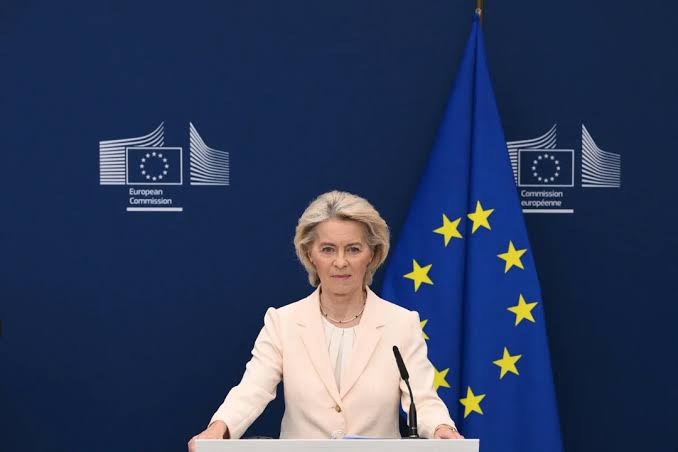
Speaking after a summit in Brussels, European Commission President Ursula von der Leyen said the bloc is determined to avoid a repeat of the 2015 migration crisis, when over one million people applied for asylum in Europe.
She noted that although there are currently no significant migration flows towards Europe, the EU must remain prepared. According to her, the union has learned from past experiences and is now better equipped to respond to any sudden increase in migration.
Migration became a major topic at the Brussels summit after Danish Prime Minister Mette Frederiksen and Italian Prime Minister Giorgia Meloni urged EU leaders to begin preparations for a possible rise in migration due to the worsening situation in the Middle East.
During the migration crisis of the mid-2010s, millions of people fled conflict-affected countries, particularly Syria, leading to a surge in asylum applications across Europe. EU leaders said in a joint statement after the summit that the bloc is ready to mobilise diplomatic, legal, operational and financial tools to prevent uncontrolled migration and maintain security across Europe.
Frederiksen and Meloni had earlier written to EU leaders warning that Europe must not allow a repeat of the migration surge seen between 2015 and 2016. They suggested that the European Commission should consider introducing emergency measures that could be activated if migration numbers increase sharply.
One of the proposed measures includes the possibility of turning away asylum seekers at the border under special emergency rules. Despite these discussions, international organisations and EU officials say there are currently no clear signs of large-scale refugee movements from the Middle East towards Europe, although ongoing conflicts in the region have displaced millions of people.
The two leaders also emphasised the need to provide more humanitarian assistance to affected regions, arguing that supporting people in their home regions would reduce the pressure of migration to Europe.
Meanwhile, stricter asylum rules are expected to take effect in June under the EU’s Common European Asylum System, aimed at speeding up asylum processing and distributing asylum seekers more evenly among member states. The EU has also increased cooperation with several non-EU countries in recent years to help control irregular migration.
—————————————————————————————————————————————
Your help to our media platform will support the delivery of the independent journalism and broadcast the world needs. Support us by making any contribution. Your donation and support allows us to be completely focus, deeply investigative and independent. It also affords us the opportunity to produce more programmes online which is a platform universally utilised.
Thank you.
Please click link to make – DONATION