

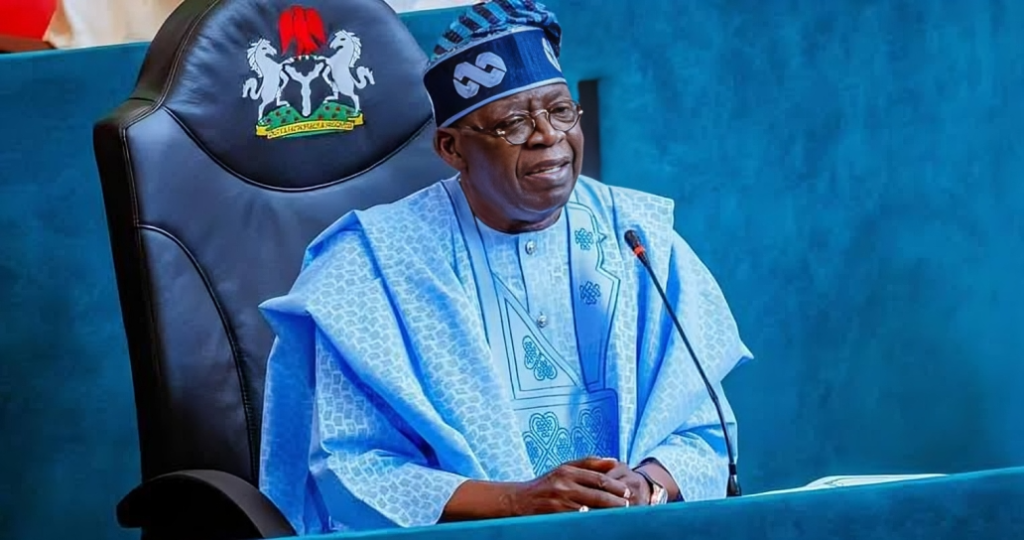
President Bola Tinubu has asked a United States federal court to block the release of investigative records concerning him, including files linked to historical FBI and DEA investigations and a 1993 civil forfeiture case involving about $460,000.
Tinubu’s legal team, in a 16-page filing before the US District Court for the District of Columbia, urged the court to uphold redactions and withholdings imposed by the Federal Bureau of Investigation and the Drug Enforcement Administration.
The filing, dated August 28 and signed by Christopher W. Carmichael, Victor P. Henderson and Oluwole O. Afolabi, was made in opposition to a Freedom of Information Act lawsuit brought by American transparency activist Aaron Greenspan.
Greenspan is seeking access to government records relating to investigations involving Tinubu, including the FBI’s entire file on the Nigerian president and FBI Form 302 interview records covering 1992 and 1993.
The records sought also include materials connected to a 1993 civil forfeiture proceeding in the United States involving approximately $460,000 allegedly linked to Tinubu.
Tinubu has consistently denied wrongdoing.
Tinubu: Public disclosure does not erase privacy rights
In the latest filing, the president’s lawyers argued that releasing the investigative records could violate his privacy rights.
They maintained that the limited information previously made public during the forfeiture proceedings did not reveal the details or outcome of any possible criminal investigation.
The lawyers argued that the disclosure of some information in the past did not automatically place the contents of the wider government investigative files in the public domain.
“Regardless of the prior disclosure in the forfeiture proceeding, Intervenor retains a privacy interest in potential disclosure of the investigative files sought by Plaintiff,” the lawyers stated.
They cited several US court decisions, including Judicial Watch, Inc. v. United States Department of Justice and Electronic Privacy Information Center v. United States Department of Justice, to support their argument.
According to the legal team, being publicly associated with an investigation is fundamentally different from making the confidential contents of investigative files available to the public.
Court battle dates back to 2022
The latest development is part of a legal battle that began with FOIA requests submitted by Greenspan in 2022 and 2023.
In April 2025, US District Judge Beryl Howell ruled that the FBI and DEA could no longer rely on so-called “Glomar” responses to refuse to confirm or deny the existence of the requested records.
The judge ordered the agencies to process non-exempt records responsive to Greenspan’s requests.
Tinubu’s lawyers, however, stressed that the ruling did not establish that the president had committed drug trafficking or any other crime.
They also argued that the ruling did not constitute a criminal conviction or finding of criminal liability against him.
Rather, they said, Judge Howell’s decision concerned the agencies’ obligations under the FOIA and whether the requested records could lawfully be withheld under applicable exemptions.
FBI seeks to keep sensitive material sealed
The FBI has separately asked the court for permission to submit sensitive information under seal to explain why portions of the requested records should remain confidential.
The agency has invoked FOIA exemptions covering personal privacy, confidential sources, law-enforcement techniques and information that could potentially endanger an individual’s life or physical safety.
Tinubu had previously joined the US Justice Department in seeking additional time to respond to the court’s orders, although Judge Howell declined to grant the full extension requested by the government.
The latest filing now puts Tinubu directly at the centre of the legal fight over access to the records.
The court will ultimately have to determine whether the FBI and DEA have sufficient legal grounds to continue withholding or redacting portions of the files, or whether additional records must be released.
For now, the dispute remains a FOIA and records-access case. The existence of the litigation or the court’s orders does not, by itself, establish criminal wrongdoing by Tinubu.
—————————————————————————————————————————————
Your help to our media platform will support the delivery of the independent journalism and broadcast the world needs. Support us by making any contribution. Your donation and support allows us to be completely focus, deeply investigative and independent. It also affords us the opportunity to produce more programmes online which is a platform universally utilised.
Thank you.
Please click link to make – DONATION