

Nigeria’s continuing security challenges, particularly across the North-East, have renewed debate over the performance of political leaders and the responsibility of those seeking another mandate in 2027.
Despite years of military operations, community resettlement initiatives and government interventions, parts of the region continue to experience insurgent attacks, displacement and threats to civilian lives. The situation has raised questions about the effectiveness of successive administrations and the progress made towards lasting stability.
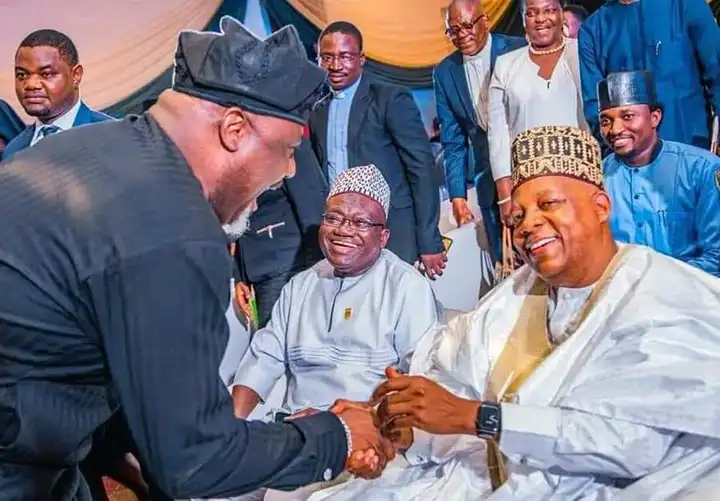
Former Nigerian senator and political figure, Dino Melaye, has challenged Vice President Kashim Shettima’s record, arguing that his years in senior public office should be assessed against measurable improvements in security, governance and living conditions.
In a strongly worded political statement titled “A Record That Cannot Carry a Second Term,” Melaye questioned whether Shettima’s record as Borno State Governor between 2011 and 2019, senator and subsequently Vice President since 2023 provides sufficient justification for another term.
Security Challenges in Borno
Melaye pointed to continuing insurgent activities, including reported attacks on military installations, abductions and displacement across Borno and neighbouring states.
He recalled the April 2014 Chibok schoolgirls’ abduction during Shettima’s governorship, describing it as a defining tragedy in the region’s security history.
The former senator also referred to concerns raised by Borno State Governor Babagana Zulum over military resources, surveillance capabilities, troop welfare and humanitarian support.
Although acknowledging military sacrifices, successful rescue operations and resettlement efforts, Melaye argued that persistent insecurity raises questions about the effectiveness of government interventions.
A central argument in Melaye’s statement concerns the influence of the Vice President within the current administration.
While recognising that Nigeria’s Constitution places executive authority under the President, Melaye maintained that Shettima should demonstrate how his position has contributed to addressing insecurity in his home region.
He questioned whether the Vice President had sufficiently used his political influence to advocate stronger federal intervention and improvements in military operations.
However, the Vice President’s constitutional responsibilities differ from those of the President, who serves as Commander-in-Chief of the Armed Forces. Security decisions also involve federal institutions, military leadership and state-level cooperation.
Economic Pressures and Political Accountability
Beyond security, Melaye linked his criticism to wider economic difficulties facing Nigerians, including rising living costs following the removal of petrol subsidies and changes to the foreign exchange system in 2023.
He argued that the Vice President shares political responsibility for the administration’s overall performance, particularly as discussions surrounding the 2027 elections intensify.
Melaye also addressed political exchanges involving former Vice President Atiku Abubakar, maintaining that public officials who question opponents’ records must be prepared to defend their own achievements.
Measuring Performance Before 2027
The former senator proposed several benchmarks for assessing the administration’s performance, including reduced attacks on communities and military facilities, safer conditions for displaced families returning home, improved military welfare and stronger protection for schoolchildren.
His central argument is that political renewal should depend on demonstrated improvements rather than length of service or promises of future action.
Melaye’s assessment represents his political position and allegations, rather than an independently established verdict on the Vice President’s performance. The statement did not include a response from Shettima or the Presidency.
As Nigeria approaches another electoral cycle, the wider debate highlights the importance of measurable outcomes, institutional accountability and the responsibility of political leaders to explain both their achievements and remaining challenges.
For voters, the fundamental question extends beyond individual personalities: whether government policies have delivered meaningful improvements in security, economic opportunity and everyday living conditions.
—————————————————————————————————————————————
Your help to our media platform will support the delivery of the independent journalism and broadcast the world needs. Support us by making any contribution. Your donation and support allows us to be completely focus, deeply investigative and independent. It also affords us the opportunity to produce more programmes online which is a platform universally utilised.
Thank you.
Please click link to make – DONATION