

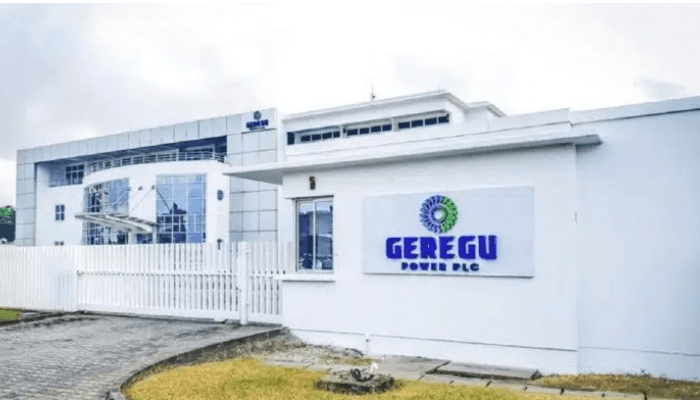
ABUJA – Geregu Power Plc has defaulted on a N40.09 billion bond obligation as a sharp decline in electricity generation and revenue, linked to an extensive turbine overhaul, puts pressure on the company’s ability to service its debt.
The power producer failed to make the eighth semi-annual coupon payment and fourth scheduled bullet principal repayment on its Series 1 Senior Unsecured Bond, according to an updated listing status published by FMDQ Securities Exchange.
The bond was issued on July 28, 2022, at a fixed interest rate of 14.5 per cent under Geregu’s N100 billion debt issuance programme and is scheduled to mature on July 28, 2029.
FMDQ classified the instrument as being in “credit default” over the missed coupon and principal payments.
The development comes amid a sharp deterioration in Geregu’s financial performance following a N61.47 billion major turbine maintenance programme, which has significantly reduced the company’s generating capacity and revenue.
Revenue falls 79%
For the six months ended June 30, 2026, Geregu’s revenue fell by 78.71 per cent to N18.65 billion, compared with N87.63 billion recorded in the same period in 2025.
Profit after tax also plunged by 88 per cent, from N20.27 billion to N2.54 billion.
The impact was particularly severe in the second quarter, when revenue dropped to just N419.1 million, compared with N55.87 billion in Q2 2025.
The decline has raised concerns about the company’s ability to generate sufficient cash flow to meet its financial obligations while its generating turbines undergo major maintenance.
Geregu has said the overhaul is aimed at restoring and preserving the long-term reliability and availability of its generating assets.
However, the immediate consequence has been a substantial reduction in electricity generation and billable revenue, while interest and principal payments on its debt have continued to fall due.
Earnings fall below projections
The financial deterioration also contrasts sharply with Geregu’s earlier expectations for 2026.
The company had projected N57.11 billion in revenue and N12.02 billion in profit after tax for the first quarter of 2026, compared with N31.75 billion and N10.43 billion respectively recorded in Q1 2025.
The actual first-half results fell significantly below those projections, indicating the extent of the operational and financial impact of the maintenance programme.
While a temporary reduction in generation does not necessarily indicate a fundamental weakness in the business, the situation becomes more serious when lower operating cash flow coincides with scheduled debt repayments.
Rating remains stable
Despite the default, GCR Ratings retained Geregu Power’s national scale long-term issuer rating at ‘A(NG)’ with a Stable outlook.
The rating reflects the agency’s expectation that the company’s electricity generation and revenue will recover following the completion of the turbine overhaul.
Geregu also recorded N16.12 billion in financial asset impairment reversals during the period, while total liabilities declined to N239.33 billion.
However, the missed bond payments highlight the difference between balance-sheet strength and the availability of cash needed to meet obligations when they fall due.
The company must now demonstrate that the expected recovery in generation will translate into sufficient cash flow to settle its outstanding obligations and restore normal debt servicing.
Investors remain cautious
Geregu’s financial challenges have also weighed on its share price.
The company’s shares closed at N825.70 on Friday, August 7, 2026, compared with N1,141.50 at the beginning of the year, representing a decline of about 27.7 per cent.
The bond default could further increase investor caution, particularly if the company does not provide a clear timeline for settling the missed payments and returning its generating units to full commercial operation.
For bondholders, attention will now focus on the terms governing the default, including any applicable grace period, the company’s plan for settling the outstanding coupon and principal payments, and the expected timeline for completing the turbine overhaul.
Bigger financing challenge for power sector
Geregu’s situation also highlights the financing risks facing Nigeria’s power generation companies.
Generators operate within an electricity market already affected by gas supply constraints, grid limitations, payment delays and other weaknesses across the power value chain.
A major maintenance programme can therefore create a difficult cycle: generation falls, revenue declines and the cash needed to finance maintenance and service existing debt becomes more difficult to generate.
Geregu’s experience underscores the importance of carefully structuring and timing major capital and maintenance investments, particularly for power companies with significant debt obligations.
The company’s long-term prospects remain tied to its ability to restore its generating capacity and convert increased generation into sustainable cash flow.
For now, however, the missed bond payments have transformed what began as an operational maintenance challenge into a significant credit and liquidity concern.
Geregu must simultaneously complete its turbine overhaul, restore generation and rebuild the cash flow required to meet its obligations to bondholders.
Until that happens, investors will have to balance the company’s potential for long-term recovery against an immediate financial reality: Geregu’s revenue has fallen by almost 80 per cent and the company has defaulted on both a coupon payment and a scheduled principal obligation on its bond.
—————————————————————————————————————————————
Your help to our media platform will support the delivery of the independent journalism and broadcast the world needs. Support us by making any contribution. Your donation and support allows us to be completely focus, deeply investigative and independent. It also affords us the opportunity to produce more programmes online which is a platform universally utilised.
Thank you.
Please click link to make – DONATION