

January 25
January 25 is one of those dates that quietly carry the weight of history. In 1958, Nigeria was nearing independence, oil was beginning to redefine its economy, Africa was rising against colonial rule, and the world itself was locked in a race for scientific and strategic dominance. It was a season of preparation; when nations, institutions, and leaders were being formed, tested, and refined.
 It was on this day, January 25, 1958, in Abeokuta, that Senator Ibikunle Amosun was born into a Western Region defined by ideas, discipline, and structured governance, and into a world where leadership increasingly meant strategy rather than sentiment.
Born Into an Era of Planning, Not Noise
In the Western Region of Nigeria, under Chief Obafemi Awolowo, governance in 1958 was centred on education, planning, and social investment, most notably the Free Universal Primary Education programme. That philosophy, leadership built on preparation and institutions would later echo in Amosun’s own political career, particularly during his years as Governor of Ogun State (2011–2019), where infrastructure, urban renewal, and fiscal order became central themes.
Nationally, the Willink Commission was engaging Nigerians on the fears of minorities ahead of independence, an early lesson that unity requires consultation, not coercion. That same understanding has shaped Amosun’s political conduct at the national level: building bridges across regions, faiths, and political interests rather than retreating into sectional comfort.
Oil, Economy and the Discipline of Numbers
In early 1958, Nigeria exported its first shipment of crude oil, marking the beginning of a new economic order. That shift from agrarian optimism to resource-driven complexity demanded discipline, accountability, and technical competence – qualities that would later define Amosun’s professional foundation as an international accountant.
 As governor and later as senator (2019–2023), his insistence on orderly planning, structured execution, and financial prudence reflected an understanding that economic potential alone does not build nations, systems do.
Africa Rising, Coalition Building at Home
Across Africa, 1958 was a year of coordinated resistance to colonial rule. Leaders such as Julius Nyerere were making calculated political decisions that prioritised long-term independence over short-term advantage. That same spirit of coalition-building has marked Amosun’s political relationships, particularly his unusual but enduring acceptance across northern political structures and voters, despite being a southerner.
His relationship with the late President Muhammadu Buhari was not transactional but built on mutual respect, consistency, and national values for decades – an attribute that earned him credibility beyond the South-West and made him one of the most recognisable southern political figures within northern circles and nationally.
Global Strategy, Local Application
Globally, January 1958 was defined by the Space Race, scientific breakthroughs, and the understanding that power belonged to those who prepared ahead of time. The launch of satellites and advances in nuclear fusion were reminders that leadership in the modern age is technical, forward-looking, and deliberate.
This philosophy has consistently reflected in Amosun’s political behaviour. Whether as governor, senator, or presidential aspirant, his approach has been rooted in strategy rather than spectacle – a trait he shared by the one they actually called master strategist of Nigerian politics, President Bola Ahmed Tinubu.
The 2022 Primaries: Timing and Political Maturity
At the 2022 APC presidential primaries, Amosun demonstrated this strategic instinct decisively. By becoming the first aspirant to openly change course and endorse Bola Ahmed Tinubu, he altered the momentum of the race and accelerated consensus-building within the party.
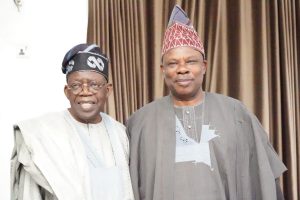 His decision to contest initially was not an act of defiance, but of confidence; believing in capacity, capability, and democratic competition. His eventual endorsement was equally strategic, recognising when leadership requires alignment rather than persistence.
Principles at Home, Strategy at the Centre
At the state level, Amosun has consistently stood for rotation and opportunity, arguing that leadership within Ogun State must be inclusive and give room for other localities to grow. At the national level, however, his politics has been guided by competence, numbers, and national cohesion, recognising Nigeria’s complex demographic and political reality.
Within Ogun State, particularly as an Egba man of the Owu Kingdom, his stature places him alongside only one other modern figure of comparable national weight – President Olusegun Obasanjo. Like Obasanjo, Amosun possesses the newer and younger reach, structure, and historical grounding to uplift communities beyond personal ambition.
Party Loyalty Without Dependency
Despite recurring questions about party affiliation, one fact remains clear: Ibikunle Amosun has never worked against his official party. What distinguishes him is his refusal to be politically dependent on inherited structures. His leadership style is independent, yet disciplined, rooted in loyalty, but driven by personal credibility and grassroots confidence.
In a democracy, majority will prevails where processes are free, fair, and transparent. Amosun’s relevance lies in his ability to operate effectively within that framework.
A Force That Cannot Be Ignored
Technically, politically, and organisationally, Amosun remains one of the few Nigerian politicians capable of mobilising and delivering voters beyond a single geography. In today’s political climate, that makes him not just relevant, but consequential.
Whether as a participant or observer, he would be a powerful force; if not a decisive spoiler – within any political arrangement, structures and positive expectations.
A Birthday That Invites Reflection
 As he marks his 68th birthday today, with expectations of a thoughtful engagement later at the Ake Palace Pavilion, Nigeria is once again at a crossroads – economically, politically, and institutionally.
This moment offers the nation an opportunity to listen once more to Ibikunle Amosun: a professional, a strategist, a party man, a supporter of President, and a leader shaped by history, discipline, and timing.
Whether or not he returns to the Senate, one truth is evident –
he remains a chapter in Nigeria’s political story that is not yet closed.
—————————————————————————————————————————————
Your help to our media platform will support the delivery of the independent journalism and broadcast the world needs. Support us by making any contribution. Your donation and support allows us to be completely focus, deeply investigative and independent. It also affords us the opportunity to produce more programmes online which is a platform universally utilised.
Thank you.
Please click link to make – DONATION