

No fewer than 146 candidates in the 2027 presidential and governorship elections could collectively spend up to N571 billion under the campaign expenditure limits contained in the Electoral Act 2026.
The figure comprises 19 presidential candidates, each subject to a maximum campaign expenditure of N10 billion, and 127 governorship candidates, each limited to N3 billion.
If every candidate were to spend up to the statutory ceiling, presidential contenders would have a combined spending limit of N190 billion, while governorship candidates would have access to a combined ceiling of N381 billion.
Together, the two categories amount to N571 billion. However, the figure represents the maximum amount candidates are legally permitted to spend and does not indicate the funds available to them or the amount they are expected to raise.
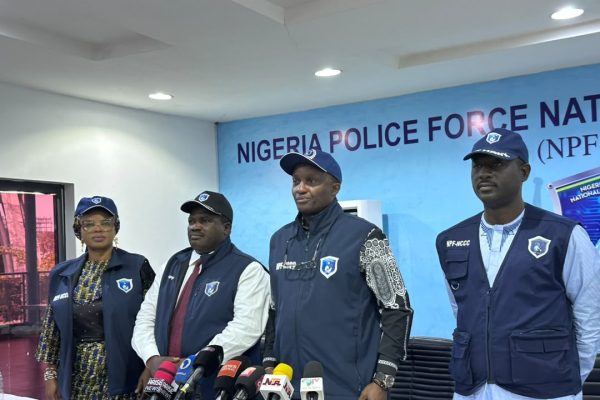
The development comes as the Independent National Electoral Commission published the personal particulars and credentials of 19 presidential candidates and their running mates ahead of the 2027 elections.
The publication paved the way for the commencement of campaigns for the presidential and National Assembly elections on Wednesday, August 19, 2026.
According to election tracker NGelections.com, 127 governorship candidates are currently in the race across 28 states. The platform lists 122 as nominated, four as declared candidates and one as still being monitored.
However, INEC is yet to publish the complete list of governorship candidates on its official 2027 election portal. The commission’s website currently states that the list “will be available soon.”
INEC has confirmed that governorship elections will hold in 28 states in 2027. Anambra, Bayelsa, Edo, Ekiti, Imo, Kogi, Ondo and Osun will not participate in the election because they are on the off-cycle election schedule.
The presidential and National Assembly elections are scheduled for January 16, 2027, while governorship and State House of Assembly elections will hold on February 6, 2027.
New campaign spending limits
Section 92 of the Electoral Act 2026 significantly increases the statutory campaign spending limits compared with the previous law.
Under the new legislation, a presidential candidate can spend a maximum of N10 billion, while the ceiling for a governorship candidate is N3 billion.
For National Assembly elections, senatorial candidates are limited to N500 million, while candidates for the House of Representatives can spend up to N250 million.
Candidates contesting State House of Assembly seats and Area Council chairmanship positions are each limited to N100 million, while candidates for Area Council councillorship positions can spend a maximum of N10 million.
The law also places a ceiling on individual contributions, limiting the amount any individual can donate to a single candidate to N500 million.
This means that although a presidential candidate can legally spend up to N10 billion, no single donor can provide more than N500 million to that candidate.
For governorship candidates, the N3 billion spending limit is six times the maximum amount an individual donor can contribute.
Section 92 also provides sanctions for candidates who knowingly exceed the prescribed expenditure limits.
A candidate found guilty may face a fine equivalent to one per cent of the applicable expenditure limit, imprisonment for up to 12 months, or both.
Despite the statutory provisions, questions remain over the effectiveness of enforcement.
There is no reported case of a Nigerian politician or political party being successfully prosecuted and convicted specifically for breaching statutory campaign spending limits.
Asked how INEC would enforce the new limits, the commission’s National Commissioner and Chairman of the Information and Voter Education Committee, Mohammed Haruna, said monitoring campaign finance was part of the commission’s statutory responsibility.
“It’s the Commission’s statutory responsibility to monitor the campaign finance of all political parties,” Haruna said.
Anti-corruption agencies are also expected to collaborate with INEC in monitoring campaign finances and enforcing the provisions of the law.
Presidential race
The 2027 presidential race includes incumbent President Bola Tinubu of the All Progressives Congress, former Vice-President Atiku Abubakar of the African Democratic Congress and former Anambra State Governor Peter Obi of the Nigeria Democratic Congress, alongside 16 other candidates.
INEC’s published list contains the personal details and credentials of the 19 presidential candidates and their running mates, in line with the requirements of the Electoral Act.
Other candidates include African Action Congress candidate Omoyele Sowore, Peoples Redemption Party candidate Donald Duke, Social Democratic Party candidate Adewole Adebayo and Allied Peoples Movement candidate Seyi Makinde.
The field also includes candidates of the National Democratic Party, Young Progressives Party, Action Alliance, Boot Party, Democratic Liberty Alliance, Zenith Labour Party, Labour Party, National Rescue Movement, Action Democratic Party, New Nigeria Peoples Party and Action Peoples Party.
CSOs demand stronger enforcement
Civil society organisations have expressed concerns over the ability of electoral authorities to effectively monitor and enforce the new campaign spending limits.
The Executive Director of the Civil Society Legislative Advocacy Centre, Auwal Musa Rafsanjani, said the challenge was not the absence of legal provisions but the capacity and willingness of institutions and political actors to comply with them.
“The law is very clear; political parties or candidates are not expected to go beyond certain thresholds,” Rafsanjani said.
He, however, questioned whether the relevant institutions would have the capacity to enforce the limits, particularly if political actors were unwilling to comply.
Rafsanjani urged INEC, political parties and other stakeholders to work towards ensuring that the spending limits were respected, while calling on the media and civil society groups to expose violations.
Similarly, the Executive Director of the Centre for Anti-Corruption and Open Leadership, Debo Adeniran, said effective monitoring would require collaboration between INEC, anti-corruption agencies, civil society organisations and the media.
He urged media organisations to establish monitoring teams to track campaign advertisements across television, newspapers, billboards, social media and other platforms.
Adeniran said campaign-related expenditure such as advertisements, procurement, staff payments, campaign venues, posters and billboards could be monitored through financial and technological tools.
He also called for stronger sanctions, including the possible deregistration of political parties and disqualification of candidates who breach campaign finance regulations.
ActionAid seeks tougher sanctions
The Country Director of ActionAid Nigeria, Andrew Mamedu, said campaign spending limits were necessary to prevent wealthy candidates from gaining an unfair advantage over opponents with fewer financial resources.
“Campaign limits and campaign funding are needed for several reasons. The major reason is to ensure that candidates do not just come and buy positions, and spend so much resources to the detriment of other candidates that might not have similar resources,” Mamedu said.
He said the major challenge remained the ability of INEC to accurately track campaign expenditure, calling for stronger legal provisions and a dedicated mechanism for monitoring political finances.
Mamedu advocated tougher sanctions, including preventing politicians or political parties that violate spending limits from contesting elections for at least two electoral cycles.
He also warned that excessive campaign spending could fuel corruption if politicians and their financiers sought government contracts and other benefits in return for their financial support.
According to him, huge campaign spending could give incumbents an unfair advantage and discourage candidates without substantial financial backing from participating in elections.
NBC warns broadcasters, online publishers
The campaign finance debate comes as the National Broadcasting Commission warned broadcasters, online publishers, bloggers and other information disseminators against spreading misinformation, hate speech and inflammatory content during the electioneering period.
The warning followed the commencement of campaigns for the 2027 presidential and National Assembly elections.
In a statement issued by Moses Jolayemi, Technical Adviser to the NBC Director-General, Charles Ebuebu, the commission said the commencement of campaigns placed greater responsibility on the media to maintain accuracy, fairness and professionalism.
The NBC directed broadcasters to provide fair, balanced and equitable coverage of political parties and candidates.
It also warned against presenting unverified allegations, statistics or political claims as facts, particularly allegations relating to corruption, criminality, electoral manipulation and misconduct.
The commission reminded broadcasters of the obligation to respect the right of reply where individuals or organisations have been genuinely misrepresented.
Presenters, anchors, reporters, producers and hosts of political programmes were also warned against presenting personal political opinions as facts, intimidating guests, suppressing opposing views or manipulating discussions in favour of particular political interests.
The NBC said broadcasters would remain responsible for content aired on their platforms, including contributions from guests, callers and panellists during live programmes.
Broadcasters were further directed to keep accurate records of political airtime allocated to candidates and political parties, including the dates, programmes and duration of such broadcasts.
The commission stressed that political advertising must be clearly distinguished from news, editorial content, analysis and independent programming and must comply with the Nigeria Broadcasting Code.
It also raised concerns over the use of broadcast and digital platforms to spread inflammatory content capable of inciting violence, promoting hatred or deepening ethnic, religious, regional and political divisions.
The NBC cautioned broadcasters and other information disseminators against announcing or projecting election results from unofficial sources.
It said results should only be broadcast as announced by duly authorised electoral officers, warning against using polling-unit figures, exit polls or other unofficial data to speculate on likely winners.
The commission said its monitoring of political broadcasts would be intensified throughout the election period, covering advertisements, news bulletins, current affairs programmes, debates, interviews, phone-ins, commentaries, sponsored programmes and live broadcasts.
It also urged online publishers, bloggers, social media commentators and other content creators to exercise responsibility and avoid content capable of undermining peace and democratic stability.
—————————————————————————————————————————————
Your help to our media platform will support the delivery of the independent journalism and broadcast the world needs. Support us by making any contribution. Your donation and support allows us to be completely focus, deeply investigative and independent. It also affords us the opportunity to produce more programmes online which is a platform universally utilised.
Thank you.
Please click link to make – DONATION