


By Festus Fifen
Over the years, elections in Nigeria are often viewed through the narrow lens of the voting day operations which includes the casting of the ballot, the counting or collation of results and the eventual announcement of the winners and losers. However ot has been established in recent times by political observers that true electoral integrity is built long before citizens step up to the ballot box and sustained well after the final results are announced.
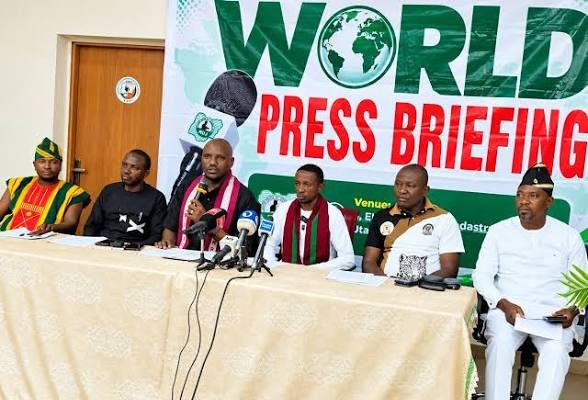
 At the just concluded Conference and Retreat for Senior Police Officers (CARSPO 2026) in Owerri, Imo State, the Nigeria Police Force under the leadership of IGP Olatunji Rilwan Disu in partnership with Lenders Consult International established a transformative blueprint for election management. By issuing a comprehensive 10-point resolution which was read as the communiqué at the end of the conference, the leadership of the Nigeria Police demonstrated an acute understanding of modern, intelligence-led, and human rights-compliant policing for democratic processes.
However, no matter how successful that conference was, the police cannot secure or guarantee democratic outcomes in isolation in a country like Nigeria.
 Delivering free, fair, credible, and peaceful elections requires a collaborative ecosystem involving electoral umpires, anti-graft agencies, civil society organizations, media organizations, state security entities, and all other political actors.
Though CARSPO 2026 has offered a vital operational model for the success of the 2027 general elections, other key agencies involved in Nigeria’s electoral processes must emulate CARSPO 2026, as adopting its core pillars is essential to modernizing governance and building public trust.
One of the core resolution of the CARSPO 2026 is Shifting from Reactive Operations to a proactive and strategic
 Historically, Nigeria’s electoral preparation has suffered from a ” Fire Brigade” mentality, where agencies focus heavily on election-day logistics while neglecting pre-election environment monitoring and post-election consolidation.
CARSPO first resolution addresses this pitfall by establishing a comprehensive election security roadmap covering the entire electoral cycle, complete with clearly assigned responsibilities, strict timelines, performance indicators, and monitoring mechanisms.
On the other hand, the second resolution captures the Predict, Prevent, and Manage framework, leveraging historical data, live intelligence, and digitized central databases to track flashpoints.
 Looking at the two resolutions above the Independent National Electoral Commission INEC should Emulate these steps.
Logistics glitches and delayed distribution of sensitive materials remain persistent challenges. Adopting an end-to-end cycle roadmap with key performance indicators (KPIs) would ensure that voter registration, logistics distribution test-runs, and staff deployments are audited long before Election Day
For anti- corruption Agencies like the EFCC and the ICPC, Illegal financial flows and vote-buying rarely start at the polling unit. A continuous, cycle-wide tracking model enables anti-graft bodies to monitor illegal campaign financing, inducement patterns, and slush funds months ahead of party primaries.
Responsive Technological Integration and Data Digitization is another resolution from CARSPO that is worth of emulation.
 In recent time, modern threats to democracy are increasingly digital, ranging from data breaches and automated disinformation campaigns to cyber threats against electoral databases.
The third resolution calls for standardizing and digitizing processes, integrating data systems, and responsibly deploying Artificial Intelligence (AI) for crime analysis, threat detection, and decision-making.
Crucially, CARSPO 2026 sets a benchmark for technological governance, technology must support rather than replace professional judgment and must adhere strictly to data protection safeguards, human oversight, and supervisory audits.
With the above in mind, the Nigeria Electoral Umpire INEC, using technology like the Bimodal Voter Accreditation System (BVAS) and the INEC Result Viewing (IReV) portal represented forward progress, public trust hinges on transparency and system reliability. INEC must match the Nigeria Police Force’s focus on explainability, supervisory review, and robust data protection. Adopting verifiable data standards ensuring that technology acts as a shield for democratic transparency.
In Nigeria , Data systems management across agencies remain fragmented, different segments of the society depending on one form of identification or the other.
Emulating a call for integrated data systems will enable seamless cross-agency identity verification, prevent multi-registration frauds, and secure critical infrastructure against digital and physical sabotage.
 Inter-agency rivalry and fragmented communication have historically compromised election operations in Nigeria. The 4th Resolution tackles this by leveraging the Inter-Agency Consultative Committee on Election Security (ICCES) to mandate joint threat assessments, joint exercises, unified command structures, common briefing standards, and interoperable communication systems.
The Government should ensure uniform enforcement of electoral law nationwide. Isolated Intelligence.
When state agencies operate as isolated islands, election disruptors exploit the gaps. By committing to shared protocols and joint simulation exercises, the Police Force has set a precedent institutional humility and operational alignment are prerequisites for national security.
In terms of operational plans, it often look strong on paper but break down on the ground due to poor logistics, neglected staff welfare, or heavy-handed execution.
CARSPO 2026 Resolutions E, F, and G create an ethical standard for operations
While resolution E prioritizes timely logistics, personnel allowances, return transportation, and explicit protection for vulnerable voters, specifically women, older persons, and persons with disabilities (PWDs), Resolution F & G mandate strict political neutrality, crowd de-escalation, human-rights-compliant policing, and absolute adherence to the principles of legality, necessity, and proportionality when managing public order. Importantly, it mandates that every use-of-force incident be documented, reported, and reviewed, while imposing strict sanctions for partisan misconduct.
 Other agencies involved in the electoral process must adopt this because thousands of National Youth Service Corps (NYSC) members and institutional staff serve as ad-hoc election officers. When these personnel are left stranded without transport, security, or allowances, the integrity of the process is compromised.
Agencies must adopt CARSPO’s welfare model to protect field staff and maintain operational morale.
Armed Services & Paramilitary Agencies on the other hand tasked with perimeter defense or crowd management must adopt CARSPO’s principles of de-escalation, proportioned response, and mandatory use-of-force audits. Establishing strict internal accountability builds citizen trust and deters voter suppression.
 A major threat to Nigerian democracy is the persistence of electoral electoral offences—such as vote-buying, ballot snatching, and political violence—that go unpunished.
Resolution H outlines a direct path to address this by establishing specialized, highly trained Election-Security Investigation Teams and fostering a joint prosecutorial coalition uniting the NPF, INEC, EFCC, ICPC, and the Ministry of Justice.
Historically, INEC possessed the legal mandate to prosecute electoral offenders but lacked the operational capacity to investigate thousands of violations nationwide. Conversely, police and anti-graft bodies had investigative power but faced procedural bottlenecks during prosecution. By proposing an integrated pipeline where investigation and prosecution are linked across agencies, CARSPO 2026 provides a model to end impunity for election crimes.
In the modern information ecosystem, false narratives, deepfakes, and premature unverified result announcements can trigger real-world violence and undermine legitimate election outcomes.
Resolution I reframes public communication from a standard public relations exercise into a core operational and leadership responsibility. It commits to proactive, verified, and timely information dissemination, direct reporting channels for citizens, and structured mechanisms to counter election-related misinformation.
The resolutions articulated at CARSPO 2026 represent a forward-looking roadmap for security and democratic governance in Nigeria. The Nigeria Police Force has demonstrated that institutional self-reflection, technological adoption, ethical clarity, and operational discipline are achievable when driven by strategic leadership.
However, the ultimate success of Nigeria’s democracy cannot rest on the shoulders of law enforcement alone.
INEC, the EFCC, ICPC, the Judiciary, civil defense corps, media organizations, and civil society must actively emulate the CARSPO 2026 resolutions. By adopting cycle-wide planning, integrating transparent technologies, harmonizing inter-agency protocols, prioritizing human rights, and enforcing strict legal accountability, Nigeria can build an electoral system defined by peace, transparency, and public trust. CARSPO 2026 has raised the standard; it is now incumbent upon all electoral stakeholders to follow suit.
—————————————————————————————————————————————
Your help to our media platform will support the delivery of the independent journalism and broadcast the world needs. Support us by making any contribution. Your donation and support allows us to be completely focus, deeply investigative and independent. It also affords us the opportunity to produce more programmes online which is a platform universally utilised.
Thank you.
Please click link to make – DONATION