

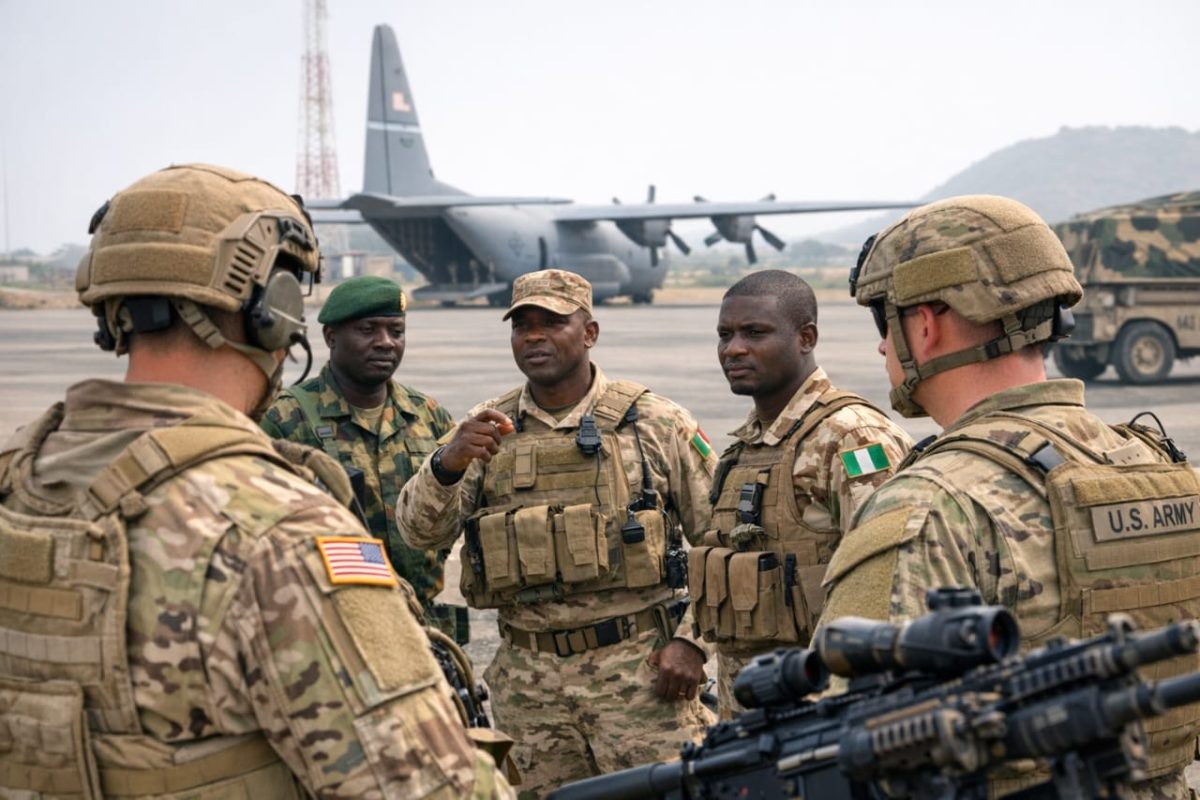
The United States is preparing to withdraw about 200 troops deployed to Nigeria for counterterrorism operations, with the bulk of the personnel expected to leave by late September, according to The New York Times.
The planned drawdown comes after a major US-led counterterrorism operation in the Lake Chad Basin that Washington says dealt a significant blow to the leadership structure of ISIS-linked militants operating in the region.
American and Nigerian officials told The New York Times that although the US deployment was relatively small, it delivered significant results through a combination of intelligence support, military assistance and training.
While the larger contingent is expected to leave Nigeria, small teams of American trainers and intelligence analysts are expected to remain, allowing Washington to maintain a security partnership with Abuja.
US officials reportedly view the Nigerian deployment as a potential model for future counterterrorism operations in Africa, particularly because of the results achieved without a large-scale American military presence.
Last month, the commander of US Africa Command, Gen. Dagvin Anderson, said Washington had already withdrawn a significant number of troops following a May operation that killed Abu-Bilal al-Minuki, described by US officials as the second-in-command of ISIS in the Lake Chad Basin.
According to Anderson, the operation significantly disrupted ISIS’ leadership structure in Nigeria and beyond. He also said Nigerian security forces had been “very active” since the operation, targeting the group’s ability to recruit, operate and sustain itself.
Despite the troop reduction, Anderson said the United States would retain its intelligence partnership with Nigeria, signalling that Washington’s security engagement with Abuja is not ending.
The development comes weeks after Nigeria and the United States held a second round of security discussions in Washington under a joint working group established to address the protection of Christian communities in Nigeria’s Middle Belt.
The talks followed US President Donald Trump’s designation of Nigeria as a country of particular concern over allegations of widespread attacks against Christians, a characterisation the Nigerian government has rejected.
Beyond the ISIS threat, Nigeria continues to face a complex and increasingly fragmented security crisis, including Boko Haram and ISWAP insurgency, banditry in the North-West, terrorism linked to the wider Sahel, farmer-herder violence, cult clashes and militia activity.
Ladd Serwat, Africa senior analyst at the Armed Conflict Location & Event Data Project (ACLED), described Nigeria’s security environment as “a very complicated security situation”.
He noted that while Islamist militant groups remain a serious threat, they account for only “a small proportion of the overall violence” recorded across the country.
The planned US troop withdrawal therefore marks less a complete retreat from Nigeria than a shift in Washington’s counterterrorism strategy—from a larger military footprint towards intelligence cooperation, training and targeted security assistance.
—————————————————————————————————————————————
Your help to our media platform will support the delivery of the independent journalism and broadcast the world needs. Support us by making any contribution. Your donation and support allows us to be completely focus, deeply investigative and independent. It also affords us the opportunity to produce more programmes online which is a platform universally utilised.
Thank you.
Please click link to make – DONATION