


US President warns Britain to scrap 2% levy or face retaliatory trade measures
By ifeoma Onyekachi
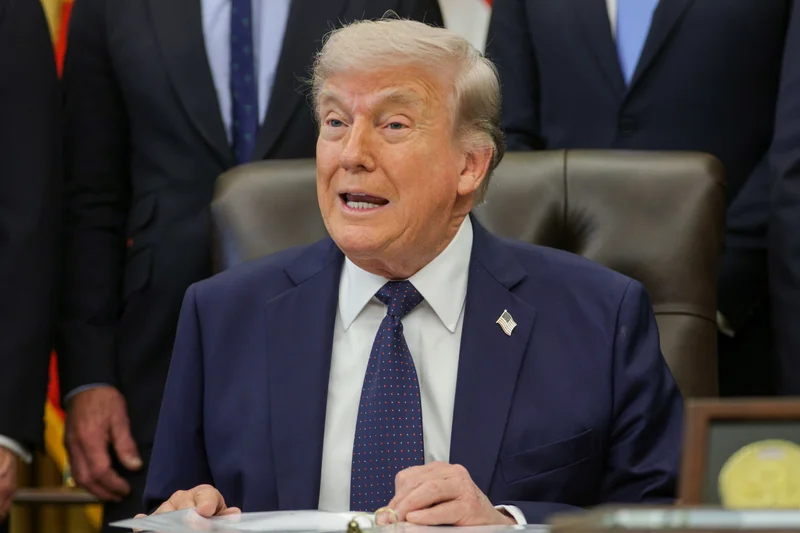
United States President Donald Trump has threatened to impose fresh tariffs on the United Kingdom if it does not abolish its digital services tax (DST), escalating tensions over the treatment of American technology companies.
Speaking to reporters at the Oval Office, Trump warned that Washington could respond with “a big tariff” if Britain maintains what he described as a “cash grab” targeting US firms. He cautioned UK leaders to “be careful,” adding that the US would match or exceed the revenue Britain generates from the tax through retaliatory measures.
The DST, introduced in 2020 under the Conservative Party government, imposes a 2% levy on revenues earned from UK users by large digital companies. It applies to firms with global revenues above £500 million and at least £25 million derived from British users.
The policy was designed to address concerns that major tech firms generate significant income from UK users while paying relatively little in domestic tax. However, it has remained a longstanding point of friction between London and Washington, with US officials arguing that the measure disproportionately targets American companies.
Trump reiterated that similar taxes adopted by other countries were attempts to “take advantage” of the US, singling out the UK as part of a broader pattern. “They think they’re going to make an easy buck,” he said, adding that the US would “reciprocate” if the policy is not reversed.
The issue was reportedly raised during negotiations leading to the UK-US trade agreement in May 2025, but the tax remained unchanged.
Britain is not alone in implementing such measures. Countries including France, Italy, and Spain have also introduced digital services taxes, drawing similar criticism from Washington.
According to UK government figures, the DST generated approximately £800 million in the 2024/25 financial year. Projections suggest it could raise between £4.4 billion and £5.2 billion from 2024 to 2029.
A recent Treasury review described the tax as a temporary measure, noting that the UK remains committed to pursuing a broader international agreement on digital taxation. Until then, officials say the DST ensures digital companies contribute in line with their economic activity in the country.
Trump has previously signaled a tougher stance on countries imposing digital levies on US firms, warning that failure to remove what he calls “discriminatory” policies could trigger significant new tariffs.
—————————————————————————————————————————————
Your help to our media platform will support the delivery of the independent journalism and broadcast the world needs. Support us by making any contribution. Your donation and support allows us to be completely focus, deeply investigative and independent. It also affords us the opportunity to produce more programmes online which is a platform universally utilised.
Thank you.
Please click link to make – DONATION