

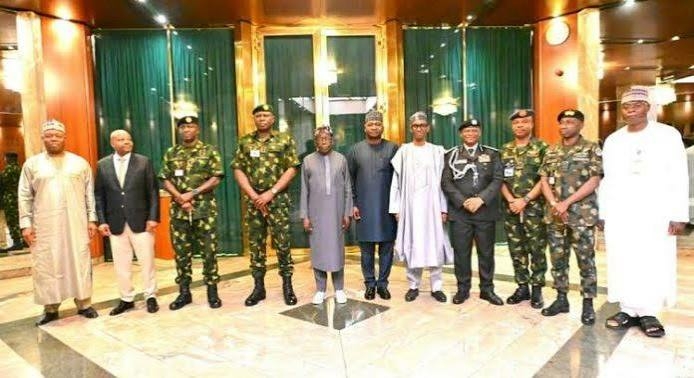
The Presidency has identified the deployment of a unified national surveillance system and stronger border security as key pillars of its renewed strategy to strengthen Nigeria’s homeland security architecture.
The agenda took centre stage on Friday as the Special Adviser to the President on Homeland Security, Adeyinka Famadewa, convened the maiden Homeland Security Stakeholders’ Meeting at the Office of the Secretary to the Government of the Federation in Abuja.
The meeting brought together heads and representatives of key Ministries, Departments and Agencies (MDAs), security institutions and other critical stakeholders to deepen inter-agency collaboration in addressing the country’s evolving security threats.
In his opening remarks, Famadewa said President Bola Tinubu remains committed to building a secure, resilient and technology-driven homeland security system capable of effectively responding to both current and emerging threats.
He said achieving that objective would require sustained collaboration, intelligence sharing and coordinated action among all relevant institutions.
According to him, deliberations at the meeting focused on four strategic priorities: implementing a Unified Surveillance Programme to enhance nationwide situational awareness; strengthening identity management to curb anonymity exploited by criminal elements; improving border security through enhanced coordination, technology deployment and intelligence-led operations; and developing more effective early warning, crisis reporting and response mechanisms.
Famadewa explained that his office was established to complement—not replace—the work of existing security agencies, while commending the armed forces and other security institutions for their continued sacrifices in safeguarding the country.
He also stressed the importance of non-kinetic approaches to security, noting that building resilient communities is critical to addressing emerging threats.
Participants reaffirmed their commitment to strengthening collaboration and institutional coordination, agreeing that Nigeria’s increasingly complex security challenges require a whole-of-government and whole-of-society approach driven by intelligence sharing, technological innovation and effective inter-agency cooperation.
The meeting concluded with a resolution to establish stronger coordination mechanisms, sustain regular stakeholder engagements and develop actionable frameworks to implement the identified priorities in support of national security and public safety.
Among those in attendance were representatives of the Office of the Secretary to the Government of the Federation, the Nigeria Customs Service, Nigerian Correctional Service, Nigerian Financial Intelligence Unit, Federal Road Safety Corps, the Office for Strategic Preparedness and Resilience, as well as the armed forces, security and intelligence agencies, regulatory bodies and other stakeholders.
—————————————————————————————————————————————
Your help to our media platform will support the delivery of the independent journalism and broadcast the world needs. Support us by making any contribution. Your donation and support allows us to be completely focus, deeply investigative and independent. It also affords us the opportunity to produce more programmes online which is a platform universally utilised.
Thank you.
Please click link to make – DONATION