


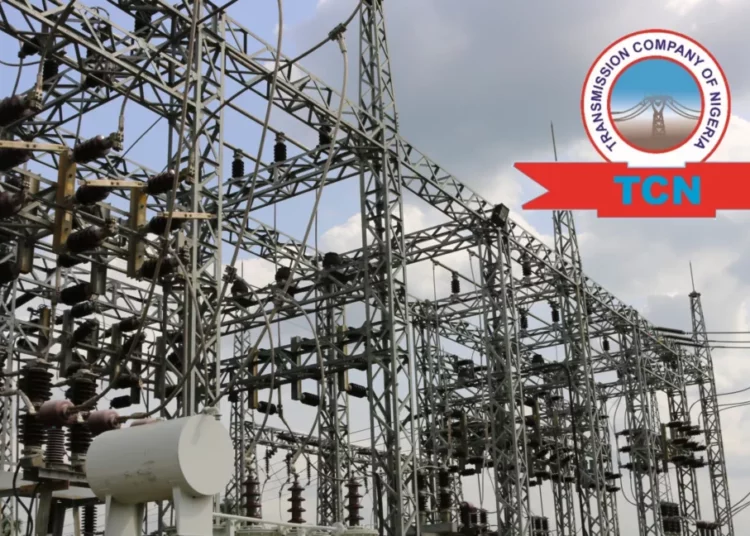
The Transmission Company of Nigeria (TCN) has dismissed claims by the Association of Power Generation Companies (APGC) that transmission constraints are responsible for Nigeria’s persistent electricity shortfall, insisting that official regulatory data points instead to inadequate power generation.
The disagreement followed reports quoting the APGC as saying more than 2,500 megawatts (MW) of electricity generated daily were stranded because the national grid could only wheel about 4,500MW, despite an installed generation capacity of over 15,500MW.
However, in a detailed statement, TCN said data from the Nigerian Electricity Regulatory Commission (NERC) showed that average generation declared available by power plants during the first quarter of 2026 stood at 4,457.96MW—almost the same as the 4,500MW cited by the generators.
According to the company, the figures indicate that the country’s electricity constraint lies with generation availability rather than transmission capacity.
TCN also challenged the installed capacity figure quoted by the APGC, stating that NERC officially recognises 13,625MW as the installed capacity of Nigeria’s 28 grid-connected power plants, not 15,500MW.
The company maintained that the national transmission network currently has a verified wheeling capacity of 8,700MW, significantly higher than the volume of electricity presently generated.
It cited a record grid peak of 5,801.84MW achieved on March 4, 2025, alongside several other peaks above 5,500MW, as evidence that the transmission system can evacuate substantially more power than it currently receives from generation companies.
TCN said investments undertaken between January 2024 and November 2025 strengthened the grid, including the installation of 82 new power transformers that added about 8,500MVA to the network and the completion of new 330kV transmission lines along the Ihovbor–Benin and Ihovbor–Ajaokuta corridors, which increased wheeling capacity on the Benin axis by more than 600MW.
The company further cited NERC data showing that the average Plant Availability Factor (PAF) for power stations in the first quarter of 2026 was only 32.72 per cent, meaning nearly two-thirds of Nigeria’s installed generation capacity was unavailable due to gas shortages, maintenance activities and mechanical faults.
According to TCN, several thermal power plants, including Alaoji, Rivers, Ibom Power, Sapele Steam, Trans Amadi and Omotosho, recorded particularly low operational availability during the period.
On the issue of stranded power, TCN said NERC’s reported grid load factor of 92.26 per cent showed that almost all electricity made available to the grid was successfully evacuated.
Based on the regulator’s figures, it estimated that only about 345MW of declared available generation remained undispatched during the quarter—far below the 2,500MW to 4,000MW claimed by the generators.
The transmission company also disputed reports of excessive transmission losses, noting that NERC’s audited Transmission Loss Factor for the first quarter of 2026 stood at 7.96 per cent, equivalent to about 327MW, rather than the 1,200MW to 1,300MW cited in some reports.
It added that some of the financial penalties referenced by stakeholders relate to electricity market settlement mechanisms and should not be interpreted as physical transmission losses.
Addressing recent grid disturbances, TCN said NERC’s preliminary investigation into the January 27, 2026 partial grid collapse attributed the incident to inadequate reactive power support affecting voltage stability rather than transmission infrastructure failure.
The company, however, accepted responsibility for the January 23, 2026 nationwide grid collapse, explaining that it resulted from a busbar separation at the Sapele Transmission Station and that investigations into the incident had been concluded.
TCN further argued that the reported N2.28 trillion capacity payment shortfall was driven more by poor revenue collection and remittances by electricity distribution companies than by transmission bottlenecks.
It pointed to Aggregate Technical, Commercial and Collection (ATC&C) losses of 37.44 per cent recorded by distribution companies in the first quarter of 2026, describing the figure as significantly above regulatory targets.
While acknowledging that challenges remain across the electricity value chain, TCN urged stakeholders to rely on verified regulatory data and called for closer collaboration among the Nigerian Independent System Operator, NERC, generation companies and distribution companies to improve the reliability and sustainability of electricity supply nationwide.
—————————————————————————————————————————————
Your help to our media platform will support the delivery of the independent journalism and broadcast the world needs. Support us by making any contribution. Your donation and support allows us to be completely focus, deeply investigative and independent. It also affords us the opportunity to produce more programmes online which is a platform universally utilised.
Thank you.
Please click link to make – DONATION