

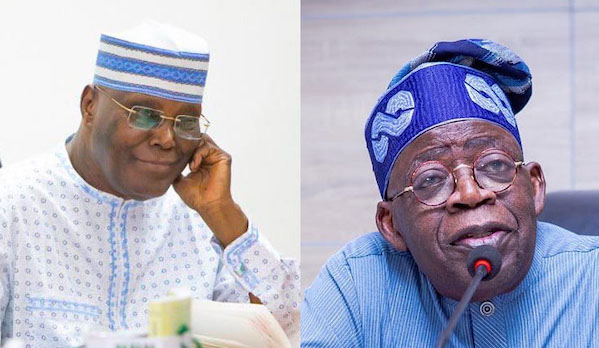
The Presidency has mounted a robust defence of President Bola Tinubu’s economic reforms, dismissing former Vice President Atiku Abubakar’s criticism of the administration as misleading, outdated and disconnected from current economic realities.
It also challenged the African Democratic Congress (ADC) presidential candidate for the 2027 election to substantiate his allegation that the Federal Government benefited from an unaccounted oil windfall of N7.98 trillion.
In a statement titled, “Facts, Not Fear: A Point-by-Point Response to Atiku Abubakar on Nigeria’s Reform Journey,” presidential spokesman Bayo Onanuga said Atiku’s assessment relied largely on economic conditions in 2024 while ignoring what he described as measurable gains recorded since the Tinubu administration’s reforms took effect.
“Democracy thrives on disagreement, but disagreement must be rooted in facts, not frozen snapshots of history,” Onanuga said.
He argued that Atiku’s claims of fiscal recklessness, excessive borrowing, poor management of fuel subsidy savings and opposition to the administration’s tax reforms presented a distorted picture of Nigeria’s economic trajectory.
According to him, reforms should be evaluated by their long-term outcomes rather than the initial hardships they create.
“Judging a reform programme solely by its earliest and most painful phase is like judging chemotherapy by the nausea it induces while ignoring the remission it seeks to achieve,” he said.
Onanuga said Nigeria’s economy had rebounded significantly following the exchange-rate reforms, noting that the country’s dollar-denominated Gross Domestic Product (GDP), which dropped to about $253 billion after the currency adjustment, had recovered to approximately $377 billion, representing a 49 per cent increase.
He added that nominal GDP had expanded from about N314 trillion in 2024 to approximately N530 trillion.
Defending the administration’s borrowing profile, Onanuga said Nigeria’s debt remained sustainable when measured against the size of the economy and its revenue capacity.
“Debt, in itself, is not the defining measure of fiscal health,” he said, adding that Nigeria’s debt-to-GDP ratio stood at about 40 per cent, while the debt service-to-revenue ratio had fallen from nearly 100 per cent in December 2022 to below 60 per cent under the Tinubu administration.
The presidential spokesman described the removal of fuel subsidy as a bold but necessary policy that previous administrations, including the one in which Atiku served as vice president, failed to implement.
He said the policy had increased allocations to states and local governments, enabling greater spending on infrastructure, education, healthcare, salaries and pensions.
On tax reforms, Onanuga said the measures were designed to reduce the burden on low-income earners and small businesses while ensuring wealthier individuals and profitable companies paid a fairer share of taxes.
Highlighting the administration’s social sector interventions, he said more than 3,000 primary healthcare centres had been revitalised, over 78,000 frontline health workers retrained and three world-class cancer centres established in Kubwa, Enugu and Katsina.
He added that more than 100 health facilities now provide free caesarean sections for indigent women.
On education, Onanuga said the Nigerian Education Loan Fund (NELFUND) had supported more than 1.64 million students, disbursing over N303 billion to beneficiaries across about 300 tertiary institutions.
He also credited the administration with restoring stability to public universities by ending the recurring industrial actions that had disrupted academic calendars.
The Presidency further cited ongoing investments in roads, railways, power, airports, housing and digital infrastructure as evidence of its commitment to long-term economic transformation.
Rejecting Atiku’s allegation of an unaccounted N7.98 trillion oil windfall, Onanuga insisted no such windfall existed, explaining that while international crude oil prices exceeded budget benchmarks, production remained below projections and part of Nigeria’s crude output had already been committed to servicing existing loan obligations.
“The production shortfall partly offset the price premium,” he said.
He challenged the former vice president to provide evidence for his claim.
“Atiku will do well to show the workings for his N7.98 trillion oil windfall,” Onanuga said.
While acknowledging that the reforms had imposed hardships on Nigerians, the Presidency maintained they were necessary to correct longstanding structural distortions and place the economy on a sustainable footing.
Onanuga said inflation, which fell to 14.4 per cent in November 2025 before rising to 15.91 per cent following the Middle East conflict, had resumed a downward trend and was projected to decline to about 12 per cent by the end of the year.
“Nigeria’s economy is not yet where it aspires to be,” he said. “But neither is it where it stood at the height of its structural distortions or in the bygone years of fiscal waste and slackness.”
He said the Tinubu administration would remain focused on deepening reforms, strengthening institutions and expanding economic opportunities despite criticism from the opposition.
—————————————————————————————————————————————
Your help to our media platform will support the delivery of the independent journalism and broadcast the world needs. Support us by making any contribution. Your donation and support allows us to be completely focus, deeply investigative and independent. It also affords us the opportunity to produce more programmes online which is a platform universally utilised.
Thank you.
Please click link to make – DONATION