

Peter Obi: I Can Transform Nigeria in Four Years, Ready to Sign One-Term Pact
What was expected to be a brief conversation at the airport turned into a 30-minute discussion on Nigeria’s security challenges, economy, governance, elections and the future of the country.
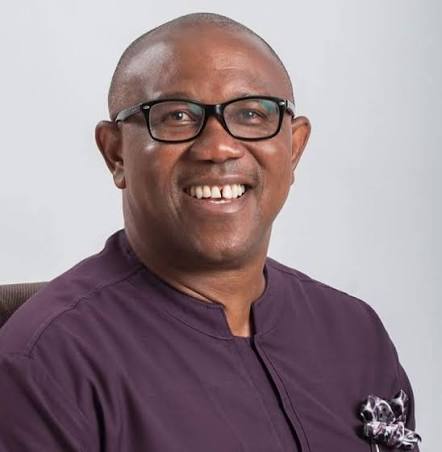
Despite being moments away from boarding his flight, former Anambra State governor and presidential candidate, Peter Obi, responded to questions on some of the major issues shaping Nigeria’s political landscape without appearing hurried.
The discussion began with insecurity, which Obi described as the foremost responsibility of any government.
He said protecting lives and property must remain the foundation of governance, adding that insecurity cannot be defeated through military action alone.
According to him, Nigeria requires stronger intelligence gathering, improved coordination among security agencies, modern security technology, better welfare for personnel and deliberate measures to address poverty, unemployment and hopelessness that contribute to criminality.
On the economy, Obi acknowledged that reforms were necessary but insisted they must be properly planned and implemented with consideration for their impact on citizens.
He argued that Nigeria must urgently transition from a consumption-driven economy to one based on production, with greater investment in agriculture, manufacturing and small businesses.
Responding to criticisms that his economic proposals often appear attractive but lack sufficient detail, Obi said his approach remained straightforward: reduce the cost of governance, eliminate waste, block financial leakages, support production and create an environment where businesses can grow.
To illustrate Nigeria’s untapped potential, he compared the country with Bangladesh, noting that despite having a much smaller land mass, Bangladesh produces significantly more rice than Nigeria.
He said Northern Nigeria, with its vast agricultural potential, could become Africa’s food hub if insecurity is addressed and farmers receive the necessary support.
“If we secure the North, invest in modern agriculture, expand irrigation, improve rural infrastructure, and guarantee farmers access to finance and markets, there is no reason Northern Nigeria cannot become the food basket of Africa,” Obi said.
He argued that agriculture should move beyond subsistence farming and become an export-oriented sector capable of generating more foreign exchange than crude oil.
“Oil is a diminishing asset, but productive land, properly managed, can create wealth for generations,” he said.
On the 2027 elections and recent political realignments, Obi dismissed concerns over his movement across political platforms, saying parties are only vehicles for achieving good governance.
According to him, the priority should be bringing together competent and patriotic Nigerians committed to solving the country’s problems.
One-term presidency promise
Obi also addressed repeated questions over whether he would serve only one term if elected president, citing the need for equity, national unity and trust.
He said he remained committed to a four-year presidency and was willing to formalise the commitment through a legal undertaking.
“Yes, you can do a lot in four years. You can change Nigeria in four years. I am committed to serving a single term of four years,” he said.
According to him, Nigeria’s biggest deficit is not only economic but also a crisis of trust between leaders and citizens.
“We must rebuild confidence by showing that a leader’s word matters,” he said.
Obi added that he would be prepared to sign a legally binding affidavit before a competent court affirming his commitment to one term.
“This is bigger than Peter Obi. It is about national healing and unity. It would be a betrayal of trust to seek the support of Nigerians based on such an understanding and later renege on it,” he said.
“My objective is not to remain in office indefinitely but to restore security, production, stability and shared prosperity within the period entrusted to me.”
‘Leadership attracts resistance’
Speaking on criticisms and attacks directed at him, Obi said anyone seeking to challenge existing systems must be prepared for opposition.
“Leadership is not about avoiding criticism. When you challenge a system, there will always be opposition. What matters is remaining focused, truthful and committed to the people,” he said.
He urged Nigerians not to lose faith in the democratic process, describing the 2027 election as a critical moment for the country.
“The 2027 election will be a defining moment between Nigerians who desire a better future and those who have continued to hold the country back through failed leadership,” he said.
He called on citizens to participate actively, protect their votes and take ownership of democracy.
Electoral reform, corruption and debt
On electoral reforms, Obi said restoring confidence in elections requires strict adherence to electoral laws, credible technology and independent institutions.
He expressed concern over unresolved issues surrounding electronic transmission of results during previous elections, insisting that the will of voters must always be respected.
“Democracy belongs to the people, and the people’s mandate must always be respected. Every legitimate vote must count,” he said.
On corruption, Obi argued that leadership integrity remains the strongest foundation for fighting graft.
“When a president or governor is personally not corrupt, corruption in that government is already reduced significantly. Leadership sets the tone,” he said.
He advocated transparency, open procurement systems and responsible management of public resources.
Addressing Nigeria’s rising debt profile, Obi said borrowing was not the problem but rather what borrowed funds were used for.
“Every serious economy borrows. The question is what you borrow for. Borrowing for productive sectors such as education, healthcare, infrastructure, agriculture, manufacturing and technology can create wealth. But borrowing to fund consumption only transfers today’s burden to future generations,” he said.
He also emphasised the importance of education, healthcare and youth development, describing human capital investment as the foundation of national progress.
As the conversation ended, Obi said Nigeria must position itself as a destination for investment through credible leadership, stable institutions and consistent policies.
His final message to Nigerians was one of optimism.
“Nigerians should never lose hope. Our greatest resource is our people. What has held us back is leadership. If we get leadership right, every other challenge becomes easier to address. That is why I continue to say that a new Nigeria is possible.”
—————————————————————————————————————————————
Your help to our media platform will support the delivery of the independent journalism and broadcast the world needs. Support us by making any contribution. Your donation and support allows us to be completely focus, deeply investigative and independent. It also affords us the opportunity to produce more programmes online which is a platform universally utilised.
Thank you.
Please click link to make – DONATION