

Since Nigeria’s return to democracy in 1999, presidential elections have revealed a troubling paradox. The number of registered voters has steadily increased, yet participation has consistently declined, and the size of winning mandates has shrunk dramatically. The result is a democracy where those in office/s govern with increasingly fragile claims to popular legitimacy.
 At the dawn of the Fourth Republic, voter engagement was relatively strong. In 1999, Olusegun Obasanjo secured 18.7 million votes to become president. By 2003, he had expanded that mandate to 24.4 million votes. In 2007, Umaru Musa Yar’Adua emerged with 24.6 million votes. In 2011, Goodluck Jonathan polled 22.5 million votes to win. Each of these victories reflected the will of more than 20 million Nigerians and turnout levels above 50 percent.
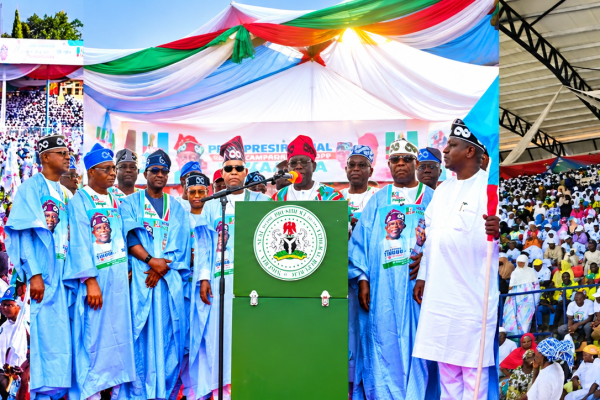
Contrast this with 2023. Despite a record 93.5 million registered voters, Bola Ahmed Tinubu was declared president with just 8.8 million votes. This figure is barely a third of Yar’Adua’s tally in 2007, and far less than half of Obasanjo’s or Jonathan’s mandates. It is the lowest winning total in Nigeria’s democratic history, and it underscores the growing gap between citizens and the political class.
The implications are far-reaching. A president who emerges with fewer than 10 million votes in a country of over 200 million people, and with almost 94 million registered voters, cannot convincingly claim broad national acceptance. Instead of a show of dominance, the 2023 election revealed the limits of political brand power. Nigerians appear unconvinced that those seeking office represent genuine change. If anything, the result points to distrust, disengagement, and empathy fatigue among the electorate.
Looking ahead to 2027, the mathematics is unforgiving. If turnout rises to the levels of 2011 or even 2003, when over 22 million votes secured victory, a repeat of Tinubu’s 8.8 million would be insufficient. The 2023 formula cannot guarantee re-election, nor can incumbency, defections, or political machinery serve as substitutes for legitimacy. Nigeria’s democracy is sending a clear signal: mandates must be earned on a broader scale.
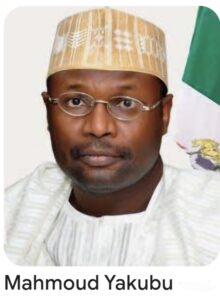 Against this backdrop, the question of who becomes the next Chairman of the Independent National Electoral Commission (INEC) takes on added weight. Professor Mahmood Yakubu, who has served since 2015, is completing his second and final term. By convention, outgoing chairmen often step aside toward the end of their tenure, paving the way for new leadership.
Since Nigeria’s return to democracy, the commission has been led by:
Justice Ephraim Akpata (1998–2000)
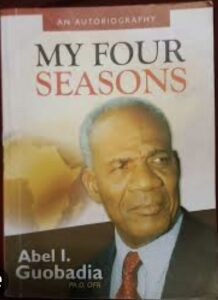
Dr. Abel Guobadia (2000–2005)
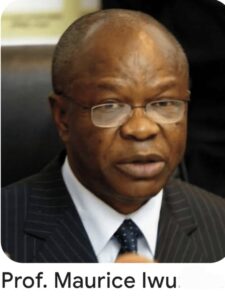
Professor Maurice Iwu (2005–2010)
Professor Attahiru Jega (2010–2015)
Professor Mahmood Yakubu (2015–2025)

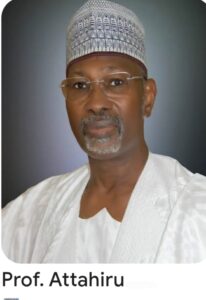 Of these, the last two — Jega and Yakubu — both northern of the same faith and belief, have overseen Nigeria’s last four general elections (2011, 2015, 2019, 2023). This continuity has created a perception imbalance, especially as no South-westerner has ever been appointed INEC chairman despite the South West’s central role in Nigerian politics.
The Nigerian Constitution vests the power of appointment firmly in the presidency. Section 154(1) of the 1999 Constitution (as amended) states clearly that the President shall appoint the Chairman of INEC, subject to Senate confirmation. This is both an executive prerogative and a constitutional responsibility. While the President enjoys wide discretion, the expectation is that his choice must strengthen public confidence in the electoral process.
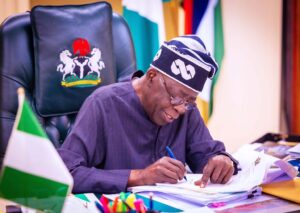 President Tinubu therefore faces a historic test. On the one hand, he has the legal authority to appoint whomever he wishes. On the other, he must contend with the political realities of a diverse federation in which trust in democratic institutions is already fragile. If he repeats the northern-same-faith-belief precedent of the past 15 years, scepticism about inclusivity will deepen. If he broadens the appointment to reflect national balance — in ethnicity, religion, and region — it may reassure Nigerians that future elections will be more transparent and credible.
The stakes could not be higher. Nigeria’s elections are not just about numbers; they are about perceptions of fairness and legitimacy. A credible INEC is essential to reversing declining voter turnout and restoring faith in the ballot. Without that trust, mandates will continue to shrink, and presidents will govern from a position of weakness rather than strength.
For Tinubu, the lesson is clear. In a climate where fewer citizens believe their votes count, his administration cannot afford to ignore the optics of inclusivity. No president, governor, minister or CEO of an organisation would willingly appoint someone who might derail their government’s stability, but statesmanship demands a broader perspective. Appointing an INEC chairman who commands confidence across divides would not weaken the presidency — it would strengthen it.

Nigeria map and flag
Nigeria’s democracy stands at a crossroads. Declining participation, fragile mandates, and the looming transition in electoral leadership all converge into a single reality: legitimacy is slipping. If turnout surges in 2027, the era of winning with 8.8 million votes will be over. Political brands that boast dominance without numbers are building castles on sand. History has shown that overconfidence has been the Waterloo of many, and the coming years will not be different.
The challenge for Nigeria’s leaders is not only to win elections but to do so in a way that leaves no doubt about their mandate. Anything less risks deepening the fragility of the Republic itself.
—————————————————————————————————————————————
Your help to our media platform will support the delivery of the independent journalism and broadcast the world needs. Support us by making any contribution. Your donation and support allows us to be completely focus, deeply investigative and independent. It also affords us the opportunity to produce more programmes online which is a platform universally utilised.
Thank you.
Please click link to make – DONATION