

 The recent state visit of Bola Ahmed Tinubu to the United Kingdom was far more than diplomatic ceremony. It was a moment of deep symbolism, international visibility and national reflection, a reminder that Nigeria still counts significantly in the eyes of the world.

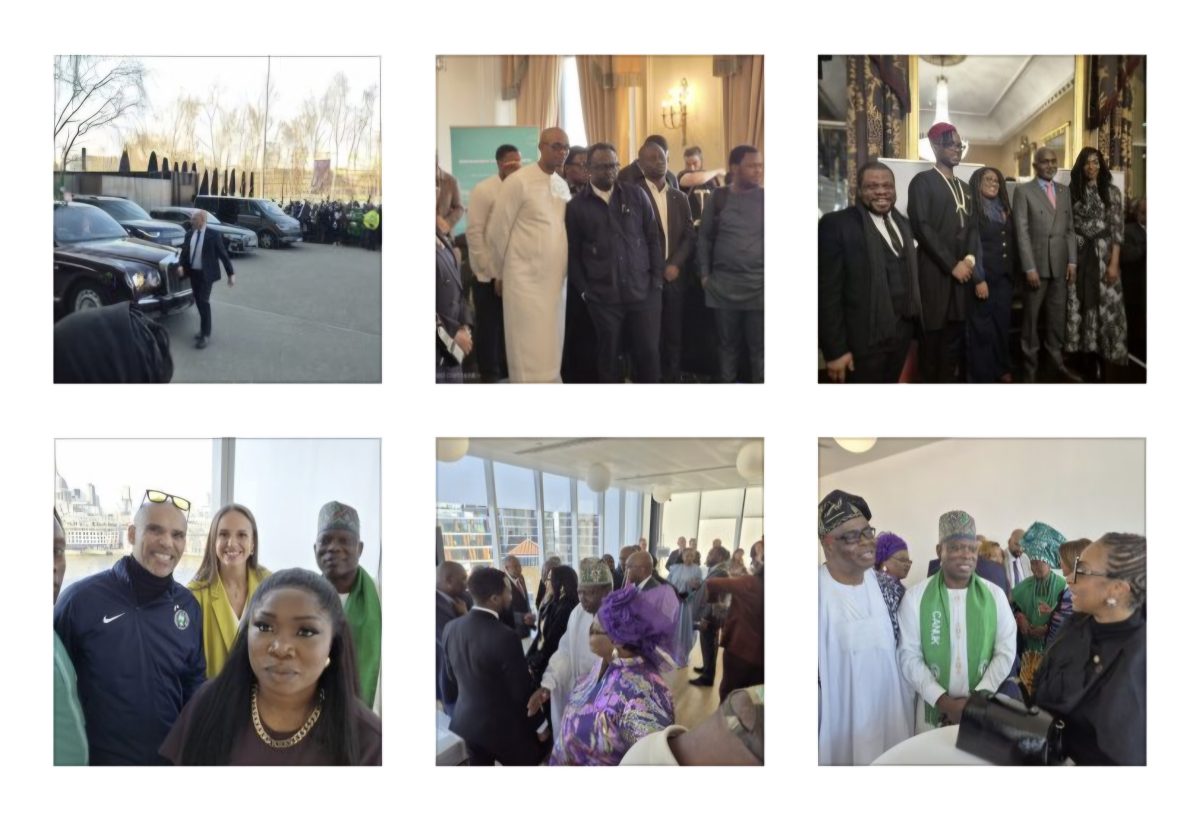
NIDO – Mr. Niyi, CANUK – Dr. Maisanda (Chairmen) and Minister of Trade
For many Nigerians in the diaspora, especially those of us who have spent decades building platforms that project Nigeria, Africa and the Black race globally, the visit carried unusual emotional weight.
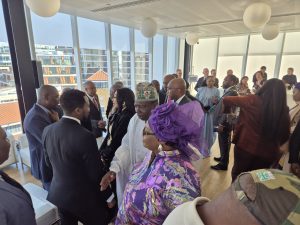 As someone privileged by providence to have planted a seed in the media space over two decades ago – using broadcasting to tell our stories, shape narratives and preserve our voice; have covered royal ceremonies, government occasions and international state functions across Britain and beyond. I have witnessed protocol at 10 Downing Street, attended engagements around Buckingham Palace, met the Royals and reported events that carried global consequence.
Yet this particular occasion touched something deeper because Nigeria itself stood visibly before the world.
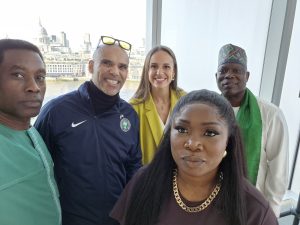
The reception, dignity and organisation surrounding the visit projected not only respect for a President but recognition of a nation.
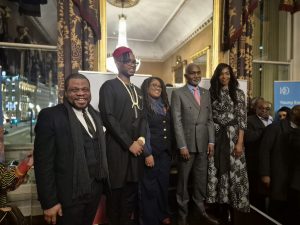 It was not merely Bola Ahmed Tinubu that was received – it was Nigeria, represented constitutionally and politically through its elected President and First Lady.
The same nation that hosted Nigeria also demonstrates how democracy accommodates both government and opposition as necessary pillars of national balance. Figures such as Kemi Badenoch stand as examples of opposition voices operating within structured democratic space.
Opposition is not a threat to democracy.
Opposition strengthens democracy.
A nation without constructive scrutiny weakens itself.
Nigerians must therefore stop seeing disagreement as hostility and begin understanding accountability as patriotic duty.
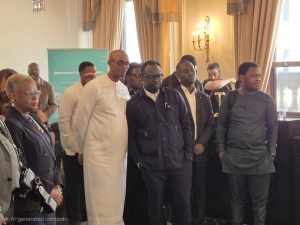
This state visit should not end as photographs, speeches and memories.
It should become a mirror.
A mirror asking every Nigerian:
What kind of country do we truly want?
What standards do we demand?
What values do we defend?
And what legacy shall we leave behind?
This is therefore a time to rejoice—but also a time to reflect.
A time to celebrate Nigeria – but also to challenge Nigeria.
A time to be proud – but also to rise.
Because if the world can still honour Nigeria at this level, then Nigeria must also honour itself through leadership worthy of its greatness.
Across the streets, public spaces and gathering points, what became evident was the scale of public interest the visit generated. Nigerians came from many backgrounds – professional groups, community associations, youth organisations, cultural bodies, media practitioners, faith leaders and civic representatives.
But even more striking was the wider crowd beyond Nigerians.
There were Black communities from across Africa and the Caribbean. There were white British observers, diplomatic followers, curious residents and supporters who came simply because Nigeria’s presence commanded attention.

In many areas, non-Nigerians visibly outnumbered Nigerians.
That itself was a statement.
It showed that Nigeria remains a nation that draws interest far beyond its own borders.
The colour, enthusiasm, discipline and atmosphere all conveyed one unmistakable truth: Nigeria still occupies a unique place in global relevance.
Anything connected to Nigeria carries unusual energy.
Anything Nigerians engage in often resonates internationally.
Anything Nigerians are allowed to enter fairly, they frequently elevate through excellence, resilience and talent.
This is why such moments must not be taken lightly.
For several days, international media projected Nigeria positively. Global audiences watched Nigerian presence framed through ceremony, order, protocol and dignity.
And this matters because perception influences opportunity.
Yet beyond celebration lies responsibility.
The standards displayed throughout the visit reflected something many developing democracies must constantly pursue; meticulous leadership, serious institutions and respect for systems.
Every venue operated with order. Invitations were honoured. Security was precise. Access was regulated professionally. Accountability was visible. Nobody simply entered because of influence; process mattered.
That is one of the strongest lessons Nigeria must take home.
The United Kingdom continues to demonstrate that leadership is not sustained merely by power, but by systems that function regardless of personalities.
Yes, leadership matters.
But appropriate leadership matters even more.
Leadership that is meticulous.
Leadership that values merit.
Leadership that understands that institutions outlive office holders.
As such careful standards are seen here in Britain, Nigeria too must consciously produce and sustain such quality in governance.
Our relationship with Britain dates back well over a century. It was from this historical political structure that Nigeria eventually obtained independence.
History therefore imposes both memory and responsibility.
It is only worthy that a child learns from those who once shaped its early foundations, and where possible, even surpasses them.
Nigeria therefore should have overtaken Britain in many measurable areas of development, considering our enormous human capital, population advantage, natural resources and entrepreneurial energy.
Even where historical grievances remain, and where arguments of British unfairness may still be debated, no nation progresses merely by rehearsing inherited complaints.
Progress belongs to those who solve problems.
Across the world, those remembered most are not those who explain difficulties endlessly, but those who create solutions.
BEN TV is celebrated because it transformed black issues into global utility.
Aliko Dangote is celebrated because industrial ambition became visible reality through major projects such as the refinery.
Telecommunications pioneers are remembered because they connected millions and changed daily life.
Creators, innovators, builders and solution providers earn enduring respect because they move nations forward.
That is exactly where Nigeria must now focus.
The state visit should therefore become more than memory.
It must become motivation.
A call for governance that is greater, not merely adequate.
A call for institutions that work beyond personalities.
A call for leadership that rewards merit over convenience.
A call for citizens to believe that Nigeria can still become one of the most respected nations of the Black world.
Personally, there were moments during this visit when emotion became difficult to contain.
Not because ceremony itself was unfamiliar, but because seeing Nigeria honoured so visibly reminded me that our country still carries enormous unfinished greatness.
Nigeria can lead.
Nigeria can inspire.
Nigeria can still stand at the forefront of global Black excellence.
But international honour must now be matched by internal seriousness.
Nigeria was celebrated abroad.
Nigeria must now become exceptional at home.
—————————————————————————————————————————————
Your help to our media platform will support the delivery of the independent journalism and broadcast the world needs. Support us by making any contribution. Your donation and support allows us to be completely focus, deeply investigative and independent. It also affords us the opportunity to produce more programmes online which is a platform universally utilised.
Thank you.
Please click link to make – DONATION