

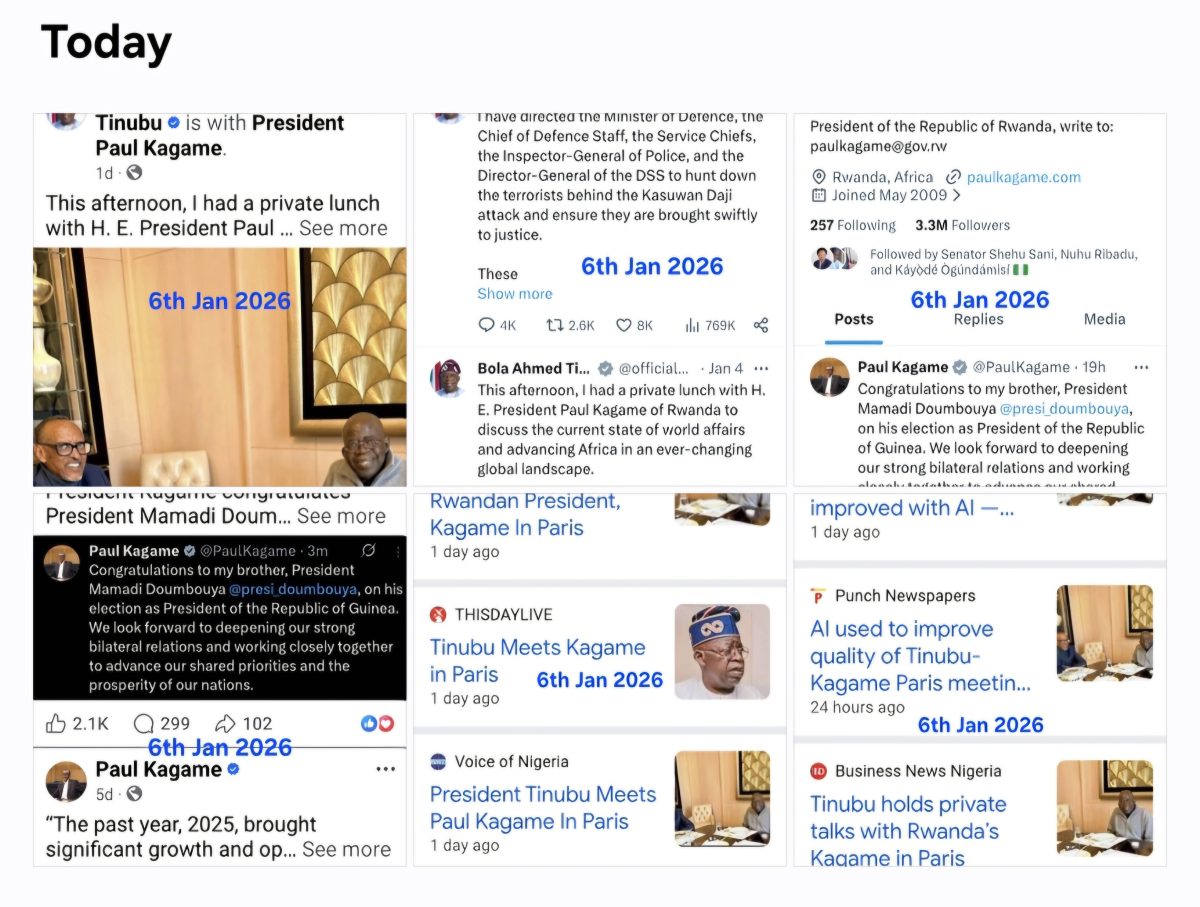
In global leadership and diplomacy, not every meeting is equal — and not every meeting needs to be announced. Yet when meetings are communicated, how they are framed can matter as much as why they occurred.
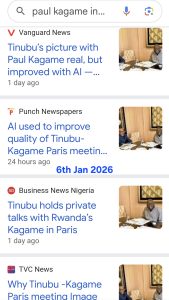 Recent public discourse around a reported meeting between Nigeria’s President and Rwanda’s President in Paris offers a useful case study – not for controversy, but for learning.
This commentary is not about questioning the legitimacy of any engagement, nor is it a critique of personalities. Rather, it is an examination of leadership optics, media symmetry, and the often-overlooked role of aides and communication teams in safeguarding the stature of the offices they serve. BEN TV roles includes and majorly is about Bridging The Gaps, – our tagging ethos. It pains seeing such deliveries when much can be avoided.
In international diplomacy, it is common for bilateral meetings to be jointly acknowledged or synchronised in messaging. When a story appears prominently from one side and is absent from the other, it creates what communication professionals call asymmetrical signalling.
This does not imply disrespect.
It does not imply rejection.
But it does imply difference in assigned significance.
At global level, silence is not accidental. It is often deliberate.
For seasoned observers, one-sided publicity usually signals that the meeting was:
- Courtesy-based rather than strategic, or
- Exploratory rather than outcome-driven, or
- Not considered communication-worthy by one party
None of these are inherently negative — unless they are misframed.
In diplomacy, restraint is a form of authority.
Presidents and prime ministers do not speak only through words; they speak through:
- Timing
- Placement
- Silence
- Delegation
Over-publication, especially without reciprocal acknowledgement, can unintentionally:
- Reduce perceived parity
- Signal eagerness
- Invite unnecessary domestic speculation
Aides must therefore ask a simple but critical question before pressing “publish”:
Does this elevate the office — or merely fill the news cycle?
Bigger is not always louder
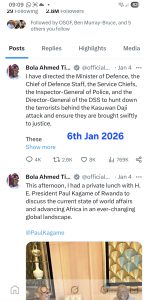 Nigeria is Africa’s most populous nation and a key regional power. Yet in global engagement, size alone does not guarantee narrative dominance.
Countries that consistently project influence do so through:
- Message discipline
- Strategic selectivity
- Professional diplomatic choreography
This is why foreign ministries exist and why they are traditionally staffed by trained, seasoned diplomats who understand protocol, perception, and long-term signalling.
Local political communication skills do not automatically translate into global statecraft competence.
The role of aides: custodians, not amplifiers
Presidential aides are not merely content distributors. They are custodians of institutional dignity.
Their responsibility is not to chase visibility, but to:
- Protect parity
- Maintain gravitas
- Avoid unintended hierarchy
- Align domestic narratives with international realities
Well-meaning enthusiasm, if unchecked, can do more harm than silence.
A learning moment, not a fault-finding mission
This observation should be taken in the spirit of institutional learning, not blame.
Leadership evolves. Communication ecosystems change. But one principle remains constant:
In global leadership, perception is policy.
This is why nations invest heavily in:
- Diplomatic training
- Strategic communications
- Protocol advisory units
It is also why mentoring and continuous capacity-building for aides is not optional but totally – is essential.
In our final conclusion –
Not every meeting must trend.
Not every photograph must circulate.
Not every engagement must be narrated.
Sometimes, the most powerful statement a leader makes is not speaking at all — and the most professional act an aide can perform is knowing when not to post.
As Nigeria continues to engage the world, aligning local political communication with global diplomatic standards will be critical in ensuring its leaders are always positioned where they belong: with dignity, parity, and authority.
—————————————————————————————————————————————
Your help to our media platform will support the delivery of the independent journalism and broadcast the world needs. Support us by making any contribution. Your donation and support allows us to be completely focus, deeply investigative and independent. It also affords us the opportunity to produce more programmes online which is a platform universally utilised.
Thank you.
Please click link to make – DONATION