


The Scramble for Buhari’s “12 Million Votes” — Who Can Truly Claim the Mantle?
The legacy of Muhammadu Buhari’s electoral stronghold, often framed as 12 million loyal northern votes continues to shape Nigeria’s political calculations ahead of the 2027 general elections. While Buhari is no longer on the ballot, the magnetic pull of his base remains potent, particularly across the North. With Buhari’s actual support in the 2023 election cycle estimated closer to 9 million due to his limited engagement and lack of a direct candidate, key northern figures are now jostling to inherit this critical bloc.
This article explores the most prominent contenders among the northern elite vying for this electoral inheritance and assesses their chances.
Kashim Shettima
 Vice-President Shettima is arguably closest to the seat of power, yet his political weight in the North remains complex. Once a two-term governor of Borno State, Shettima recently referenced how former Attorney-General of the Federation, Mohammed Bello Adoke, advised President Goodluck Jonathan not to suspend him as governor, implying his democratic credentials. Yet, critics argue his role under Tinubu has lacked visible autonomy; he has not consistently been handed over presidential authority during Tinubu’s foreign trips. Moreover, his exclusion from some high-level endorsements, including those at the Gombe summit, sparked a mini-uprising led by Borno delegates: “No Shettima, no 2027”. These signs suggest he has northern clout, but his image is sometimes seen as elite‑oriented, with less direct grassroots appeal than Buhari had.
Atiku Abubakar
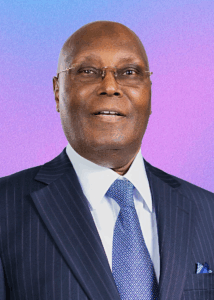 Veteran politician Atiku Abubakar has re-emerged as a central force in northern realignment, recently departing from the PDP to lead a burgeoning coalition under the ADC umbrella. With former governors such as Rotimi Amaechi, Nasir El‑Rufai, Rauf Aregbesola, David Mark and Aminu Tambuwal now rallying around him, Atiku is once again building formidable structures. However, at 79 by the next elections, doubts persist about his vitality and appeal to younger or first-time voters. While he has the opportunity to capture parts of Buhari’s base, evident in the chants of his name at Buhari’s burial; his support in the Middle Belt remains fragile. Though regionally and religiously aligned with Buhari’s voter base, translating this into electoral dominance will depend on more than heritage; it will require policy clarity and mass mobilisation.
Nasir El‑Rufai
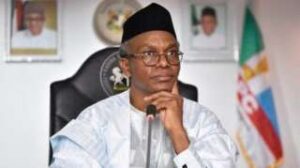 The former Kaduna State governor and one of the most strategic minds in the northern bloc, El-Rufai was among the earliest high-profile defectors from APC, aligning with the Social Democratic Party (SDP). His departure gave momentum to discussions around a northern-led political realignment. While his political intelligence is widely acknowledged, El-Rufai has never demonstrated the mass mobilisation capabilities that Buhari consistently enjoyed. His base, while loyal and vocal, is more technocratic than populist. Nonetheless, as a key figure within the emerging ADC-led coalition, his influence could be pivotal in helping shape northern voter sentiment even if he is unlikely to directly command millions of votes on his own.
Rabiu Musa Kwankwaso
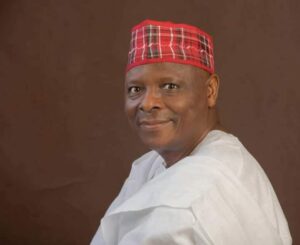 Kwankwaso, through the NNPP and his distinct Kwankwasiyya movement, continues to hold sway in Kano, arguably the North’s most politically vital state. His grassroots mobilisation and consistent branding make him a potent figure. However, despite his strength in Kano and a few surrounding areas, he has yet to build a coalition of elite northern leaders around him. Unlike Atiku or Shettima, he lacks broad national endorsement. Still, his message of self-reliance and people-driven governance resonates with northern youths. If alliances are struck effectively, Kwankwaso could evolve from a regional force to a national contender. For now, he remains a strategic wild card in the race for Buhari’s electoral heritage.
Abdullahi Adamu Al‑Makura
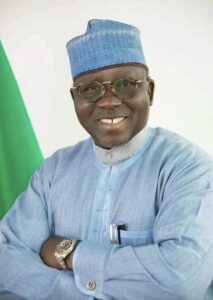 Former Governor of Nasarawa State and one-time top contender for the APC national chairmanship, Al-Makura’s political resurgence is tied to the recent exit of Abdullahi Ganduje from the APC leadership. Ganduje had held the role until his resignation last month, following internal party tensions. Al-Makura now finds himself well-placed to re-enter the national conversation, particularly as a Middle Belt figure capable of bridging the northern and central divides. Though not a mass mobiliser, he may be positioned to unify sections of the North Central within APC’s internal realignment, especially as the party seeks to redefine its identity post-Buhari. He may not own Buhari’s base, but he could influence how and where those votes are distributed as founding member of the CPC block of APC.
Bala Mohammed
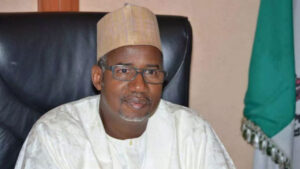 The Governor of Bauchi State, Bala Mohammed, remains one of the quiet yet strategic actors in northern politics. While not overtly vocal in national conversations, he commands respect across several northern states and has previously demonstrated cross-party appeal. His governance style—balancing technocratic management with culturally attuned leadership—positions him as a possible consensus candidate for a fragmented northern bloc. Bala’s political evolution has also kept him relatively insulated from the frictions that have destabilised other contenders. Although not yet the front-runner to inherit Buhari’s voting base, his stature in the North-East and measured national outlook could enable him to emerge as a dark horse in the race for the northern vote especially if wider coalitions continue to fracture.
While many political figures claim links to Buhari’s legacy, none yet commands his level of trust among the masses. Instead of one anointed successor, Buhari’s voter base may fracture across regions and alliances, unless one contender successfully embodies both Buhari’s ideological stance on poor-focused governance and his emotional connection with the northern electorate.
Until then, the so-called 12 million votes may remain aspirational—waiting not for nostalgia, but for authenticity.
Bola Ahmed Tinubu
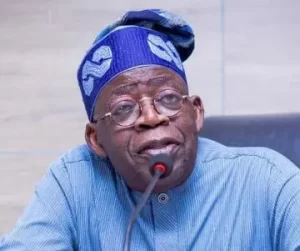 President Tinubu remains the most structurally empowered political figure ahead of 2027, not just as incumbent but as someone who has historically mastered political consolidation. He has effectively drawn numerous PDP governors particularly from the southern region into the APC fold, signalling an ambition towards a dominant party structure. However, while institutional control is significant, it does not automatically translate to mass voter loyalty. As seen in prior elections, governors often switch parties without necessarily carrying their electorate with them. Tinubu’s real test lies in whether he can complement his top-down political machinery with grassroots appeal in the North, a terrain still emotionally tied to Buhari. His electoral fate may ultimately rest on how well he adapts Buhari’s narrative of empathy for the poor and marginalised, not just his political architecture.
Other Potential Contenders: Peter Obi, Prince Adewole Adebayo & Emerging Forces
While the northern corridor remains central to the battle for Buhari’s legacy votes, several figures from outside the region could also make inroads—particularly among voters disillusioned with the traditional political class.
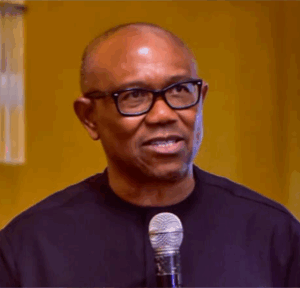 Peter Obi, former governor of Anambra State and the Labour Party’s presidential candidate in 2023, garnered significant youth and urban support across Nigeria. While his strongest base remains in the South-East and parts of the Middle Belt, Obi’s message of accountability, prudence, and anti-corruption resonates with northern voters tired of elite politics. His clean image may win over segments of Buhari’s base who prioritised integrity above all else.
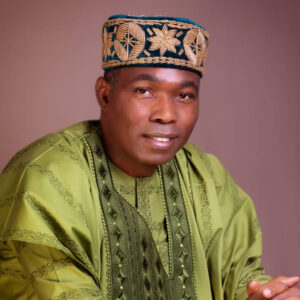 Prince Adewole Adebayo, the SDP’s 2023 presidential candidate, presented a deeply policy-driven and principled campaign. Though his electoral reach was limited, his party’s ideological stance on social justice, economic fairness, and rule of law echoes some of Buhari’s original appeal to the poor. If the SDP consolidates behind a more visible structure or joins a coalition, Adewole could become a notable player among reform-minded voters.
Beyond these names, Nigeria’s fast-evolving political landscape means new alliances and dark horses may yet emerge. As history shows, the so-called “12 million votes” are not fixed—they are available to whoever earns the trust of the forgotten, marginalised, and patriotic masses Buhari once inspired.
The Turnout Factor: 2027 Could Be a Different Ball Game
A major element often overlooked in political forecasting is voter turnout. The 2023 Nigerian presidential election saw a historically low participation rate, with just over 24.9 million votes cast out of over 93 million registered voters. The All Progressives Congress (APC) won with 8.79 million votes, securing 36.61% of the total. Atiku Abubakar of the PDP followed with 6.98 million votes (29.07%), and Peter Obi of the Labour Party earned 6.1 million votes (25.40%).
These figures reveal a fragmented mandate—none of the candidates captured even 40% of the total vote. But more critically, nearly 70 million Nigerians did not vote.
If the 2027 election sees a surge in participation say, an additional 20 to 25 million votes the entire political landscape could shift. The so-called “Buhari 12 million” bloc, while influential, could be dwarfed by a newly awakened electorate, particularly among youths, first-time voters, and politically disengaged citizens.
Such a turnout boost would make it nearly impossible to predict a clear winner based solely on past alignments or regional loyalties. It would force all contenders to re-evaluate their strategies—not just to secure their base, but to inspire Nigerians who have long stayed on the margins of electoral politics.
In 2027, numbers may speak louder than narratives.
—————————————————————————————————————————————
Your help to our media platform will support the delivery of the independent journalism and broadcast the world needs. Support us by making any contribution. Your donation and support allows us to be completely focus, deeply investigative and independent. It also affords us the opportunity to produce more programmes online which is a platform universally utilised.
Thank you.
Please click link to make – DONATION