

By ifeoma Onyekachi
Fresh efforts are underway to resolve the lingering leadership crisis within the Peoples Democratic Party (PDP) as rival blocs reopen reconciliation talks ahead of the party’s planned national convention scheduled for March 29–30, 2026.
The reconciliation process is being spearheaded by a committee set up by the party’s Board of Trustees and led by former Minister of Special Duties, Tanimu Turaki (SAN), with the backing of PDP governors. The move is seen as a last-minute attempt to unify the party and prevent further internal division before key electoral activities begin.
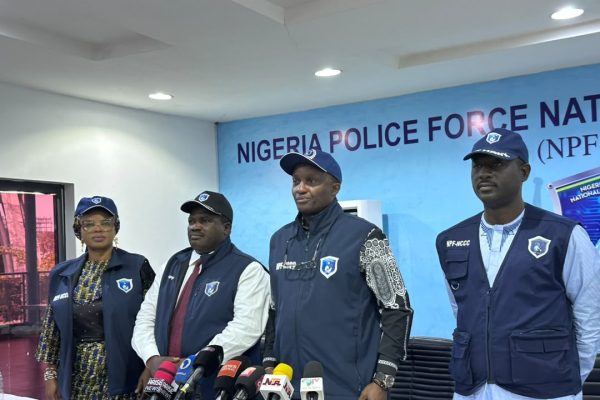
Turaki, who addressed journalists in Abuja, confirmed that discussions between the opposing camps resumed earlier this week and that early signs of progress were emerging. According to him, the renewed peace talks followed the advisory of the Court of Appeal in Ibadan, which urged parties involved in the ongoing legal disputes to pursue reconciliation in the interest of the party and Nigeria’s democratic system.
He explained that the party leadership had earlier postponed scheduled meetings of the National Executive Committee and National Caucus as a goodwill gesture to create room for dialogue and reduce tensions within the party.
Turaki, however, expressed concern that despite their conciliatory steps, the opposing camp continued issuing hostile statements and engaging in heated rhetoric, which he described as unhelpful to the peace process. He called on party members and supporters to tone down inflammatory comments and allow the reconciliation process to succeed.
He also assured aspirants preparing for future elections that the party would field candidates for all elective positions in accordance with the party constitution and the Electoral Act.
Wike Denies PDP Split
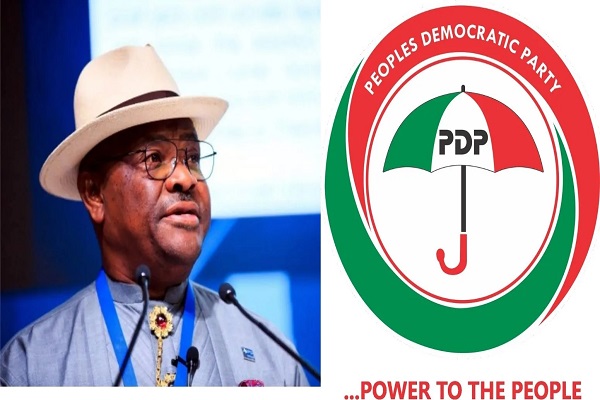
Meanwhile, the Minister of the Federal Capital Territory, Nyesom Wike, dismissed reports suggesting that the party had split into factions, insisting that the PDP remains one united party despite disagreements among members.
Wike spoke in Abuja after inspecting ongoing infrastructure projects across the Federal Capital Territory, where he maintained that disagreements are normal in political parties and do not amount to factionalisation.
According to him, reconciliation efforts can continue alongside preparations for the national convention, noting that both processes are not mutually exclusive.
Background to the Crisis
The PDP has been embroiled in a prolonged leadership crisis since late 2025 following disputes over the legitimacy of the party’s national leadership.
The crisis deepened after a convention held in Ibadan on November 15 produced a National Working Committee led by Kabiru Turaki for a four-year tenure. However, a rival faction aligned with Wike rejected the outcome and set up a 13-member caretaker committee led by Mohammed Abdulrahman as Acting National Chairman and Senator Samuel Anyanwu as Acting National Secretary.
Tensions escalated on November 18 when rival groups attempted to hold separate meetings at the PDP National Secretariat in Abuja, leading to chaos and the eventual sealing of the secretariat by the Nigeria Police.
The dispute later moved to court, culminating in a Court of Appeal ruling on March 9, 2026, which nullified the Ibadan convention, ruling that it violated the Electoral Act, the Nigerian Constitution, and the party’s constitution. The court also advised the parties to explore reconciliation to resolve the crisis internally.
Political analysts say the outcome of the reconciliation talks and the March national convention could determine the party’s stability and electoral strength ahead of future elections, particularly as the PDP continues to position itself as the main opposition party in Nigeria.
FCT Projects and Infrastructure
Speaking during his inspection tour, Wike also highlighted ongoing infrastructure development in the Federal Capital Territory, including road projects and facilities at the Nigerian Law School. He attributed the pace of development to prudent financial management, internally generated revenue, and support from President Bola Tinubu’s administration.
He assured residents that ongoing projects would be completed on schedule, emphasizing that the administration only awards contracts for projects it has the funds to execute.
Political Implications
Observers note that the PDP crisis, if not resolved before the national convention, could weaken the party’s chances in upcoming elections and further strengthen the ruling All Progressives Congress (APC). The success of the reconciliation process is therefore seen as critical to the survival and future competitiveness of the PDP as Nigeria’s main opposition party.
—————————————————————————————————————————————
Your help to our media platform will support the delivery of the independent journalism and broadcast the world needs. Support us by making any contribution. Your donation and support allows us to be completely focus, deeply investigative and independent. It also affords us the opportunity to produce more programmes online which is a platform universally utilised.
Thank you.
Please click link to make – DONATION