


There are moments that refuse to announce themselves, yet arrive carrying the full weight of philosophy. No drums. No procession. No herald. Just a man, a decision, and a quiet departure that rearranges the meaning of everything that came before it.
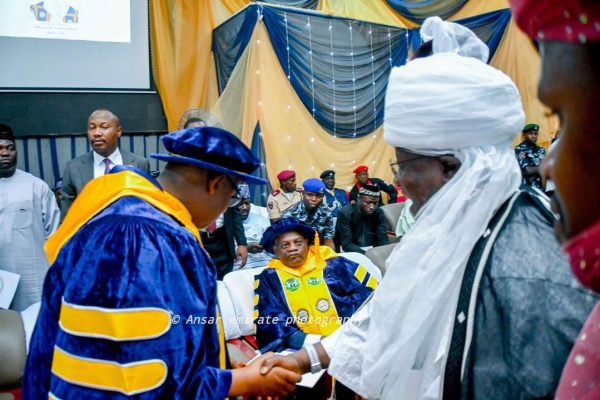
At Egbaliganza, amid the splendour of fabric, lineage, and the resplendent invocation of Lisabi’s enduring spirit, Wole Soyinka—our Kongi—offered such a moment. When the expected order faltered, when the vehicle and driver meant to carry him away dissolved into the ordinary confusion of events, he did not summon outrage, nor cloak himself in the entitlement of stature. He did something infinitely more radical in its simplicity.
 He boarded an okada.
And in that act—unadorned, unceremonious, almost invisible—he delivered a lecture no podium could hold.
For what is greatness if it cannot walk? What is honour if it depends on arrangement? What is nobility if it collapses the moment comfort withdraws? In choosing the most modest of exits, Soyinka dismantled the architecture of vanity with the ease of a man who has long outgrown it. It was a living echo of the wisdom of Ecclesiastes: vanity upon vanity, all is vanity. Not as abstraction, but as practice. Not as quotation, but as conduct.
This is where the lesson deepens.
 Egbaliganza has, without question, achieved something remarkable. It has restored pride, reanimated heritage, and clothed identity in a language the world cannot ignore. It has elevated the Lisabi brand into a visible, dignified, and globally resonant cultural expression. That achievement stands. It must be preserved. It must be celebrated.
But culture, if it is to endure, must transcend display.
Lisabi is not remembered because of what he wore into battle, but because of what he gave to his people. The true archive of greatness is not textile, but testimony. Not attire, but action. Not spectacle, but sacrifice. Legends do not live on in wardrobes; they live on in the human consequences of their courage.
And so, Soyinka’s okada becomes more than a moment—it becomes a mandate.
It calls Egbaliganza beyond the runway of heritage into the rugged terrain of humanity. It asks that the brilliance of cloth be matched by the depth of compassion. That the pride of identity be translated into programmes that touch the ordinary Egba man and woman—not in theory, but in tangible, measurable, transformative ways. Education. Mentorship. Community health. Youth empowerment. Cultural literacy with economic consequence. Interventions that do not merely celebrate ancestry, but actively shape destiny.
For what will it profit a cultural movement to conquer aesthetics and lose impact?
This is not a rejection of splendour. It is a completion of it.
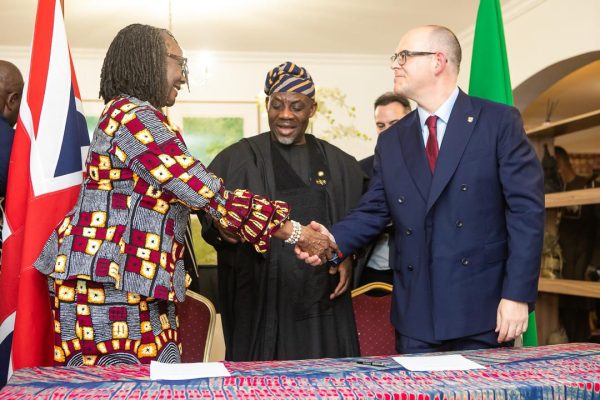
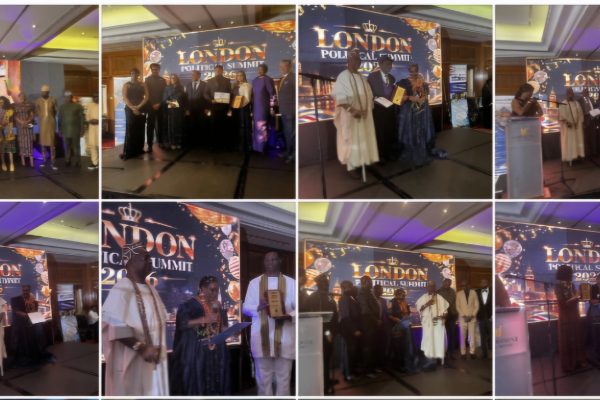
One is reminded, again, of another Soyinka moment—this time in London, at The Africa Centre. During the WS@90 convening of the Wole Soyinka International Cultural Exchange, facilitated by Olu Alake and produced by Teju Kareem, there was no fanfare, no theatrical arrival. He came almost straight from landing, set aside comfort, and entered the space not as an icon demanding ceremony, but as a mentor offering presence. For over three hours, he engaged African children and youth in the diaspora—listening, probing, provoking thought, and depositing something far more enduring than performance: direction.
The children will not remember the chairs, nor the lighting, nor the programme order. They will remember that a man of global stature sat with them, spoke to them, and treated their futures as worthy of his time. That is how legacies reproduce themselves—not in monuments, but in minds.
And beyond London, across the Atlantic, the pattern holds. In the United States, where Soyinka has often stood not as a beneficiary of power but as a critic of its excesses, he has consistently chosen principle over convenience. Whether through intellectual resistance, public dissent, or symbolic personal decisions that reject comfort in favour of conviction, he has demonstrated that true freedom is not conferred by systems, but asserted by conscience. In a world where many seek protection behind institutions of power, he has chosen instead the vulnerability—and strength—of moral clarity.
That is the continuity of character. That is the grammar of true greatness.
In an age where power often hides behind layers of security, where influence is insulated and humanity outsourced, Soyinka represents a counter-tradition—the freedom of a man who can move among people not because he is protected by systems, but because he is sustained by moral authority. He does not need distance to be significant. He does not require spectacle to be seen.
He can ride an okada—and still tower above history.
And so, the charge is clear.
Let Egbaliganza remain radiant in its celebration of Lisabi. Let the fabrics continue to speak. Let the colours continue to declare identity. But let there now emerge, with equal clarity, a deliberate architecture of humanitarian legacy. Let there be initiatives that outlive events. Let there be structures that serve beyond seasons. Let there be a conscious, institutional commitment to ensuring that the ordinary lives within Egba land—and beyond—feel the touch of this cultural awakening in practical, sustaining ways.
Because in the end, when the drums fall silent and the garments are folded away, what will remain is not what was worn.
What will remain… is what was done.
—————————————————————————————————————————————
Your help to our media platform will support the delivery of the independent journalism and broadcast the world needs. Support us by making any contribution. Your donation and support allows us to be completely focus, deeply investigative and independent. It also affords us the opportunity to produce more programmes online which is a platform universally utilised.
Thank you.
Please click link to make – DONATION