


Ancient Sebastia Becomes Flashpoint in Israeli-Palestinian Battle Over Heritage and Land
From a hilltop overlooking northern Nablus, the landscape of the occupied West Bank reveals a complex picture: Israeli settlements, Palestinian communities, roads and checkpoints cutting across the terrain.
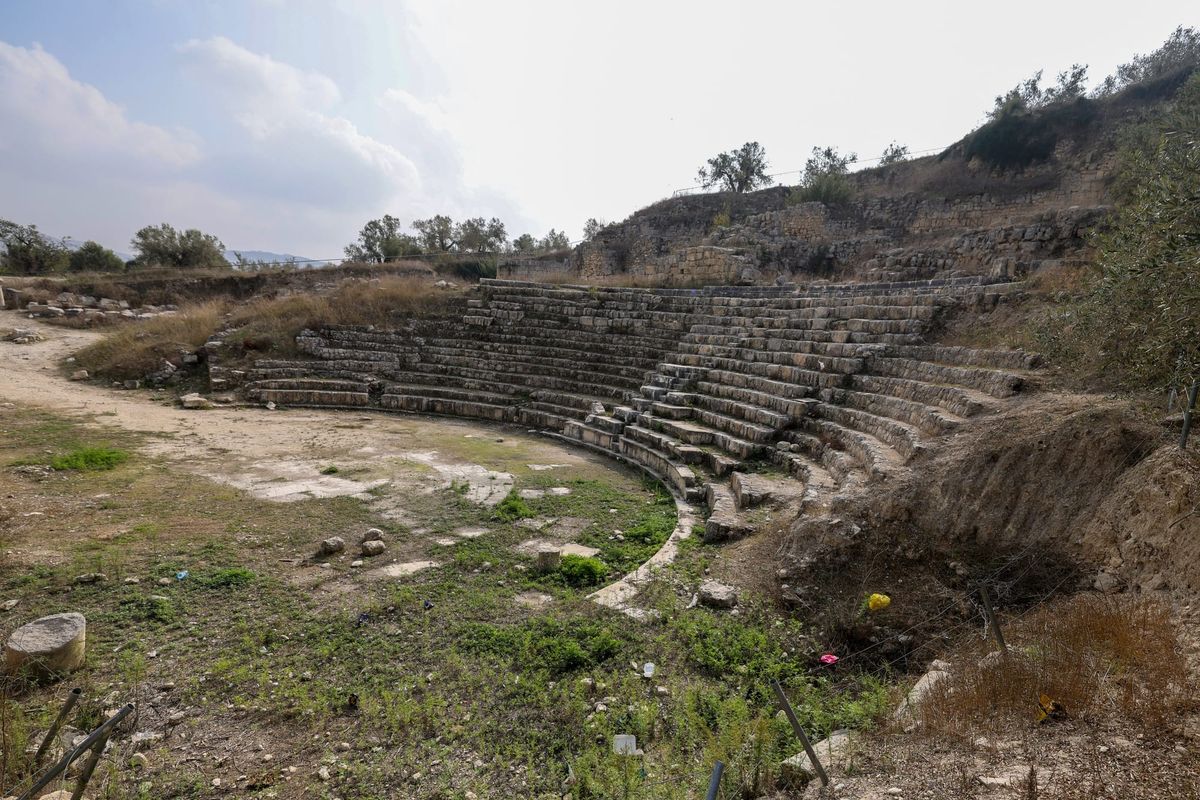
Beneath the olive groves of Sebastia lie layers of history spanning thousands of years — the remains of an ancient palace, a Roman theatre and stone columns that have survived the rise and fall of multiple empires. But today, the archaeological site has become the centre of a modern struggle over land, identity and control between Israeli and Palestinian authorities.
Over the past year, Israel has moved to take control of around 500 acres of privately owned Palestinian land surrounding Sebastia, a small Palestinian town known for its historic ruins. The Israeli government has allocated millions of dollars to transform the site into a major tourism destination.
The Palestinian Authority, meanwhile, is seeking urgent recognition for Sebastia as a UNESCO World Heritage site, with the application under consideration by the organisation. Both sides view the ancient site as an important part of their historical and cultural narrative.
Sebastia’s history dates back at least 3,000 years. Archaeologists identify it with ancient Samaria, the capital of the biblical Kingdom of Israel. Centuries later, King Herod rebuilt the city and renamed it Sebastia, leaving behind monumental structures that endured through Roman, Byzantine, Islamic and Crusader periods.
Local Christian tradition also identifies nearby areas as the burial place of John the Baptist, adding another layer of religious significance to the site.
The archaeological mound is located in Area C of the West Bank, which remains under full Israeli civil and security control under the Oslo Accords. The nearby Palestinian town and tourism facilities are located in Area B, where administrative responsibilities are shared between Israel and the Palestinian Authority.
Residents say the division has increasingly affected their ability to manage and preserve the site. Local tourism operators claim they have been restricted from carrying out preservation work in areas controlled by Israel and fear new land measures could further limit their access.
“For us, this is our heart and our memory at the same time,” said Zaid Azhari, a local tourism developer involved in the “Save Sebastia” campaign. He warned that losing access to the archaeological site would damage the town’s economy, which depends heavily on tourism and agriculture.
“If we cannot access them, the whole economic circle of Sebastia will be destroyed,” he said.
The dispute over Sebastia forms part of a broader Israeli government effort to expand investment in archaeological sites across the West Bank. Since 2023, Prime Minister Benjamin Netanyahu’s government has allocated hundreds of millions of shekels to heritage projects through the “Road, Land, Heritage” programme, overseen by Heritage Minister Amichai Eliyahu of the far-right Otzma Yehudit party.
The programme prioritises sites connected to Jewish history, including Hebron’s Cave of the Patriarchs and Herodium, the ancient palace fortress built by Herod the Great. Critics say other historical and religious traditions in the same areas receive far less attention.
Netanyahu has defended the policy as an effort to preserve Jewish heritage and protect historical sites.
“Almost every stone and heritage site contains thousands of years of Jewish history,” he said while announcing additional funding for preservation projects.
Eliyahu has also proposed creating a West Bank Heritage Authority that would transfer archaeological oversight from the military’s Civil Administration to his ministry. Israeli officials said the proposal was later delayed due to concerns over international criticism.
The minister argues that the programme is intended to protect neglected historical sites, accusing Palestinians of failing to properly preserve archaeological remains.
“I am not willing to have the story of the Jewish people destroyed, dismantled, or erased,” Eliyahu said, arguing that Sebastia and other sites reflect Jewish historical ties to the land.
Israeli archaeological watchdog groups dispute that explanation. Alon Arad, director of the organisation Emek Shaveh, which monitors archaeology in the West Bank, said the government was using heritage as a means of advancing territorial claims.
“The antiquities are just the excuse, part of a much more serious process, creating a correlation between heritage and sovereignty,” Arad said, arguing that archaeology had become a political tool.
He also rejected claims of widespread Palestinian neglect of archaeological sites, saying there was insufficient evidence to support such allegations.
The Palestinian Authority is now seeking to move Sebastia from UNESCO’s tentative list, where it has been listed since 2012, to full World Heritage status. Supporters of the bid hope international recognition could help protect the site from further changes.
Eliyahu has dismissed the potential UNESCO listing, saying international bodies cannot alter what he considers historical facts.
The West Bank contains thousands of archaeological sites representing centuries of human civilisation. Sebastia has become a symbol of a much larger struggle — not only over ancient ruins, but over competing claims to history, territory and the future of the people living around them.
—————————————————————————————————————————————
Your help to our media platform will support the delivery of the independent journalism and broadcast the world needs. Support us by making any contribution. Your donation and support allows us to be completely focus, deeply investigative and independent. It also affords us the opportunity to produce more programmes online which is a platform universally utilised.
Thank you.
Please click link to make – DONATION