

Gas supply cuts push debt-ridden power plants towards collapse
Electricity generation companies have warned that Nigeria’s power plants are edging towards collapse as mounting unpaid debts continue to cripple operations, forcing gas suppliers to cut fuel supplies to indebted generation companies and raising fresh concerns over the stability of electricity supply.
The Association of Power Generation Companies (APGC) said the worsening liquidity crisis in the Nigerian Electricity Supply Industry had left many generation companies struggling to remain operational, warning that more power plants could shut down unless the Federal Government implements sustainable reforms to address the sector’s long-standing financial challenges.
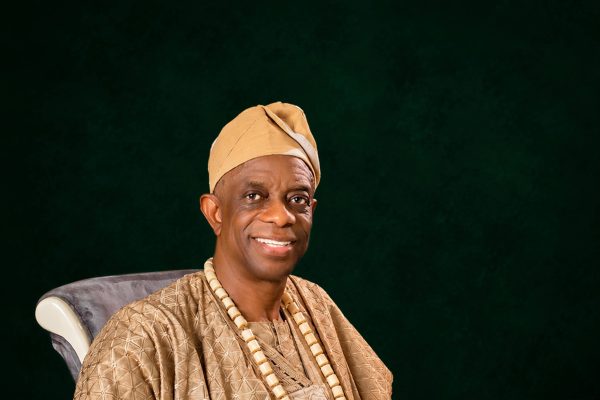
The Chief Executive Officer of APGC, Joy Ogaji, stated this in an interview with The PUNCH while reacting to the Federal Government’s planned issuance of a second ₦729bn bond under the Presidential Power Sector Debt Reduction Programme.
The government recently concluded an investors’ forum ahead of the bond issuance, which is expected to offset part of the estimated ₦4tn owed to electricity generation companies. The programme is designed to restore liquidity across the power sector by settling verified legacy debts.
However, Ogaji argued that while the bond issuance was a step in the right direction, it would not resolve the industry’s liquidity crisis because fresh liabilities continue to accumulate every month as market participants fail to meet their payment obligations.
According to her, unpaid debts have now exceeded ₦3tn, forcing gas suppliers to increasingly cut off indebted generation companies and pushing several power plants towards shutdown.
She said the deteriorating situation posed a direct threat to electricity generation, noting that some plants had already ceased operations because they could no longer afford gas supplies.
“You can see that most of the power plants are shutting down. Ibom Power, for example, has not generated since 2025 because of the debt. Gas suppliers have cut them off. Several other GenCos have also been cut off. The story of Ibom Power is the story of most of the GenCos. Some of them have not paid salaries for months,” she said.
Ogaji warned that unless the underlying liquidity crisis is addressed, more generation companies could suspend operations entirely.
“The way forward is for GenCos to stop generating so that there will be no more shortfalls,” she said, stressing that the current market structure had become financially unsustainable.
She described the crisis as the result of years of mounting debts, gas supply disruptions and persistent cash flow constraints, insisting that government intervention must go beyond debt repayment to address the structural weaknesses in the electricity market.
While reiterating that generation companies support the government’s efforts to clear outstanding obligations, Ogaji urged policymakers to consider the time value of money and the long-term sustainability of the business.
“The GenCos are not against bond issuance or whatever the Federal Government wants to use to pay their debts. They should take into consideration the time value of money and the sustainability of this business,” she said.
She also questioned claims that the latest bond would substantially clear the sector’s debt burden, arguing that the programme only covers verified legacy debts up to December 2024 while new liabilities continue to build because electricity distribution companies and the Nigerian Bulk Electricity Trading Plc (NBET) still fail to fully settle market invoices.
“Every month, the DisCos are not paying 100 per cent. NBET is not paying 100 per cent. You’re raising a ₦4tn bond over seven years. By the time you finish paying the ₦4tn, more than another ₦7tn would have accumulated. What we need is a sustainable solution,” she said.
Ogaji further criticised the current electricity subsidy regime, arguing that government subsidy commitments were not backed by adequate budgetary provisions.
“One of the sustainable ways is for the Federal Government to acknowledge the fact that it cannot subsidise the power market. You can see it’s only on paper that the government is subsidising power. It’s not in the budget,” she added.
She called for realistic subsidy funding, improved market discipline and reforms capable of restoring liquidity across the electricity value chain, warning that failure to tackle the sector’s structural challenges would further weaken generation capacity and worsen power supply nationwide.
Meanwhile, the Federal Government maintained that it was making significant progress in settling the industry’s legacy debts.
Speaking at the NBET Finance Company Plc Series II Bond Issue Investors’ Forum in Abuja on Tuesday, the Special Adviser to President Bola Tinubu on Oil and Gas, Olu Verheijen, said the government had fulfilled all obligations under the first tranche of the power sector debt financing programme.
According to her, about ₦501bn has been deployed to settle part of the legacy debts owed to generation companies, while the first bond coupon has been paid as scheduled.
She disclosed that ₦333bn had already been paid to eight participating generation companies covering 17 power plants under the first phase of the programme.
Verheijen said the successful execution of the first series had restored investor confidence in Nigeria’s electricity market and paved the way for the planned ₦729bn Series II bond, which is expected to deepen liquidity across the power value chain.
—————————————————————————————————————————————
Your help to our media platform will support the delivery of the independent journalism and broadcast the world needs. Support us by making any contribution. Your donation and support allows us to be completely focus, deeply investigative and independent. It also affords us the opportunity to produce more programmes online which is a platform universally utilised.
Thank you.
Please click link to make – DONATION