

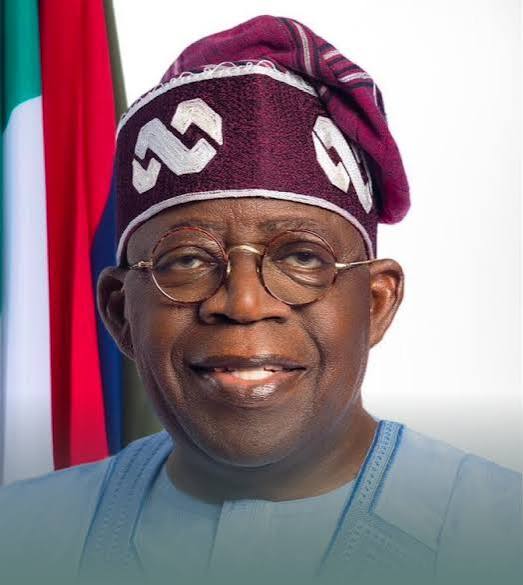
The Federal Government says it has invested over ₦1 trillion in Nigeria’s tertiary education sector within the last two years as part of President Bola Ahmed Tinubu’s commitment to expanding access to higher education and improving learning infrastructure across the country.
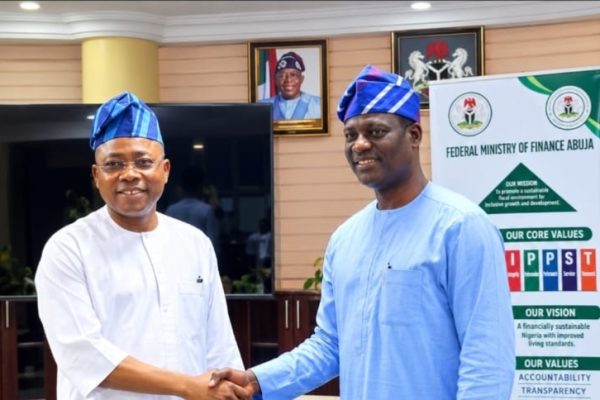
Minister of Education, Dr. Maruf Tunji Alausa, disclosed this during a meeting with members of the National Committee for the Advancement of Occupational Therapy, Audiology and Speech and Language Therapy Education in Abuja.
The Minister said the Tinubu administration has removed financial barriers that previously prevented many qualified Nigerians from pursuing higher education, stressing that no deserving student should be denied the opportunity to acquire tertiary education because of poverty.
Dr. Alausa noted that the administration’s education reforms are focused on providing equal access to quality education while strengthening universities, polytechnics and colleges of education to produce the skilled manpower required for national development.
“This President, President Bola Ahmed Tinubu, has opened up access to students so that not having money, or coming from an indigent family, or your parents being poor, will no longer stop you from achieving the opportunities you can achieve in life. Education is no longer a barrier for students in this country.”
The Minister described the President’s education agenda as a strategic investment in human capital development, commending President Tinubu for prioritising the welfare and future of Nigerian youths.
According to him, the Federal Government has committed ₦250 billion to the construction of new student hostels across tertiary institutions, while more than ₦150 billion has been invested in the rehabilitation of existing hostels, classrooms, engineering workshops and other academic facilities.
Dr. Alausa also revealed that over ₦130 billion has been invested in rehabilitating medical schools nationwide, with an additional ₦52 billion provided for modern equipment in 18 medical schools and nearly ₦30 billion spent on establishing 11 state-of-the-art medical simulation laboratories.
He further disclosed that almost ₦110 billion has been invested in engineering education through the construction and rehabilitation of engineering workshops and the provision of modern equipment for Federal Universities of Technology, conventional universities offering engineering programmes and polytechnics.
The Minister described the interventions as some of the largest investments ever made in Nigeria’s tertiary education sector, noting that the funding covers new infrastructure, rehabilitation projects, specialised laboratories, workshops, modern equipment and institutional capacity development.
“This is amazing. This is just mind-boggling what this President has done in rapidly transforming tertiary education.”
Dr. Alausa said the investments are aimed at producing graduates equipped with the knowledge, technical skills and practical competencies needed to drive innovation, industrialisation and sustainable economic growth.
Earlier, Chairman of the National Committee for the Advancement of Occupational Therapy, Audiology and Speech and Language Therapy Education, Dr. Victoria Omua Amu, briefed the Minister on the committee’s activities.
She said the committee has developed a one-year implementation plan, established governance structures, created three specialised subcommittees and commenced consultations with the National Universities Commission, the Medical Rehabilitation Therapists Registration Board of Nigeria, universities and other stakeholders.
Dr. Amu disclosed that six Nigerian universities currently offer Audiology programmes, five offer Occupational Therapy, while three offer Speech and Language Therapy. She also identified delays in the release of TETFund support as a major implementation challenge.
The Minister reaffirmed the Federal Government’s commitment to supporting tertiary institutions and ensuring that ongoing reforms translate into improved educational outcomes, stronger institutions and greater opportunities for Nigerian students. He reiterated that no qualified Nigerian would be denied access to higher education because of financial hardship.
—————————————————————————————————————————————
Your help to our media platform will support the delivery of the independent journalism and broadcast the world needs. Support us by making any contribution. Your donation and support allows us to be completely focus, deeply investigative and independent. It also affords us the opportunity to produce more programmes online which is a platform universally utilised.
Thank you.
Please click link to make – DONATION