

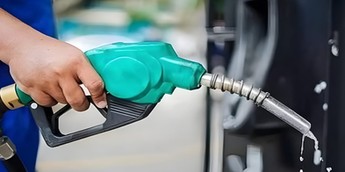
Growing pressure is mounting on the Federal Government to introduce economic relief measures as rising global crude oil prices continue to push petrol costs to unprecedented levels across Nigeria.
Stakeholders including industry operators, economists, labour unions and private sector leaders say the government must deploy the anticipated windfall from higher crude oil prices to cushion the impact on citizens and businesses already struggling with rising living costs.
The calls come as petrol prices have climbed to between N1,200 and N1,300 per litre in several parts of the country, with industry projections warning that prices could rise beyond N1,500 and possibly approach N2,000 per litre if the ongoing Middle East conflict persists.
Global crisis pushing fuel costs higher
The price surge follows escalating geopolitical tensions involving the United States, Israel and Iran, which have disrupted global oil markets. With the conflict entering its third week and no diplomatic resolution in sight, analysts fear crude oil prices may continue to climb.
Crude oil prices, which hovered around $68 per barrel before the crisis, had risen to about $103 per barrel as of Sunday evening.
The Dangote Petroleum Refinery has attributed recent increases in its gantry price to the global crisis, raising prices from below N800 per litre before the conflict to about N1,175 per litre.
Marketers seek tax cuts, pipeline repairs
The Independent Petroleum Marketers Association of Nigeria (IPMAN) has urged the government to reduce taxes and charges imposed on petroleum products to help moderate pump prices.
IPMAN spokesman Chinedu Ukadike said marketers currently face multiple charges from agencies including the Nigerian Maritime Administration and Safety Agency (NIMASA), the Nigerian Ports Authority (NPA), and the Nigerian Midstream and Downstream Petroleum Regulatory Authority (NMDPRA).
According to him, reducing these charges could ease the pressure on fuel prices.
Ukadike also called for urgent repairs of the country’s fuel pipelines to reduce transportation costs.
He explained that transporting petroleum products through pipelines is significantly cheaper than using trucks, adding that fixing the infrastructure would help stabilise prices nationwide.
He further suggested the reintroduction of petroleum equalisation, which would allow the government to cover transportation costs so fuel prices remain relatively uniform across different regions.
Private sector pushes for CNG investment
Meanwhile, members of the Organised Private Sector have advised the government to channel additional revenue from rising oil prices into long-term investments instead of reinstating petrol subsidies.
They recommended investments in Compressed Natural Gas (CNG) transportation, domestic refining capacity, and settling debts owed to gas suppliers to improve electricity generation.
The President of the Lagos Chamber of Commerce and Industry (LCCI), Leye Kupoluyi, urged the government to strengthen local refining capacity by supporting modular refineries and encouraging domestic crude supply in naira.
According to him, promoting CNG adoption for vehicles could significantly reduce Nigeria’s reliance on petrol.
“If many public transport vehicles move to CNG, the pressure on petrol demand will drop considerably,” he said.
Kupoluyi also advocated wider adoption of solar power to reduce pressure on the national electricity grid and allow more power to be directed toward industrial production.
Economists warn of inflation impact
Economists have warned that the rising energy costs could worsen Nigeria’s inflation outlook.
The Managing Director of Afrinvest Securities Limited, Ayodeji Ebo, noted that crude oil prices currently trading between $95 and $105 per barrel are far above Nigeria’s budget benchmark of about $65 per barrel, boosting government revenue.
However, he warned that higher oil prices also increase the landing cost of refined petroleum products.
Ebo said petrol prices could rise beyond N1,500 per litre, while diesel prices have already surged by more than 50 per cent, reaching about N1,700 to N1,800 per litre.
According to him, the rising energy costs could push inflation up by an additional three to five percentage points, reducing household purchasing power.
Labour demands urgent intervention
The Nigeria Labour Congress (NLC) has also called on the government to urgently intervene, warning that Nigerian workers are already struggling with the impact of soaring fuel costs.
In a statement signed by its President, Joe Ajaero, the union said the global crisis is imposing severe economic hardship on workers.
“The Nigeria Labour Congress voices the collective anguish of millions of Nigerian workers bearing the brutal cost of a global crisis they did not create,” the statement said.
The union also called for the rehabilitation of Nigeria’s state-owned refineries in Port Harcourt, Warri and Kaduna, arguing that stronger domestic refining capacity could help shield the country from global price shocks.
In addition, the NLC demanded measures to ease the burden on workers, including wage awards, cost-of-living allowances, expanded social welfare programmes and tax relief for low-income earners.
Nigeria facing revenue paradox
Analysts say the situation presents a paradox for Nigeria as an oil-producing nation.
 While rising crude prices increase government revenue, they also push up domestic fuel prices, placing additional strain on citizens.
Economic analyst Ilias Aliyu noted that any government intervention should be carefully designed to avoid the corruption and inefficiencies associated with past subsidy regimes.
He suggested that if subsidies must be introduced, they should be applied directly within the fuel supply chain to minimise leakages.
Businesses under pressure
Meanwhile, rising fuel prices are also squeezing businesses that depend heavily on petrol and diesel generators due to unreliable electricity supply.
The Centre for the Promotion of Private Enterprise (CPPE) warned that escalating energy costs are increasing operating expenses and threatening the sustainability of many enterprises, particularly small and medium-sized businesses.
According to the organisation, the rising cost of fuel is driving up transportation, logistics and production costs across the economy.
Without supportive policy measures, analysts warn that the energy price shock could weaken economic activity and further slow growth.
NESG warns against subsidy return
However, the Nigeria Economic Summit Group (NESG) has cautioned the government against reintroducing petrol subsidies despite rising living costs.
In a report titled “Boom Not Gloom: Nigeria’s Optimal Policy Response to the US/Israel–Iran War,” the group warned that returning to subsidies could undermine fiscal reforms.
The NESG said global oil price increases now transmit more directly to domestic fuel prices following the removal of subsidies, contributing to inflation through higher transportation and logistics costs.
According to the group’s projections, the oil price shock could add between 1.3 and 5.2 percentage points to Nigeria’s inflation rate over the next few quarters depending on the severity of the crisis.
Nevertheless, the group noted that increased domestic refining capacity, particularly from the Dangote refinery, has improved Nigeria’s resilience to global fuel supply disruptions.
—————————————————————————————————————————————
Your help to our media platform will support the delivery of the independent journalism and broadcast the world needs. Support us by making any contribution. Your donation and support allows us to be completely focus, deeply investigative and independent. It also affords us the opportunity to produce more programmes online which is a platform universally utilised.
Thank you.
Please click link to make – DONATION