

The Federal Capital Territory could be heading for an increasingly interesting Senate contest in 2027 with the emergence of a popularly known former Federal Commissioner, MC Gida Gida, as a prominent Accord Party contender for the FCT Senate seat.
Hon. Dalhatu Ezekiel Musa, PhD, MNPA, is seeking to become the Senator to represent the FCT Senate for 2027.
The launch of Dalhatu.org by the Dalhatu Musa Ezekiel Movement (DEM Movement) provides the digital platform for his campaign and introduces his central proposition of Equity, Security and Development, alongside an “FCT Contract” designed to promote measurable and accountable representation.
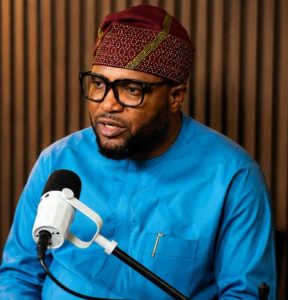
Dalhatu Musa
Dalhatu is an FCT public servant and community advocate from Kuje Area Council and of Gbagyi/Gbari heritage. His profile describes a public life rooted in the Territory’s farming communities, traders, youth associations and traditional institutions. He has been involved in community advocacy, citizen complaints, accountable policing, community security and efforts to bring indigenous associations across the FCT together. His public-service experience includes serving as a Federal Commissioner representing the FCT at the Public Complaints Commission.
His political message is consequently built around being both “One of Our Own” and “A Voice for All” — seeking to represent indigenous communities while emphasising equal belonging and representation for all residents of the nation’s capital.
The timing of his emergence is also significant for Accord. The party has just delivered one of Nigeria’s major political surprises of 2026, with Governor Ademola Adeleke winning re-election in Osun State on the Accord platform. Adeleke secured 511,067 votes against APC’s 444,815, winning by 66,252 votes and carrying 19 of the state’s 30 local government areas.

That victory gives Accord a much stronger platform going into the 2027 national elections and raises an important question: can the party’s Osun breakthrough be replicated beyond the state?
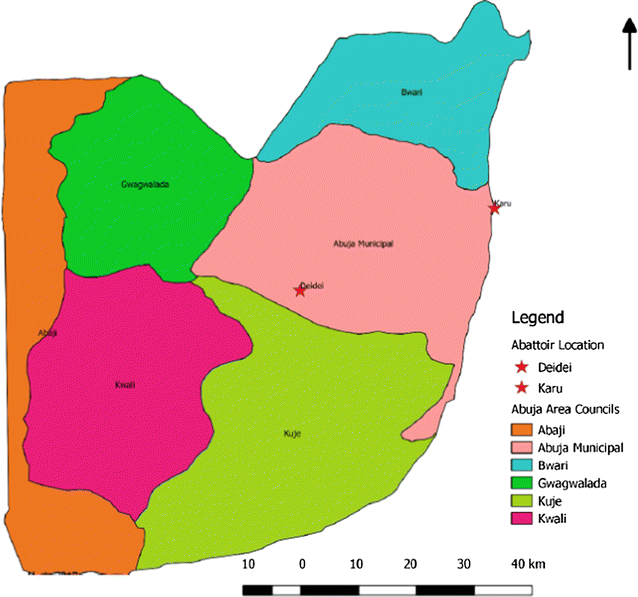
The FCT Senate seat provides a particularly important test. Abuja has one senatorial seat covering all six Area Councils. Since 2019, the seat has been represented first by long-serving PDP senator Philip Aduda, who won in 2019, and subsequently by Ireti Kingibe of the Labour Party, who defeated Aduda in 2023.
Dalhatu’s emergence potentially introduces a different proposition — a new-generation, indigenous FCT politician with roots in the Territory seeking to take the seat and its representation into a new political era.
The FCT also presents a unique political environment. Unlike Nigeria’s 36 states, it has no elected governor; executive administration is headed by the Minister of the Federal Capital Territory, Nyesom Wike. Wike’s publicly reported relationship with Governor Adeleke, including hosting him at his residence, adds another interesting dimension to the political landscape.
Ultimately, however, the credibility of the 2027 contest should rest on the voters and a free, fair and transparent electoral process.
For Dalhatu, the challenge is now to turn “One of Our Own. A Voice for All” from a campaign slogan into a proposition capable of winning support across all six Area Councils.
And for Accord, Abuja could become another important test of whether its remarkable Osun victory can evolve into a wider national political movement.
—————————————————————————————————————————————
Your help to our media platform will support the delivery of the independent journalism and broadcast the world needs. Support us by making any contribution. Your donation and support allows us to be completely focus, deeply investigative and independent. It also affords us the opportunity to produce more programmes online which is a platform universally utilised.
Thank you.
Please click link to make – DONATION