

By ifeoma Onyekachi
Economic experts and civil society organisations are divided over calls for the administration of President Bola Ahmed Tinubu to introduce palliatives or reinstate fuel subsidies to cushion the impact of rising petrol prices triggered by global crude oil price increases.
The sharp rise in global oil prices followed the 24-day conflict involving Iran, the United States and Israel, which disrupted global energy markets and pushed crude oil prices above 100 dollars per barrel far above Nigeria’s 2026 budget benchmark of 64 dollars per barrel.
Although the surge in crude oil prices has increased Nigeria’s oil revenue in recent weeks, it has also worsened domestic economic conditions, with petrol prices rising sharply across the country.
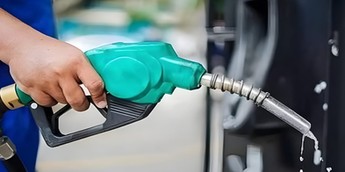
Petrol prices have increased by about N492, representing a 56 percent rise, moving from N875 per litre before February 28 to between N1,367 and N1,390 per litre as of Monday, March 23, 2026.
The development has triggered increases in transportation costs and food prices, further weakening the purchasing power of millions of Nigerians, particularly workers earning the N70,000 minimum wage.
Amid the growing cost-of-living crisis, several stakeholders have called on the Federal Government to introduce relief measures to cushion the economic hardship.
The Centre for the Promotion of Private Enterprises (CPPE) urged the government to implement a coordinated policy framework to prevent energy-driven inflation. The organisation’s Chief Executive Officer, Muda Yusuf, warned that the Middle East crisis could reverse Nigeria’s disinflation trend, which stood at 15.06 percent in February.
Similarly, the President of the Nigeria Labour Congress, Joe Ajaero, said the government should not wait for industrial action before intervening to support Nigerians.
He noted that the government was earning more revenue due to higher oil prices and should use part of the funds to cushion the impact on citizens.
Meanwhile, the Oyo State Government recently approved a N10,000 wage allowance for civil servants to help cushion the effect of rising fuel prices.
However, experts remain divided over whether Nigeria should return to fuel subsidy.
A Professor Emeritus of Petroleum Economics, Wumi Iledare, dismissed calls for the return of fuel subsidy, describing them as economically unsustainable and misguided.
According to him, fuel subsidy regimes often create market inefficiencies and divert government resources away from critical sectors such as healthcare, education, infrastructure and power.
He warned that evidence from past subsidy regimes shows that they often crowd out important public investments and weaken long-term economic development.
Instead of subsidy, Iledare recommended targeted social intervention programmes, improved governance in the energy sector and strategic use of oil revenue windfalls to strengthen economic resilience.
He also suggested policy options such as crude oil discounts for local refineries, including the Dangote Refinery, as well as the removal of import duties or Value Added Tax on petroleum products to reduce fuel costs.
On the other hand, the Executive Director of the Civil Society Legislative Advocacy Centre and Transparency International Nigeria, Auwal Rafsanjani, called for urgent pro-people policies to address the hardship facing Nigerians.
He criticised what he described as the absence of pro-poor policies and warned that the economic situation could worsen if urgent government intervention was not implemented.
Rafsanjani said the benefits from subsidy removal had not translated into improved living conditions for Nigerians, adding that there appears to be a growing disconnect between political leaders and ordinary citizens.
He stressed the need for inclusive economic policies that prioritise the welfare of citizens, warning that rising fuel prices, inflation and declining purchasing power could further increase poverty levels across the country.
Analysts say the Federal Government now faces a difficult policy decision whether to maintain market-driven fuel pricing and provide targeted relief measures, or reintroduce subsidies to immediately reduce petrol prices but risk long-term fiscal pressure.
—————————————————————————————————————————————
Your help to our media platform will support the delivery of the independent journalism and broadcast the world needs. Support us by making any contribution. Your donation and support allows us to be completely focus, deeply investigative and independent. It also affords us the opportunity to produce more programmes online which is a platform universally utilised.
Thank you.
Please click link to make – DONATION