

The International Civil Aviation Organization (ICAO) has called on governments and airlines to strictly adhere to health and safety measures introduced after the COVID-19 pandemic as concerns grow over the spread of a deadly Ebola strain in Central Africa.
The appeal comes amid a worsening outbreak of the Bundibugyo strain of Ebola virus disease (BVD) in the Democratic Republic of the Congo (DRC), with confirmed cases already reported in neighbouring Uganda.
Health authorities in the DRC have recorded more than 900 suspected infections and about 220 suspected deaths linked to the outbreak, raising fears of wider regional transmission. Uganda has so far confirmed seven cases.
The World Health Organization (WHO), which has declared the outbreak a Public Health Emergency of International Concern, warned that the virus is spreading faster than health workers are able to contain it.
In response, ICAO on Tuesday urged aviation stakeholders and governments to fully implement WHO recommendations aimed at reducing Ebola-related risks in international air travel.
ICAO Pushes Coordinated Aviation Response
The UN aviation agency said lessons learned during the COVID-19 pandemic remain critical in responding to emerging global health threats.
Following the disruption caused by the pandemic, ICAO developed protocols to improve rapid and standardised information sharing among governments, airlines, airports and public health authorities.
The organisation noted that digital systems such as electronic health declarations and contactless border procedures have become central tools in monitoring and managing cross-border health risks.
ICAO said it is continuing to work closely with WHO and member states to strengthen measures designed to prevent the transmission of Ebola through air travel while protecting passengers and aviation personnel.
The agency added that the measures are also intended to reassure travellers and minimise unnecessary flight cancellations or disruptions.
WHO Advises Against Travel Restrictions
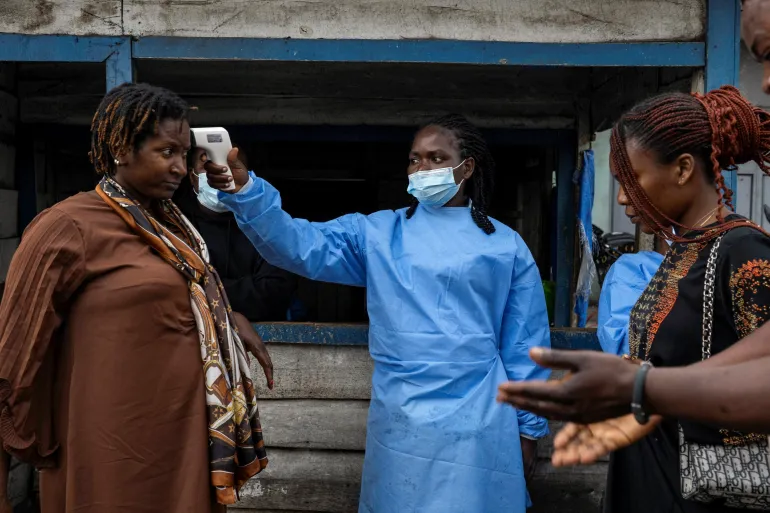
WHO guidance on air travel states that countries should avoid closing borders or imposing blanket restrictions on travel and trade in response to the outbreak.
The agency said entry screening outside affected regions is currently not considered necessary for travellers arriving from at-risk areas.
Instead, WHO recommends exit screening at international airports in affected countries to identify travellers with unexplained fever or symptoms consistent with possible Ebola infection.
The organisation also urged health authorities to ensure that confirmed Ebola patients and identified contacts are isolated and prevented from undertaking international travel unless it forms part of a medically supervised evacuation.
—————————————————————————————————————————————
Your help to our media platform will support the delivery of the independent journalism and broadcast the world needs. Support us by making any contribution. Your donation and support allows us to be completely focus, deeply investigative and independent. It also affords us the opportunity to produce more programmes online which is a platform universally utilised.
Thank you.
Please click link to make – DONATION