

By Festus Fifen
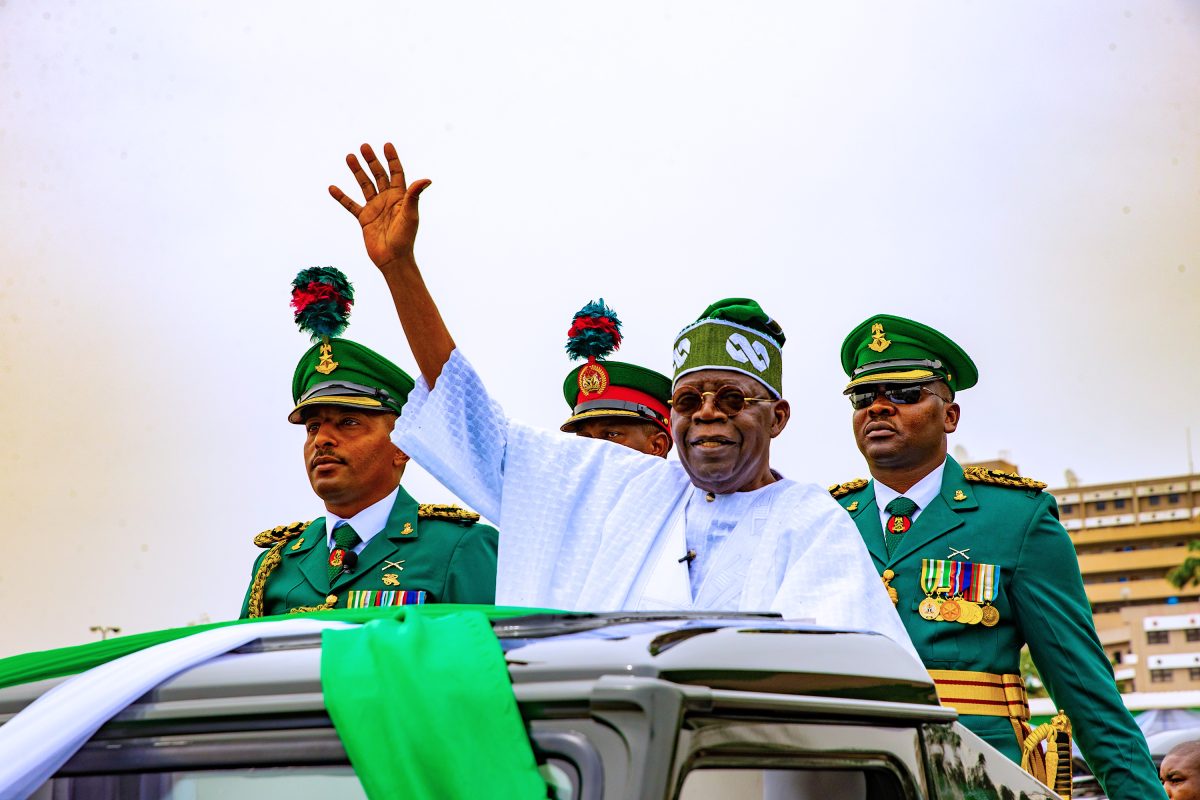
When President Bola Ahmed Tinubu stood on the podium at Eagle Square on May 29, 2023, the air was thick with a mixture of desperate hope and profound uncertainty. At the time, it won’t be out of place to say Nigeria was a country at a fiscal crossroads, staggering on the edge of a debt trap and strangled by an unsustainable subsidy regime.
His inaugural speech—specifically the unscripted declaration that “subsidy is gone”—sent shockwaves through the global market and the Nigerian household alike. While many welcomed the idea because of the unsustainable subsidy regime that Nigeria has practiced since democracy returned, and its effect on the economy, the majority felt it would make life harder for the average Nigerian because a lot depended on the market price of the premium motor spirit (PMS).
Three years later, the dust has begun to settle, though the air remains crisp with the tension of transition. To the casual observer, the visible scars of inflation and the high cost of living dominate the narrative. However, a deeper, forensic look at the mid-term trajectory of the Tinubu administration reveals a different story: a story of a nation undergoing painful but necessary reconstructive surgery.
While the challenges have been formidable, with so many Nigerians blaming this administration for their high handedness especially in the areas of fiscal policies, the systemic gains, structural, fiscal, and infrastructural outlook suggest that Nigeria is finally laying a foundation for long-term prosperity that past administrations merely danced around.
To pinpoint these gains specifically, taking a look at the Fiscal policies of this administration for the past three years, it is clear that the administration chose Courage Over Convenience.
The centerpiece of Tinubu’s first three years has been “Economic Courage.” For decades, economists warned that the twin burdens of the petrol subsidy and the multi-tiered exchange rate system would eventually bankrupt the nation. Previous administrations lacked the political will to touch these “Sacred Issues” of Nigerian politics. Tinubu, however, chose the path of immediate, but agonizing, reform.
The removal of the fuel subsidy was a masterstroke in fiscal responsibility. In the years leading up to 2023, Nigeria was spending trillions of Naira, these are money it didn’t have—on subsidizing consumption rather than production. Today, those trillions have been diverted into the Federation Account (FAAC), resulting in record-breaking monthly allocations to State and Local Governments. For the first time in a generation, sub-national governments have no excuse for failing to develop their domains. The “Gains” here are found in the decentralization of wealth; the money is no longer disappearing into the pockets of “subsidy billionaires” but is being channeled into the 36 states of the federation.
Simultaneously, the unification of the Naira’s exchange rate, though it led to an initial devaluation, has begun to restore investor confidence. The arbitrage (the “round-tripping” where people made billions just by having access to official rates) has been largely decimated. By the third year, we are seeing a stabilization of the foreign exchange market, driven by increased transparency and an influx of Foreign Direct Investment (FDI) that had previously fled Nigeria’s opaque monetary system.
INFRASTRUCTURE AS A CATALYST FOR GROWTH
If Tinubu’s first year was about fiscal stabilization, his second and third years have been about “The Great Build.” Drawing from his antecedents the President has treated infrastructure not as a luxury, but as a primary driver of the Gross Domestic Product (GDP).
The Lagos-Calabar Coastal Highway is perhaps the most ambitious project in West African history. Beyond the asphalt and concrete, this 700km highway is an economic artery, designed to link the industrial hubs of the Southwest with the maritime potential of the South-South and Southeast. Critics initially questioned the cost, but by year three, the emergence of new “mini-cities” and industrial clusters along the initial stretches of the road has silenced many skeptics.
In the north, the completion of the AKK (Ajaokuta-Kaduna-Kano) Gas Pipeline project has begun to revitalize the textile industries and manufacturing hubs of Kaduna and Kano. By bringing gas-to-power to the northern hinterlands, the administration is tackling the root cause of poverty in the region which has been narrowed to the lack of industrial jobs.
Furthermore, the “Renewed Hope” housing estates—massive social housing projects across the six geopolitical zones—have turned the construction sector into a major employer of labor. These aren’t just houses; they are the creation of a mortgage culture that allows the Nigerian middle class to dream again.
EDUCATION: NELFUND to the Rescue
Perhaps the most understated gain of the last three years is the Nigerian Education Loan Fund (NELFUND). For decades, the barrier to tertiary education in Nigeria was purely financial. Many brilliant minds were lost to the streets because they couldn’t afford tuition.
By operationalizing the Student Loan Act, Tinubu has effectively democratized education. In the last three years, hundreds of thousands of students from indigent backgrounds have accessed interest-free loans to pursue their dreams. This is a long-term gain that will yield “human capital interest” for decades to come. By investing in the minds of the youth, the administration is ensuring that the “Renewed Hope” agenda survives long after the current political cycle ends.
Moreover, the repositioning of the Universal Basic Education Commission (UBEC) to focus on digital literacy ensures that the next generation of Nigerians is not just educated, but globally competitive in a tech-driven economy.
SECURITY: From Defense to Offense
Security remains the most sensitive yardstick for measuring any Nigerian administration. While the challenges of kidnapping and banditry haven’t vanished completely, the strategy has shifted from reactive defense to proactive offense.
Under President Tinubu, the Nigerian military has seen a significant upgrade in its technological warfare capabilities. The integration of advanced drone technology and enhanced signals intelligence has led to the neutralization of several high-ranking bandit leaders in the Northwest and Boko Haram commanders in the Northeast.
More importantly, the administration has moved toward a “non-kinetic” approach—the Pulako Initiative. By tackling the socio-economic roots of cattle rustling and farmer-herder conflicts through the development of rural infrastructure, the government is treating the disease rather than just the symptoms. The “Gain” is a noticeable, albeit gradual, return of farmers to their lands in the Middle Belt, Nigeria’s food basket.
Foreign Policy: Nigeria’s Seat at the Head of the Table
In areas of foreign Policies, under Tinubu’s leadership, Nigeria has again established a bold presence and a better image on the international stage. As the Chairman of ECOWAS during a period of unprecedented regional instability, Tinubu positioned Nigeria as the bulwark of democracy in West Africa.
His shuttle diplomacy has not been about mere photo-ops but about economic “re-entry.” From the G20 summit in India to investment forums in Qatar and the UAE, Tinubu has been Nigeria’s Chief Salesman. These efforts have yielded billions of dollars in investment commitments in the oil and gas, solid minerals, and agricultural sectors. Nigeria is no longer a country people are afraid to visit; it is once again the “investment destination of choice” on the continent.
The “Pain” vs. The “Gain”: A Balanced Perspective
It would be disingenuous to write on these three years without acknowledging the hardship. Inflation, particularly food inflation, has hit the average Nigerian hard. The transition from a subsidy-dependent economy to a market-driven one has been a “shock to the system.”
Though most of these economic outcomes are not entirely the fault of the government because of activities of some non state actors that are determined to paint the administration black using every means possible, however, the administration has not been deaf to these cries.
The introduction of the Presidential Compressed Natural Gas (CNG) initiative—aimed at slashing transportation costs by 60%—is a direct response to the fuel price hike. The various social intervention programs, the “wage awards” for civil servants, and the suspension of taxes on essential food items and medical supplies show a government that is constantly calibrating its policies to provide cushions for the vulnerable.
The “Pain” is the “labor room” experience of a new nation being born as described by the President himself. You cannot have the joy of a newborn without the agony of the delivery room. For sixty years, Nigeria refused to go into the labor room, preferring to stay “pregnant” with potential while the fetus of its economy withered. Tinubu has forced the delivery, though painful, if other administrations after president Tinubu builds on the successes being recorded , Nigeria will be greater.
Agriculture and Food Security
To combat the food crisis, the administration declared a State of Emergency on Food Security early on. By year three, the fruits of the “Dry Season Farming Initiative” are beginning to manifest. Through the provision of solar-powered irrigation pumps and high-yield seedlings to farmers in the North and South alike, the country is moving toward self-sufficiency in wheat and rice production.
The move to modernize agriculture through the “Greens Imperative” program—a partnership with Brazilian investors—is transitioning Nigerian farming from the hoe-and-cutlass era to the mechanized age. This is the only sustainable way to bring down food prices in the long run.
Though it will be difficult to write extensively about every aspect of the Renewed Hope initiative of this present administration in one piece because of the constraints of time and space, it is however pertinent to state that as we look at the landscape of Nigeria after three years of the Tinubu presidency, we see a country that is finally being honest with itself. We see a government that prefers the “bitter medicine of truth” over the “sweet poison of populist lies.” Things might not be rosy immediately as expected but a steady and slow step towards the right direction is far better than a sprint in the wrong direction that brings no good to anyone.
The upward indicator in the “PowerPoint” slides might not be fast enough, but we can say surely that the positive movement outweighs the downward trends.
The gains are not always found in the noise of social media; they are found in the silence of the new rail tracks being laid, the rising walls of the social housing projects, the grateful sigh of a student receiving a NELFUND loan, the ease of movement that the new coastal highways are bringing, the new settlements amd urban cities these road constructions are bringing and the data of a narrowing trade deficit. Foreign reserves are growing, the exchange rate is now more stabilize and predictable for Businesses and Foreign Direct Investments and a local business boom.
President Bola Ahmed Tinubu did not promise a magic wand; he promised “Renewed Hope.” Hope is not the absence of struggle; it is the presence of a plan. After three years, the plan is evident. The foundation is set. The pillars are rising.
Has it been easy? No. Has it been worth it? When one considers that the alternative was a total national bankruptcy and the collapse of the Naira to irredeemable levels, the answer is a resounding yes. The gains are more, not because the challenges are small, but because the leadership is finally big enough to face them head-on.
As Nigeria moves into the final year of this term, the trajectory suggests that the “Renewed Hope” is transitioning into “Realized Gains.” The seeds sown in the tears of the first two years are beginning to bloom in the third, promising a harvest that will feed generations of Nigerians yet unborn.
Nigeria is not just surviving; it is being rebuilt. And in the annals of history, these three years will be remembered as the era when Nigeria finally stopped running from its shadows and started walking toward its light.
—————————————————————————————————————————————
Your help to our media platform will support the delivery of the independent journalism and broadcast the world needs. Support us by making any contribution. Your donation and support allows us to be completely focus, deeply investigative and independent. It also affords us the opportunity to produce more programmes online which is a platform universally utilised.
Thank you.
Please click link to make – DONATION