

Nigeria’s diversity is one of its greatest strengths. Our nation is a tapestry of cultures, languages, traditions, and histories woven together through centuries of migration, interaction, and coexistence. Yet, despite our shared citizenship and collective aspirations, the distinction between “indigene” and “settler” continues to shape access to opportunities, political participation, and social acceptance in many parts of the country.
While the concept of indigeneity was historically intended to preserve the rights and identities of indigenous communities, its modern application often raises a profound question: How long must a person or family live in a place before they are accepted as belonging to it?
For many Nigerians, this question is not theoretical. There are families whose great-grandparents migrated to a community generations ago, whose grandparents were born there, whose parents grew up there, and who themselves know no other home. They have attended local schools, built businesses, paid taxes, participated in community development, and contributed to the economic, political, and cultural life of their society. Yet they are still described as “settlers” and denied full recognition as members of the communities they have helped build.
Such a reality challenges our understanding of fairness, citizenship, and national unity.
Belonging cannot be determined solely by ancestry. If it were, much of human history would be rendered meaningless. Nearly every ethnic group, kingdom, and community in Nigeria traces its origins to some form of migration, settlement, conquest, or integration. Human societies have always evolved through movement and interaction. The communities we celebrate today are themselves products of historical encounters and adaptation.
The argument that those who arrived first possess a perpetual and exclusive claim to a territory, while those who came later remain permanent outsiders regardless of the passage of generations, creates a hierarchy of citizenship that is difficult to reconcile with the ideals of equality and justice.
A modern nation should recognize that genuine belonging is built not only through ancestry but also through residence, participation, and contribution.
Those who live in a community, raise families there, invest their resources there, respect its customs, contribute to its economy, and share in its challenges and successes develop a legitimate stake in its future. Their connection to that place is real and meaningful. It is a connection forged through lived experience rather than inherited privilege.
This is not an argument against preserving indigenous cultures, traditions, or historical identities. Every community has the right to celebrate and protect its heritage. Cultural preservation and social inclusion are not mutually exclusive goals. A community can honour its history while embracing those who have become part of its story through generations of residence and contribution.
Indeed, placing greater emphasis on residency rather than indigeneity would strengthen national cohesion. It would encourage citizens to invest in the communities where they live, knowing they will be recognized and valued as full participants. It would reduce tensions arising from exclusion and foster a stronger sense of shared destiny among Nigerians.
The continued prominence of indigene-settler distinctions often undermines merit, fuels social divisions, and weakens the bonds that should unite us as one people. It can leave citizens feeling alienated in the very places where they were born and raised. Such outcomes are inconsistent with the vision of a united, democratic, and inclusive Nigeria.
As our nation continues to evolve, we must begin to ask whether our policies and social attitudes reflect the realities of contemporary life. In a society where families have lived in communities for generations, where identities have blended, and where development depends on the contributions of all residents, the concept of belonging must become more inclusive.
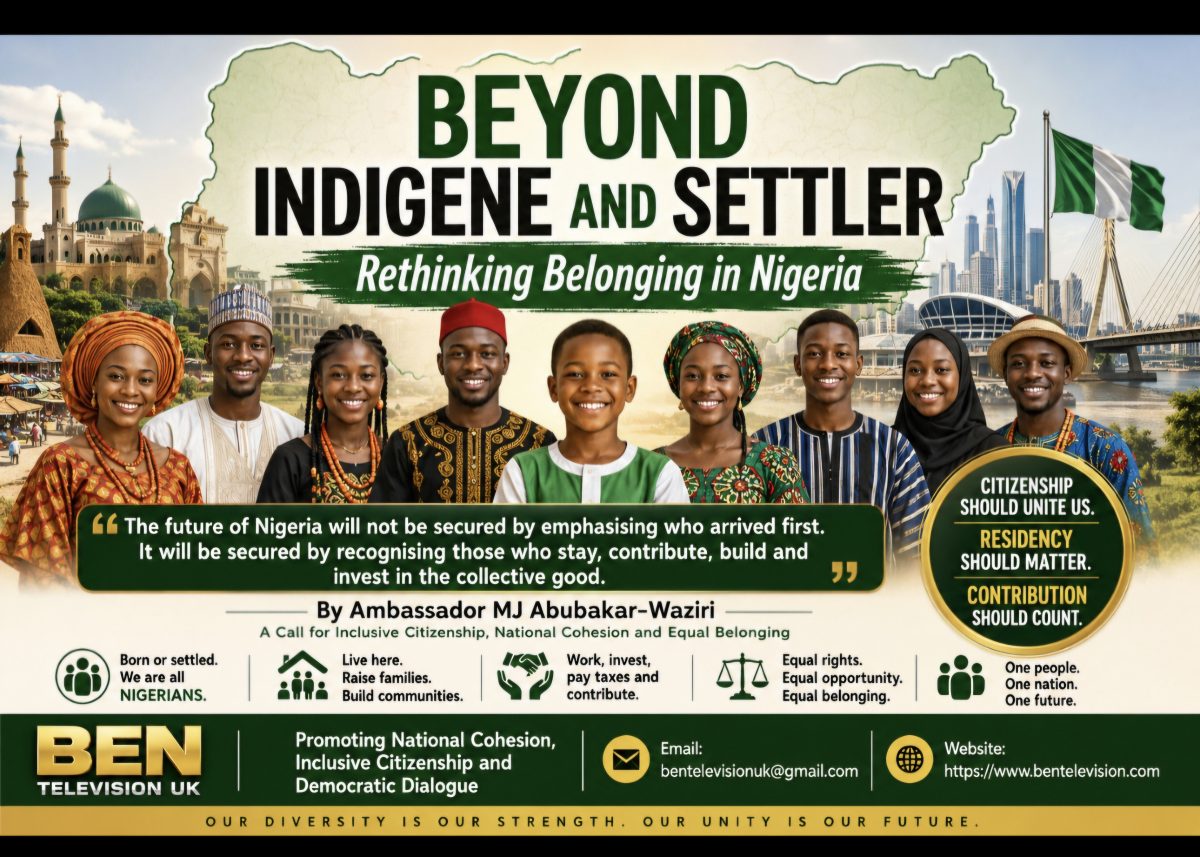
The future of Nigeria will not be secured by emphasizing who arrived first. It will be secured by recognizing those who choose to stay, contribute, build, and invest in the collective good.
Citizenship should unite us. Residency should matter. Contribution should count. And belonging should be defined not merely by ancestral origins but by a shared commitment to the communities we call home.
Only then can we move closer to the Nigeria envisioned by our founding ideals—a nation where every citizen has an equal opportunity to belong, participate, and prosper.
Signed,
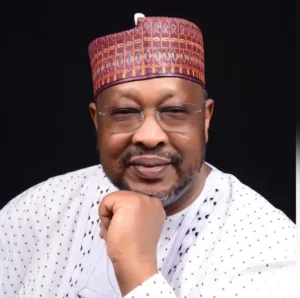 Ambassador MJ Abubakar-Waziri
Advocate for Inclusive Citizenship, National Cohesion, and Equal Belonging
Editor’s Commentary: Beyond Indigeneity Towards Equal Citizenship
Ambassador MJ Abubakar-Waziri raises an important question that Nigeria can no longer avoid: What truly defines belonging in a modern nation?
His argument is not against culture, tradition, or indigenous identity. Rather, it is a call to recognise that citizenship, residency, contribution, and commitment to community should carry greater weight in determining opportunity and participation in national life.
This principle is increasingly recognised across many developed democracies. In countries such as the United Kingdom, the United States, Canada, and others, migrants, their children, and even naturalised citizens are generally entitled to equal citizenship rights. Individuals of African, Asian, Caribbean, and other backgrounds have risen to occupy some of the highest offices in those societies, demonstrating that contribution and citizenship matter more than ancestral origin.
Nigeria must begin a similar conversation. A Nigerian born and raised in Kano, Kaduna, Maiduguri, Lagos, Abeokuta, Enugu, Port Harcourt, or Jos should not face barriers because of where his or her grandparents originated from. If a person has lived, worked, invested, paid taxes, raised a family, and contributed positively to a community for generations, that person has earned a legitimate stake in that community’s future.
Perhaps it is also time to review the continued prominence of “State of Origin” in official documentation and public appointments. Greater emphasis should be placed on citizenship, residency, merit, and contribution. Likewise, religion should not be a determining factor in access to opportunities, as both ethnicity and religion have too often been used as markers of division rather than instruments of national unity.
The Nigeria of the future must be built on equal citizenship, shared responsibility, and common destiny. We will strengthen our nation not by continually emphasising our differences, but by recognising that every citizen who contributes to the development of a community and the country deserves a fair opportunity to belong, participate, and prosper.
That is the essence of national cohesion, and it is a vision worthy of serious consideration.
—————————————————————————————————————————————
Your help to our media platform will support the delivery of the independent journalism and broadcast the world needs. Support us by making any contribution. Your donation and support allows us to be completely focus, deeply investigative and independent. It also affords us the opportunity to produce more programmes online which is a platform universally utilised.
Thank you.
Please click link to make – DONATION