

 When Nigerian airline operators say that up to 60% of an airfare goes to government charges, they are not exaggerating. Industry leaders, from major airlines, including chairmen of major airline companies in the country, have repeatedly drawn attention to this structural imbalance.
 Yet public debate continues to focus narrowly on airline pricing, even prompting the Senate to summon the Minister of Aviation over fares reportedly reaching ₦700,000.
This approach misses the real problem. The crisis in Nigerian aviation is not driven primarily by airline inefficiency or profiteering, but by a heavy, opaque, and multi-layered system of taxes and levies embedded in every ticket sold.
While commonly described as “18 taxes,” closer examination reveals that there are between 30 to 54 separate government-imposed charges that applied across Nigeria’s aviation value chain. These levies are collected by multiple agencies and are either paid directly by passengers or imposed on airlines and inevitably passed on through ticket prices.
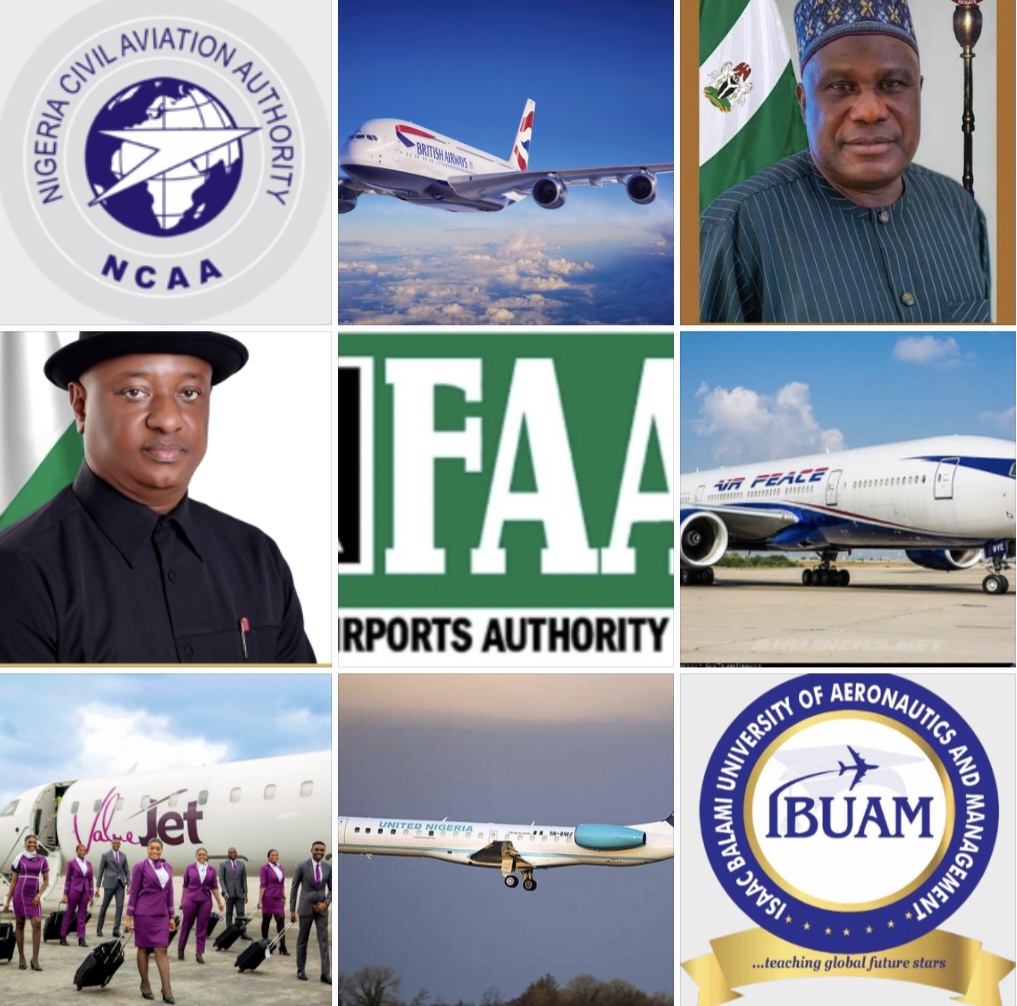
A typical Nigerian airfare is therefore less a reflection of market forces and more likely a collection vessel for government revenue. Passengers pay ticket sales charges, passenger service charges, security levies, VAT, APIS fees, and terminal equipment fees. Airlines, in turn, face landing and parking charges, navigation fees, apron and check-in charges, certification fees, and numerous regulatory levies from agencies such as FAAN, NAMA, and the NCAA etc.
 The cumulative impact is severe. NCAA-related charges alone add between ₦18,000 and ₦25,000 to a domestic ticket. For international travellers, government charges can total $180 to $200 per passenger before accounting for fuel, crew costs, maintenance, insurance, or aircraft leasing. This is why Nigeria has become one of the most expensive countries in Africa to fly within or out of and of course the large number of passengers in the country.
Crucially, passengers and operators are rarely shown how these levies are utilised. As government continues to demand higher charges, or now trying to reduce the charges, it is only reasonable to expect clear, transparent, and accountable reporting on how these funds directly improve airport infrastructure, safety standards, passenger experience, and operational efficiency. Without visible reinvestment, the levies feel punitive rather than developmental, eroding public trust and industry confidence.
Encouragingly, reform is now on the horizon. The Economic Community of West African States (ECOWAS) has issued a landmark directive, effective 1 January 2026, requiring member states to abolish non-essential taxes such as ticket, tourism, solidarity, and foreign travel taxes, while reducing passenger service and security charges by 25%. These measures are expected to cut airfares by up to 40%, addressing a long-standing anomaly where West African travellers pay up to 67% more in charges than their counterparts in other African regions.
However, Nigeria must go further. Implementing ECOWAS directives alone is not enough. What is needed is a clear national policy principle: government charges on any air ticket should not exceed 50% of the base fare.
 A statutory 50% cap achieves balance and clarity. It ensures fairness by preventing the state, which carries none of the capital or operational risks, from extracting more value from a ticket than the airline itself. It promotes transparency and predictability for both operators and consumers. Most importantly, it acts as an economic catalyst: affordable air travel expands tourism, strengthens trade, supports job creation, and ultimately delivers broader and more sustainable tax revenues than today’s prohibitive system.
 The ECOWAS reform presents Nigeria with a rare opportunity to reset its aviation framework. Rather than reacting episodically to high fares, lawmakers should pursue permanent structural reform. By legislating a 50% cap on government charges and insisting on transparent utilisation of aviation revenues, Nigeria can reposition air travel from a luxury for the few into a lifeline for national integration, economic growth, and regional competitiveness.
It is time to tax smarter, not heavier, and allow Nigerian skies to finally work for Nigerians opening more destinations, businesses and expanding real investors into industry which includes every day passengers.
—————————————————————————————————————————————
Your help to our media platform will support the delivery of the independent journalism and broadcast the world needs. Support us by making any contribution. Your donation and support allows us to be completely focus, deeply investigative and independent. It also affords us the opportunity to produce more programmes online which is a platform universally utilised.
Thank you.
Please click link to make – DONATION