


COPENHAGEN, DENMARK — The debate over democracy, political power and the rule of law took on an unmistakably Nigerian dimension in Copenhagen this week, as Senator Dino Melaye used an international legal gathering to make a forceful case for citizens’ rights to question and challenge government.
The intervention came during the 2026 Annual Conference of the International Bar Association (IBA), being held at the Bella Center in Copenhagen from 4 to 9 October. The conference is one of the major gatherings of the international legal profession, with more than 5,000 legal professionals expected from over 130 jurisdictions and more than 200 working sessions examining issues confronting law, justice and governance around the world.
Against that backdrop, Melaye’s contribution was less about Nigeria alone than about a question increasingly confronting democracies across continents: what happens when political power begins to test the limits of the rule of law?
A Nigerian voice in a global debate
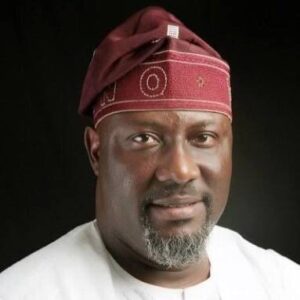 Melaye, a former Nigerian senator and prominent political activist, argued that the rule of law cannot be defended selectively.
His message, as reflected in the intervention, was that governments cannot demand democratic legitimacy while treating legitimate criticism, dissent and civic activism as threats.
The argument carries particular weight at a time when the IBA itself has placed the rule of law, political polarisation and the weaponisation of legal processes among the central themes of its Copenhagen programme.
One of the conference’s Rule of Law sessions, for example, is examining how legal processes can be weaponised against perceived political opponents and what that means for populism and the rule of law. Another is focused on whether law itself can become a tool of authoritarianism and why justice must remain at the heart of the rule-of-law principle.
It was within this wider international conversation that Melaye’s intervention found its relevance.
‘Asking government to do right is not an offence’
At the centre of his argument was a simple proposition: citizens should not be criminalised merely for demanding better government.
Melaye’s position was that criticism of government should not automatically be interpreted as hostility towards the state. Rather, constructive criticism can provide governments with an opportunity to correct their mistakes and maintain peaceful relations with their citizens.
That argument turns the conventional understanding of political opposition on its head.
A citizen who challenges government, in this view, is not necessarily seeking to destroy it. He may instead be demanding that government live up to the trust placed in it.
For many African societies where the boundaries between political dissent, activism and opposition can become blurred, the distinction is significant.
The Trump question and the problem of double standards
The discussion also placed the United States under the spotlight.
The Trump era has become a significant subject in international legal debate, with the IBA itself publishing extensive analysis of questions surrounding executive power, judicial independence, presidential ethics and the resilience of democratic institutions in the United States.
Melaye’s argument, as presented at Copenhagen, was that the principles of justice and democracy should not change according to geography or political convenience.
If the international community expects African governments to respect dissent, judicial independence and fundamental freedoms, the same standards should apply to powerful Western democracies.
For the Global South, that argument has particular resonance. International institutions cannot credibly demand adherence to universal principles while appearing to apply different standards to different countries.
Bringing the ‘common man’ into the legal conversation
Perhaps the most distinctive feature of Melaye’s intervention was its attempt to connect an elite international legal gathering with ordinary citizens.
The IBA conference brings together senior lawyers, judges, academics, regulators, government representatives and other professionals from around the world. Its programme ranges across international law, human rights, geopolitics, legal ethics and the future of the profession.
Melaye’s intervention sought to bring another constituency into that conversation: the ordinary citizen.
The market woman, the unemployed graduate, the young activist and the citizen confronting government bureaucracy may never enter a courtroom or attend an international legal conference. Yet, ultimately, they are among the people for whom the rule of law exists.
That is why the central question raised by his intervention extends beyond Nigeria: is the rule of law meaningful if ordinary people are afraid to question those who exercise power?
More than a Nigerian issue
The significance of the Copenhagen appearance therefore lies less in political rhetoric and more in the broader question it raises about the relationship between citizens and government.
The IBA’s own 2026 programme reflects concern about a world facing political polarisation, populist rhetoric, pressure on legal institutions and challenges to the international rules-based order. Its Rule of Law Symposium will examine international peace and security, justice and the weaponisation of legal processes.
In that environment, an African political voice challenging the idea that dissent should be treated as an offence fits squarely within one of the defining debates of contemporary governance.
For Nigeria, it also provides a different narrative from the country’s familiar international headlines.
Nigeria is frequently discussed internationally through the lenses of insecurity, corruption, political instability and economic challenges. But Copenhagen offered another image: a Nigerian politician participating in an international discussion about democracy, justice, citizens’ rights and the future of the rule of law.
Whether Melaye’s intervention ultimately becomes more than a moment in a busy conference programme will depend on what follows from it.
But the message itself is difficult to miss.
Government derives its legitimacy from the people. The law should protect the citizen as much as it regulates the citizen. And demanding that government do better should be regarded not as an offence, but as part of the democratic process.
That was the broader message carried from Nigeria to Copenhagen — and into a global conversation about what the rule of law should mean in an increasingly polarised world.
—————————————————————————————————————————————
Your help to our media platform will support the delivery of the independent journalism and broadcast the world needs. Support us by making any contribution. Your donation and support allows us to be completely focus, deeply investigative and independent. It also affords us the opportunity to produce more programmes online which is a platform universally utilised.
Thank you.
Please click link to make – DONATION